
Turlock
Understand How Your Water Heater Recovers
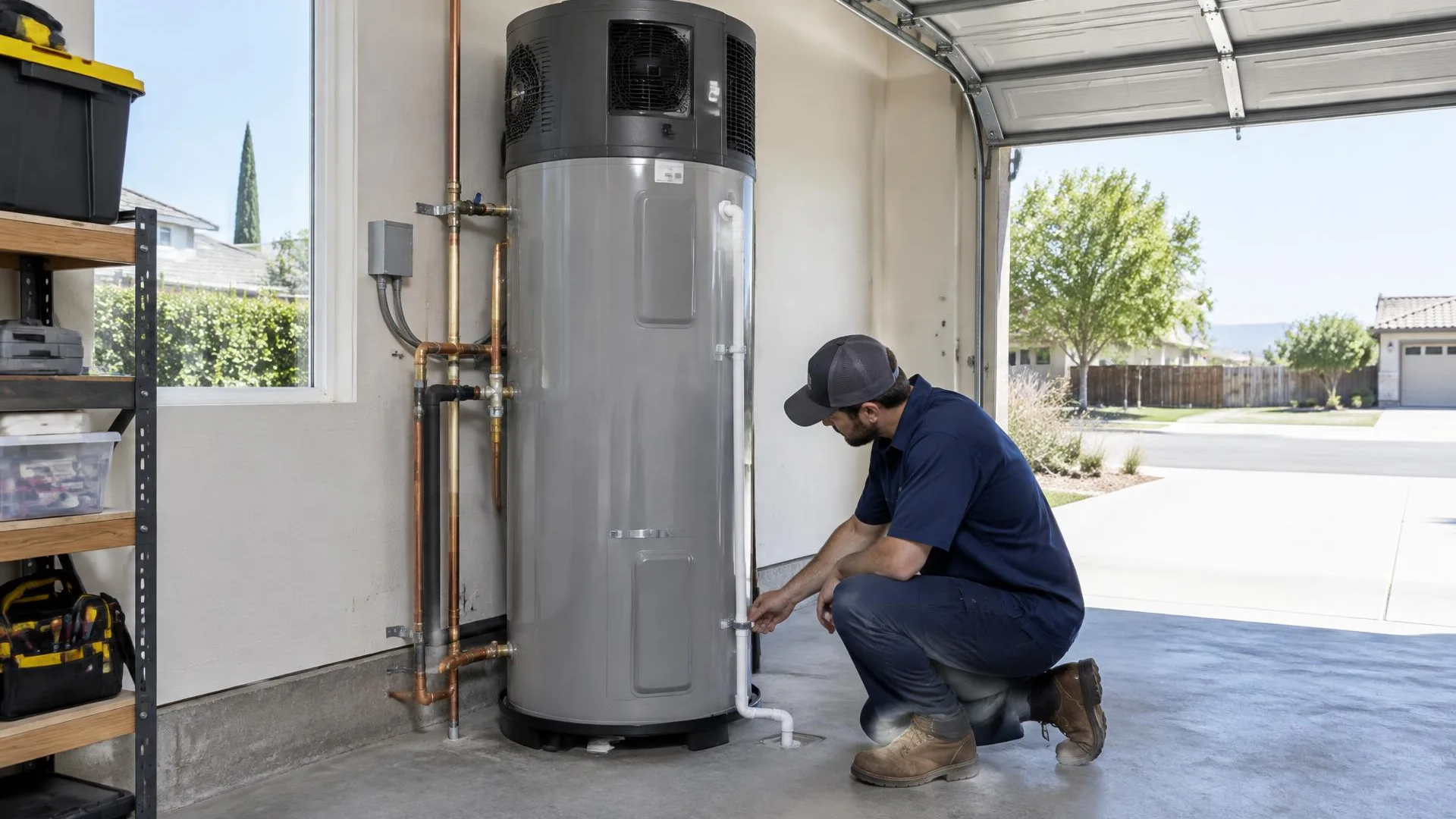
Heat pump water heater modes can affect how equipment responds after hot water is used. In Turlock, we explain those choices in the context of the selected model and your household's routines rather than treating every control panel as interchangeable. Recovery expectations, storage, electrical requirements, and site conditions belong in one assessment. Understanding them before installation helps you make an informed choice and avoids relying on a setting to compensate for unsuitable equipment or placement.
- Mode explanation
- Recovery discussion
- Demand matching
- Supply review
What we handle
Read Beyond the Mode Label
Terms on a control screen do not tell the whole operating story. Manufacturers define modes differently, and available features vary. We connect the equipment documentation with your demand pattern so you understand intended operation, relevant tradeoffs, and the questions that need professional evaluation before selection.
Since 2001
Serving the Central Valley
- 01Mode explanation
- 02Recovery discussion
- 03Demand matching
- 04Supply review
- 05Site verification
- 06User orientation
Begin with how quickly hot water needs to be available again after the busiest uses. Back-to-back demand and long intervals between activities create different expectations. A model's heat pump operation and any additional heating capability should be understood from its documentation. The discussion is not about finding a universally best mode; it is about selecting suitable equipment and explaining how its intended settings relate to the way your household uses hot water.
Mode choice does not remove installation requirements. Qualified professionals assess the electrical supply and model-specific circuit needs, including any implications of the equipment's available operating configurations. The location still needs suitable air volume, condensate disposal, manufacturer clearances, and service access. A setting that changes operating behavior cannot make an unsuitable enclosure acceptable. These requirements should be settled alongside recovery questions, not deferred until the unit is already delivered.
At handoff, ask for an explanation of the recommended settings, normal indicators, and circumstances that warrant a service call. Avoid changing installer-level or safety-related settings without appropriate guidance. If routines change, the equipment's documented user options may be worth revisiting, but recurring shortages deserve assessment rather than repeated guesswork. A clear proposal and operating discussion should distinguish expected performance from conditional estimates and never promise that one mode provides unlimited hot water.
When Operation Needs Explaining
Ask about recovery modes when equipment comparisons emphasize efficiency labels, household demand is concentrated, or a proposal names settings without explaining how the selected model operates and meets the stated expectations.
- Mode confusion
- Peak demand
- Recovery questions
- Model comparisons
- Changing routines
- Unclear handoff
Compare Operation Clearly
Schedule a Turlock heat pump water heater assessment to discuss demand, model-specific modes, and installation requirements. We can explain operating considerations without promising a universal setting, recovery time, or consumption outcome.
Heat Pump Water Heaters questions
Frequently Asked Questions
No. Labels and operating behavior can vary, so the selected model's documentation matters. Ask for an explanation of what each relevant user mode does rather than assuming familiar wording means identical operation across different products.
Not universally. Household demand, equipment characteristics, and your operating priorities influence the discussion. The recommended setting should follow the model's instructions and the assessed use pattern rather than a blanket rule applied to every installation.
It should not be treated that way. Storage, recovery behavior, peak demand, and site feasibility need consideration together. A setting may alter operation, but it does not automatically make an unsuitable equipment choice appropriate for the household.
The equipment's electrical requirements must be evaluated for the actual model and approved installation configuration. Qualified professionals handle that assessment. Do not assume a preferred operating mode allows wiring or protection requirements to be reduced without proper verification.
Consult the user instructions and seek professional guidance where needed. Repeated shortages may indicate a demand, equipment, or installation issue that deserves assessment. Avoid experimenting with installer-level or safety-related controls as a substitute for identifying the cause.
Ask about recommended user settings, normal sounds and indicators, filter care, maintenance responsibilities, and when to request service. The explanation should match the installed model and distinguish ordinary user actions from work requiring a qualified professional.