
Turlock
Do Not Keep Resetting
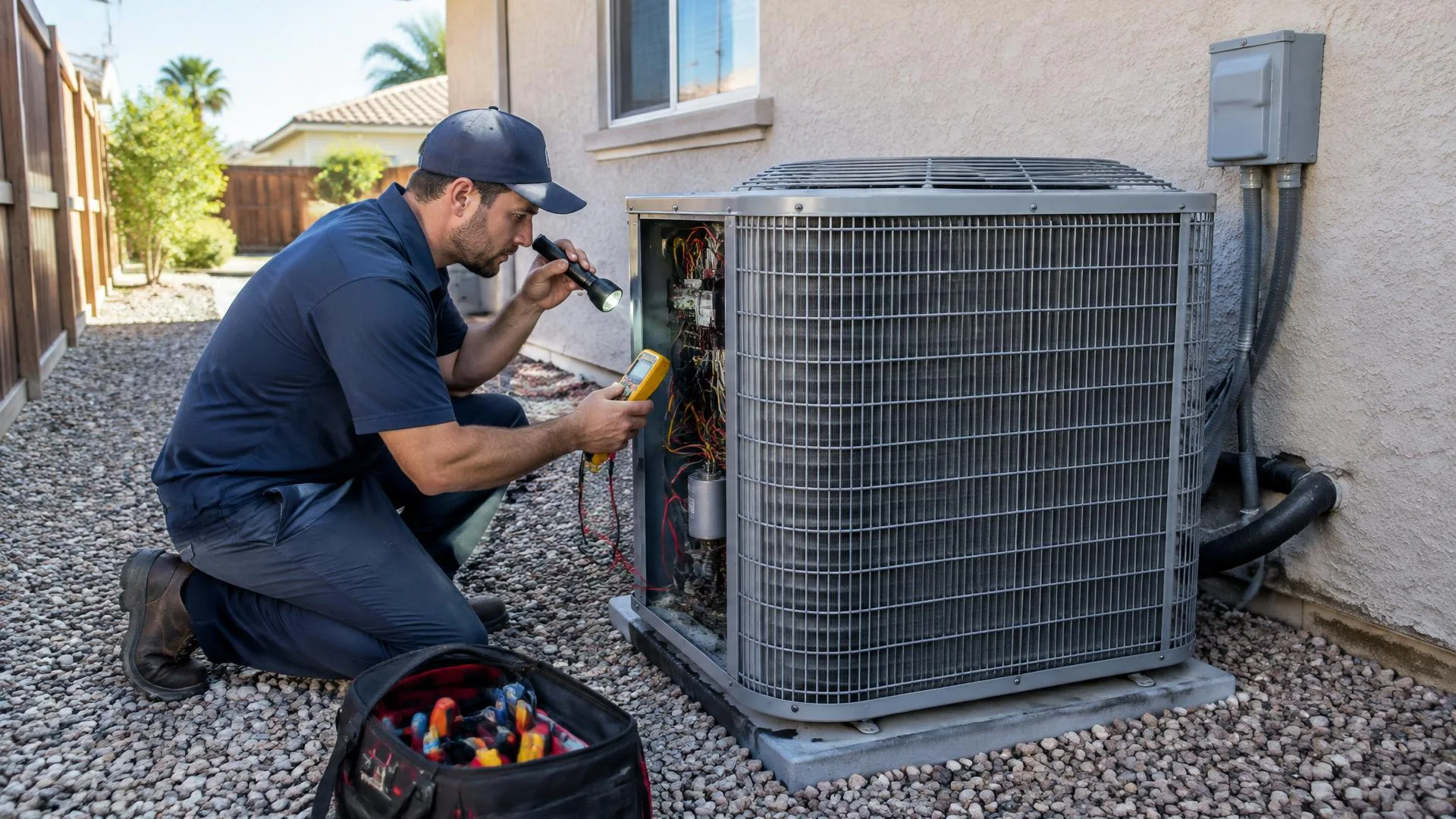
A breaker that trips when cooling starts should be treated as a warning rather than an inconvenience to override. All American helps Turlock homeowners arrange evaluation of AC-related electrical symptoms. Do not repeatedly reset the breaker, install a larger one, or open electrical compartments. Report what happened, whether the trip repeats, and any sounds or odors. If smoke, sparking, or an immediate fire hazard is present, move away and contact emergency services.
- Electrical diagnosis
- Motor testing
- Component checks
- Circuit coordination
What we handle
Respect the Protection
A tripped breaker can reflect several electrical or mechanical conditions. The breaker itself is not automatically the failed part, and restoring power does not establish that the system is healthy. Diagnosis should identify the cause before repeated operation adds risk or equipment stress.
Since 2001
Serving the Central Valley
- 01Electrical diagnosis
- 02Motor testing
- 03Component checks
- 04Circuit coordination
- 05Repair planning
- 06Load verification
Keep the initial report factual. Note whether the trip occurred at startup, after several minutes, or during another household event. Mention recent electrical work and any unusual hum, click, or burning smell. Do not stand in water or approach a hot, damaged, or buzzing panel. Where power isolation is uncertain, leave the area and obtain appropriate help rather than attempting a shutdown yourself. The safe next step depends on the condition, not on a universal instruction to flip a switch.
An HVAC evaluation may include checking relevant motors, wiring, contactors, capacitors, and operating current within the technician's scope. Some findings may require a licensed electrician to evaluate the supply circuit or panel. We explain that distinction so the repair path does not confuse an equipment fault with a building-electrical concern. Component testing is essential because similar shutdown symptoms can arise from different sources. Replacing a breaker or a common AC part without evidence can leave the real problem in place.
Before authorized work, ask what fault was confirmed and whether further electrical assessment is needed. The proposal should identify any limits on testing or restoration. After repairs, appropriate checks help establish how the equipment behaves under load; a single successful restart is not the only relevant observation. Keep an alternate comfort plan while the system remains unavailable. Move vulnerable occupants to a cooler safe location when needed, and seek emergency medical help for heat-illness symptoms instead of waiting for the electrical or cooling issue to be resolved.
Electrical Warning Signs
Report electrical symptoms before ordinary comfort complaints. Stay clear of damaged panels, wet areas, or exposed wiring, and do not provoke another trip to demonstrate the problem during the call.
- Repeated trip
- Burning odor
- Hot panel
- Startup hum
- Sudden shutdown
- Visible damage
Discuss a Breaker-Trip Concern
Call All American with the shutdown sequence and any hazard signs. Ask about diagnostic availability and whether an electrician may also be needed, without resetting the breaker repeatedly or opening equipment.
Emergency AC Repair questions
Frequently Asked Questions
Do not repeatedly reset a breaker that trips with the AC. It may be responding to an unresolved fault. Ask for professional guidance, and stay away from any panel that is wet, damaged, unusually hot, smoking, or making concerning sounds.
Installing a larger breaker is not an acceptable workaround. Circuit protection must match the equipment and wiring requirements. Changing it without proper evaluation can create a serious hazard while leaving the actual equipment or circuit fault unresolved.
Not necessarily. The equipment, wiring, protective device, or supply circuit may be involved. A technician must establish the relevant cause, and some findings require an electrician. The timing of the trip is useful context but not a complete diagnosis.
Keep away from the affected equipment and stop operation only if that can be done safely. If there is smoke, sparking, fire, or an immediate electrical hazard, leave the area and contact emergency services rather than continuing HVAC troubleshooting.
A motor problem can be one cause, but several other faults can produce the same result. Professional testing should support any motor recommendation. Avoid assuming the most familiar component is responsible simply because the trip occurs when cooling starts.
Panel and supply-circuit issues may require a licensed electrician, while AC components fall within the relevant cooling-service scope. Ask which concern was identified and who should address it. Clear coordination matters before the system is returned to operation.