
Patterson
Plan for Care Beyond Installation
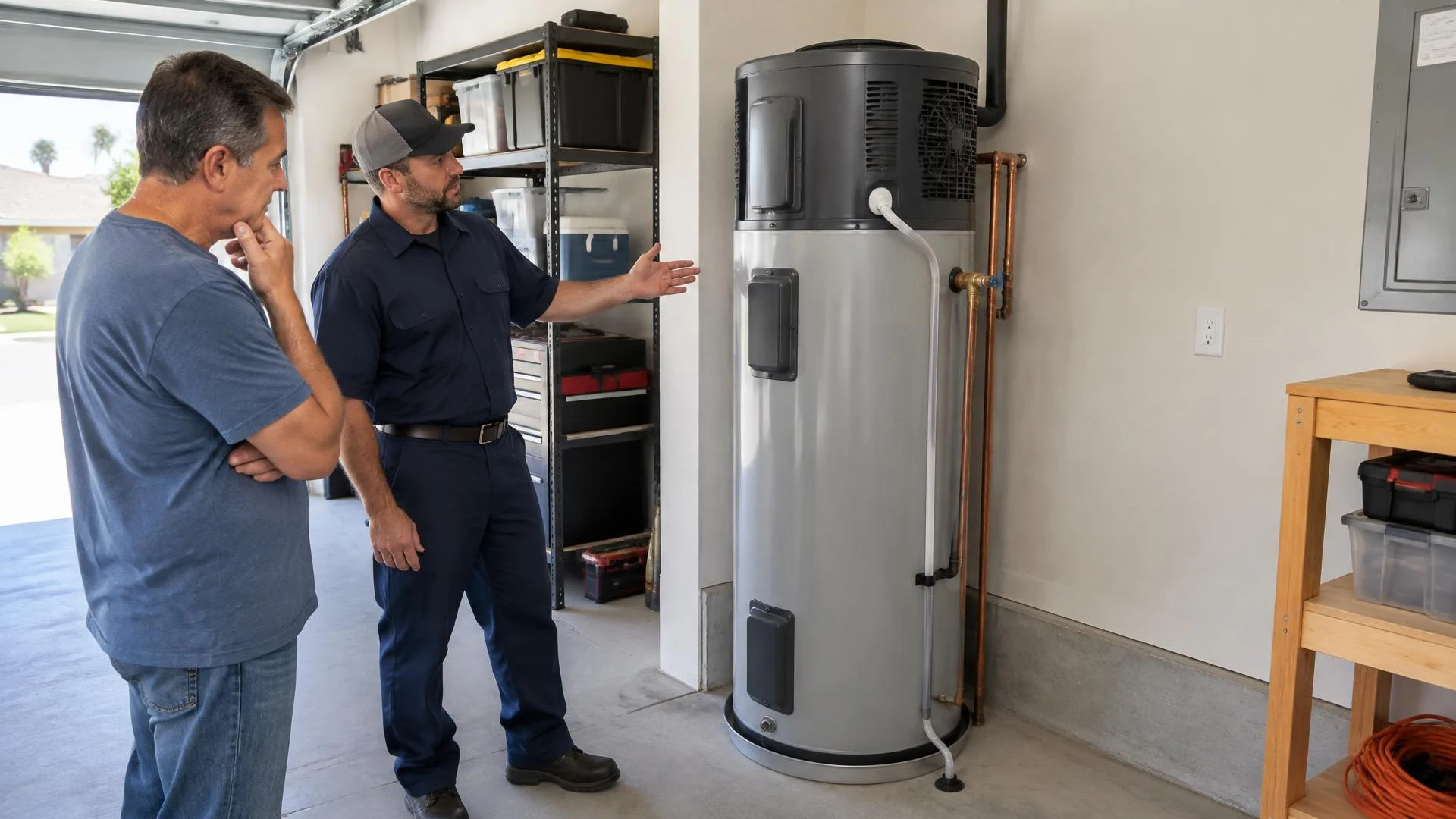
A water heater should be installed with its future care in mind. For Patterson heat pump water heater projects, we review maintenance access, manufacturer guidance, and the division between routine user tasks and professional service. Filters, condensate arrangements, plumbing, controls, and surrounding space all deserve attention before equipment is placed. The goal is an installation you can understand and maintain appropriately, not a promise that any appliance will operate indefinitely without inspection, upkeep, or repairs.
- Access planning
- Filter guidance
- Condensate care
- User orientation
What we handle
Make Maintenance Practical
Good access supports ongoing care, but each model has its own instructions. We use the selected manufacturer's guidance to explain relevant tasks and avoid a one-size-fits-all schedule. The installation assessment also considers how storage, enclosure details, and connection layout may affect future service.
Since 2001
Serving the Central Valley
- 01Access planning
- 02Filter guidance
- 03Condensate care
- 04User orientation
- 05Service boundaries
- 06Record keeping
Maintenance planning begins with the location. Required air volume and manufacturer clearances must be preserved after installation, not only on the day the tank arrives. Filters and service areas need appropriate access, while condensate components should remain reachable for the care their configuration requires. A tightly packed utility space can make routine attention more difficult even when the tank fits. Those practical considerations belong in equipment siting and proposal discussions.
The homeowner handoff should identify ordinary observations and any user maintenance described in the model's instructions. It should also explain which plumbing, mechanical, and electrical tasks need a qualified professional. Avoid opening electrical covers, adjusting safety devices, or dismantling connections to investigate performance. If water, unusual sound, fault indications, or changing hot-water behavior appear, the response should follow appropriate guidance rather than an assumption that cleaning one component will resolve every symptom.
Ongoing service needs depend on the equipment, installation, and relevant water conditions, so maintenance recommendations should be specific rather than invented from a universal interval. Ask how professional service is arranged and what records are useful to retain. A well-documented installation includes model information and clear operating guidance. Keeping the surrounding area suitable and reporting changes promptly supports informed care, while no maintenance plan can guarantee a particular lifespan or eliminate the possibility of future repairs.
Care Questions to Resolve
Discuss maintenance when the proposed location is crowded, service areas are difficult to reach, or installation information focuses on equipment features without explaining model-specific care and when professional attention is needed.
- Crowded setting
- Filter access
- Unclear guidance
- Pump components
- Storage habits
- Service questions
Plan an Accessible Installation
Arrange a Patterson heat pump water heater assessment that includes long-term access and care. We can discuss manufacturer guidance, homeowner responsibilities, and professional service boundaries alongside the initial installation requirements together.
Heat Pump Water Heaters questions
Frequently Asked Questions
Yes, follow the selected manufacturer's guidance and recommendations appropriate to the installation. Relevant tasks may involve filters, condensate components, and other water heater care. The details should be explained for the installed model rather than assumed from another appliance.
No. Some routine user tasks may be described in the instructions, while electrical, plumbing, mechanical, and safety-related work can require professionals. The handoff should identify that boundary clearly. Do not open electrical equipment or alter protective components.
No universal schedule should replace the manufacturer's instructions and professional recommendations for the actual installation. Equipment differences and relevant operating or water conditions can matter. Ask which tasks apply, who performs them, and how their timing is determined.
Required space supports operation and access for care. Adding storage, shelves, or an enclosure later can change the setting and obstruct important areas. Keep the manufacturer's requirements in view rather than treating unused-looking space as automatically available for storage.
Follow the equipment guidance for faults and warning conditions. Water near the tank, unusual sounds, recurring shortages, or changed behavior can warrant assessment. Avoid assuming every symptom has the same cause or attempting electrical checks to investigate it.
Retain equipment identification, installation documents, operating instructions, and service history where available. These details help future professionals understand the system. Records support informed service, but they do not replace current assessment or guarantee a particular repair or warranty outcome.