
Newman
Give Every Treatment Component a Practical Place
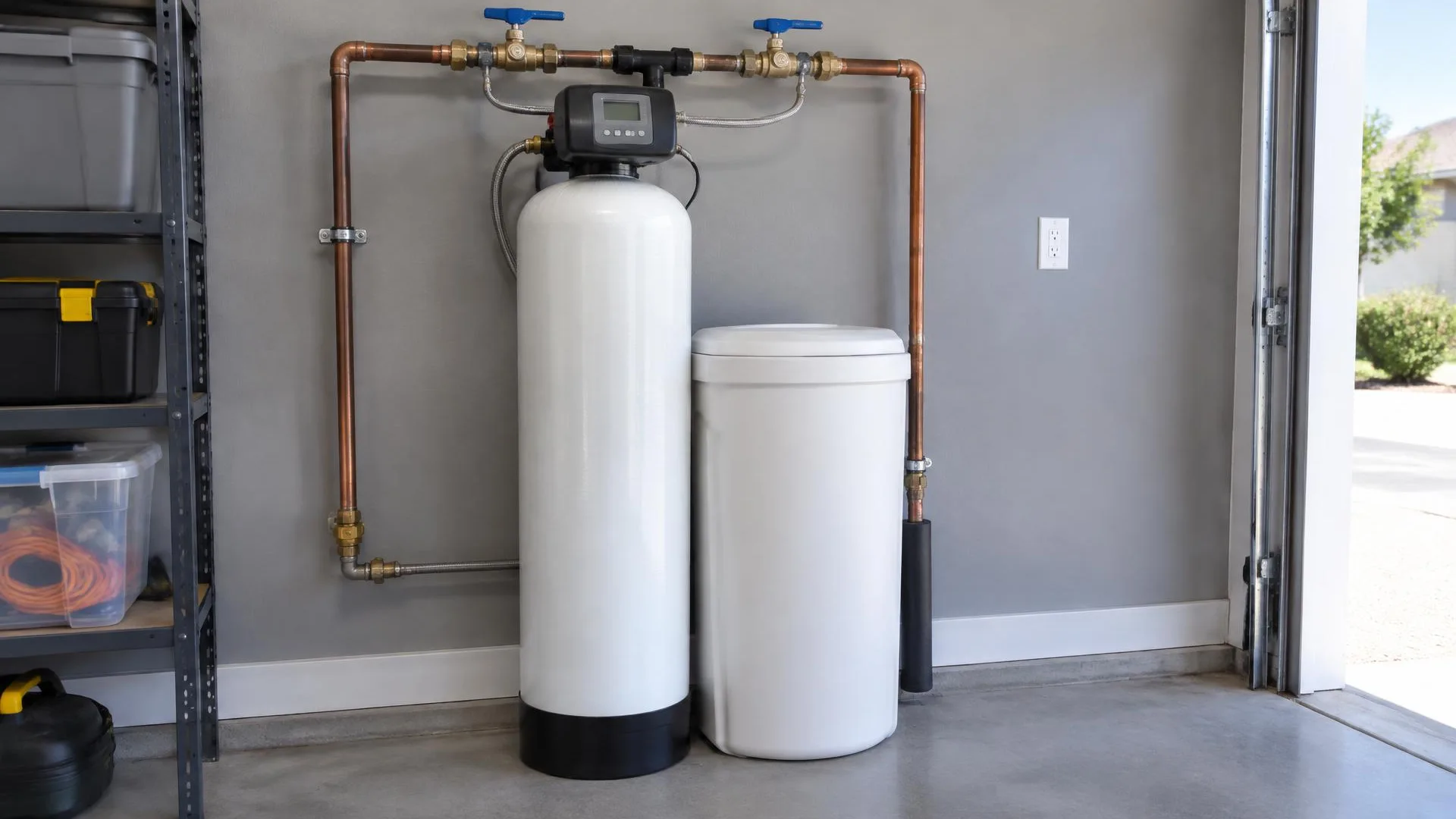
A water-conditioning plan needs a workable layout as well as appropriate equipment. All American helps Newman homeowners consider where softeners, filters, and drinking-water systems belong, how they connect, and how they will be serviced. Space that holds a tank is not automatically sufficient for installation. Valve access, cartridge clearance, drain requirements, and the route of treated water should be reviewed before the final arrangement is chosen.
- Incoming water route review
- Treatment stage placement
- Bypass access planning
- Drain configuration discussion
What we handle
Design for Service, Routing, and Equipment Requirements
The layout should explain what water enters each stage, which fixtures receive treatment, and how the equipment can be maintained. Treatment order is not a universal diagram; it depends on the identified water characteristics, selected products, and requirements of the complete installation.
Since 2001
Serving the Central Valley
- 01Incoming water route review
- 02Treatment stage placement
- 03Bypass access planning
- 04Drain configuration discussion
- 05Service clearance assessment
- 06RO connection coordination
Begin with the incoming water route and the treatment goals. A whole-home filter or softener may serve a different plumbing path from an under-sink RO system. Identify any fixtures intended to remain outside a particular treatment stage rather than assuming every branch is included. Existing plumbing and access conditions influence the options, so the proposed layout should be reviewed against the actual installation rather than a generic product illustration.
All American installs water softeners, whole-home filtration, and reverse osmosis systems with appropriate connection planning. Depending on the equipment, the project may require bypass access, drainage, electrical supply, or space for a brine tank and consumables. Requirements vary by product. Any drain connection must be arranged appropriately; a convenient nearby pipe should not be assumed suitable without review of the applicable installation details.
Measure available space and note doors, shelves, vehicles, or stored items that could block maintenance. Filters need clearance for service, and control heads and valves should remain reachable. Ask who handles any work outside the defined plumbing scope and when it must occur. Keep the final equipment information and operating layout accessible. A practical installation lets the owner understand the water path and service needs without having to move equipment or improvise around permanent obstructions.
Layout Constraints to Identify Early
Installation problems often begin with space or routing assumptions. Share these constraints before equipment is selected so treatment purpose, utility requirements, maintenance clearance, and the water path can be considered as one coordinated layout.
- Limited overhead filter clearance
- No identified drain connection
- Stored items blocking valves
- Unclear treated-water branches
- Several proposed treatment stages
- Existing equipment in a tight location
Plan a Serviceable Newman Treatment Layout
Provide photos of the proposed location and information about your treatment goals to All American. A layout discussion can clarify connections, access, and equipment requirements before the final system arrangement is chosen.
Water Conditioning questions
Frequently Asked Questions
No. The sequence depends on the water characteristics, each stage's purpose, and the selected equipment instructions. Ask why the proposed order fits the installation instead of relying on a diagram intended for a different treatment combination.
Service tasks may require room to remove housings, replace cartridges, or reach controls. Equipment that fits physically can still be impractical to maintain. Review the manufacturer's service requirements rather than measuring only the installed unit's outside dimensions.
No. The connection needs to suit the equipment and applicable plumbing requirements, including appropriate protection against improper cross-connections. Identify the intended drain arrangement during planning rather than treating proximity as proof that the connection is suitable.
That depends on the actual piping and where the equipment connects. Some branches may be upstream or otherwise separate. Clarify which fixtures receive each treatment stage so the phrase whole-home does not conceal an unverified routing assumption.
Yes, when the selected equipment requires power. The location must also work for water connections, drains, access, and the product's environmental requirements. Confirm who handles any electrical work rather than assuming it is included in the plumbing scope.
You should know the purpose of each stage, the normal water path, relevant isolation or bypass controls, and the space needed for maintenance. Keep product information available so future service does not depend on reconstructing the installation from memory.