
Newman
Understand the Steps Before Installation Day
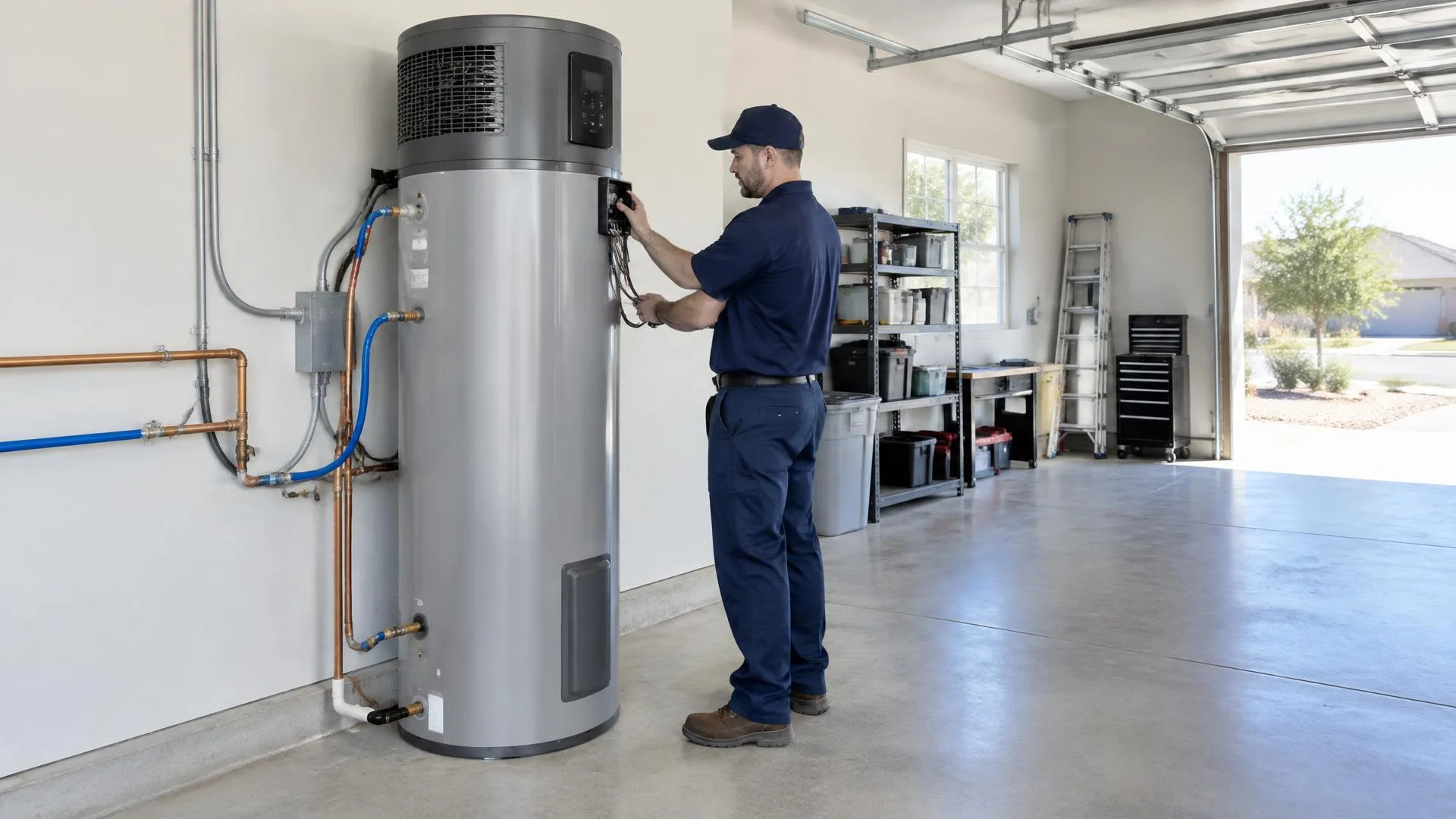
A clear installation schedule starts with knowing which tasks depend on earlier decisions. For Newman heat pump water heater projects, we connect site assessment, equipment selection, professional electrical work, permitting, delivery, and startup in an understandable sequence. Hot-water interruption deserves discussion, but its duration should not be promised before the scope is known. Early planning helps identify unresolved requirements and household coordination needs without assuming every replacement can be completed through the same set of steps.
- Dependency review
- Trade scheduling
- Permit coordination
- Delivery access
What we handle
Schedule Around Real Dependencies
The installation date is only one milestone. Some projects need additional evaluation or preparatory work before the tank can be connected. We explain those dependencies so equipment orders, trade visits, access arrangements, and required inspections can be coordinated around the actual project rather than an assumed standard replacement.
Since 2001
Serving the Central Valley
- 01Dependency review
- 02Trade scheduling
- 03Permit coordination
- 04Delivery access
- 05Interruption planning
- 06Startup handoff
Assessment comes first because location and connection findings can change the scope. A heat pump water heater needs suitable air volume, condensate disposal, manufacturer clearances, plumbing compatibility, and service access. Qualified professionals also evaluate electrical supply and capacity. Selecting equipment before those questions are addressed can leave unresolved work in the schedule. If the preferred location requires modification, that dependency should be made explicit before delivery or removal of the existing tank is arranged.
The next stage establishes responsibilities and readiness. Confirm who handles electrical work, plumbing changes, permits, inspections, equipment delivery, and removal. Access routes should be available, and planned cabinetry or other construction should be coordinated with installation needs. Availability and approval processes can influence timing, so a preliminary schedule should identify assumptions rather than present every date as guaranteed. Changes in equipment or location may require the sequence to be reviewed again.
Before work begins, discuss expected hot-water interruption and any household needs that affect scheduling. Temporary arrangements, where considered, require professional evaluation rather than improvised connections. Completion should include appropriate startup, verification, and user instruction, not merely setting the tank in place. Ask how inspection milestones and follow-up responsibilities are handled. A practical schedule explains what must happen before service resumes and which remaining administrative or service steps may follow the physical installation.
Scheduling Questions to Ask
Discuss sequencing when electrical work is separate, household routines make interruption difficult, or a proposed installation date is offered before location requirements, equipment availability, access, and inspection responsibilities are clearly established.
- Separate trades
- Limited availability
- Access constraints
- Permit questions
- Urgent replacement
- Remodel overlap
Build a Clear Installation Sequence
Schedule a Newman assessment to establish the work before discussing firm installation arrangements. We can review dependencies, household coordination, and interruption expectations without promising a standard timeline for every replacement project.
Heat Pump Water Heaters questions
Frequently Asked Questions
A preliminary discussion is possible, but reliable scheduling depends on the scope. Electrical work, location changes, equipment availability, permits, and access can affect sequencing. Confirm which assumptions support any proposed date and what could require it to change.
That should be discussed after the installation requirements are understood. Connection changes, preparatory work, startup, and other project details can affect interruption. Avoid relying on a universal duration or assuming every replacement follows an identical same-day sequence.
The appropriate order depends on the project, but electrical readiness must be coordinated with installation. Qualified professionals should establish requirements and responsibilities early. The schedule should explain which tasks must be completed before the water heater can operate.
Follow the contractor's access instructions and discuss parking, delivery routes, pets, and household availability where relevant. Do not disconnect utilities or move electrical components yourself. Preparation should support safe professional work without asking you to perform technical tasks.
They can. Required permits and inspections should be identified with clear responsibility for scheduling and follow-up. The project plan should explain relevant milestones rather than assume that physical installation alone completes every approval or documentation obligation.
Contact the service provider to reassess the situation and available options. An urgent replacement may change equipment or scheduling choices, but installation requirements still apply. Temporary or revised arrangements should be professionally evaluated rather than improvised by the homeowner.