
Newman
When Discomfort Spreads
Several rooms becoming uncomfortable at once can indicate a broader cooling problem, but the pattern still needs careful evaluation. All American helps Newman homeowners report multiroom cooling loss and arrange emergency service assessment. Tell us whether the whole home changed suddenly or certain spaces have been worsening over time. Include any water, ice, odor, or unusual sound. If vulnerable occupants cannot stay comfortable, arrange a cooler safe location while equipment service is being discussed.
- System assessment
- Room comparison
- Airflow diagnosis
- Duct review
What we handle
Map the Affected Spaces
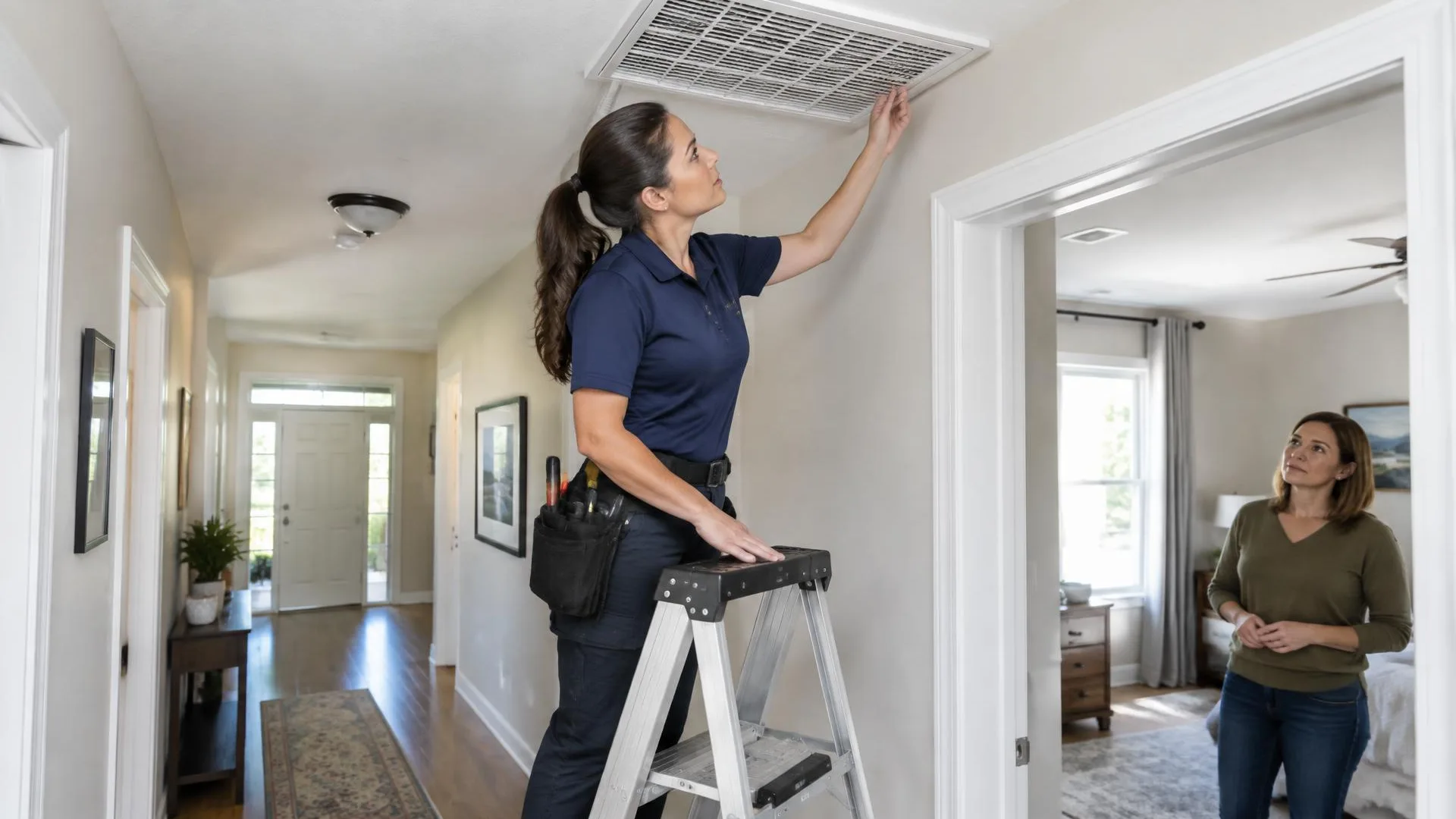
The distinction between a system-wide failure and a distribution problem matters. A hallway thermostat may not describe occupied bedrooms accurately, while a failed cooling component can affect every branch. Comparing the rooms and the timing helps establish the right starting point for diagnosis.
Since 2001
Serving the Central Valley
- 01System assessment
- 02Room comparison
- 03Airflow diagnosis
- 04Duct review
- 05Cooling repairs
- 06Comfort follow-up
Create a simple picture of the complaint without extensive testing. Note which rooms are affected, whether doors change the pattern, and whether air still comes from their registers. A sudden whole-home change differs from a long-standing warm room, though both may be present at once. Do not close multiple registers to force air into the uncomfortable spaces. That can increase resistance and complicate the existing problem. Report what you normally experience rather than changing the distribution system before the visit.
The technician may evaluate cooling production, overall airflow, return pathways, and accessible duct conditions. Equipment and distribution faults can coexist, so restoring outdoor operation may not resolve every room complaint. We explain which findings account for the immediate loss and which relate to longer-term imbalance. If ice appears, switch cooling off pending advice and do not scrape the coil. Refrigerant and internal electrical checks belong with qualified personnel; room discomfort alone does not establish a need for added refrigerant or larger equipment.
Service planning should include occupant needs as well as access to the equipment. Tell the team about vulnerable people and any restrictions that affect entry, but do not assume those details create a guaranteed arrival time. Use an alternative cooler location when necessary. Seek emergency medical help for signs of heat illness instead of waiting for room temperatures to improve. After authorized work, ask how system operation was verified and which remaining room differences may require a separate airflow or load assessment.
Whole-Home or Local?
Report the extent of discomfort and whether it changed suddenly. Room comparisons help guide the visit, but occupant safety takes priority over measuring temperatures or checking every register in the home.
- Several warm rooms
- Hallway mismatch
- Weak supplies
- Sudden decline
- Door sensitivity
- Lost cooling
Describe the Rooms Affected
Tell All American where comfort has changed and who is affected. Ask about service options while arranging a cooler safe place when needed, rather than relying on an unconfirmed repair timetable.
Emergency AC Repair questions
Frequently Asked Questions
No. Controls, airflow, electrical issues, and other equipment faults can affect the whole home. A system-wide complaint establishes the scope of discomfort, not a specific failed part. Testing should determine why useful cooling has declined.
Avoid closing multiple registers as an emergency balancing strategy. It can increase resistance without reliably improving occupied spaces. Describe the normal distribution pattern and let the technician determine whether airflow, ducts, or equipment condition needs attention.
The control may represent a different part of the home, or room airflow and loads may differ. Sensor placement and distribution both deserve review. A lower setting might cool other rooms more without correcting the underlying bedroom problem.
It depends on whether the same fault causes both concerns. Immediate equipment repair may restore cooling while leaving a separate duct or room-load issue. Ask which symptoms the quoted work is expected to address and what may require further assessment.
Move them to a cooler safe location when possible and seek emergency medical help for signs of heat illness. Do not wait for HVAC service to respond to a health concern, even if an appointment has already been requested.
Note whether the original affected rooms improve during normal use and whether the system maintains the selected setting. Record remaining differences without repeatedly changing controls. Share persistent symptoms so unresolved distribution or equipment issues can be evaluated appropriately.