
Newman
Keep Cooling Water Contained
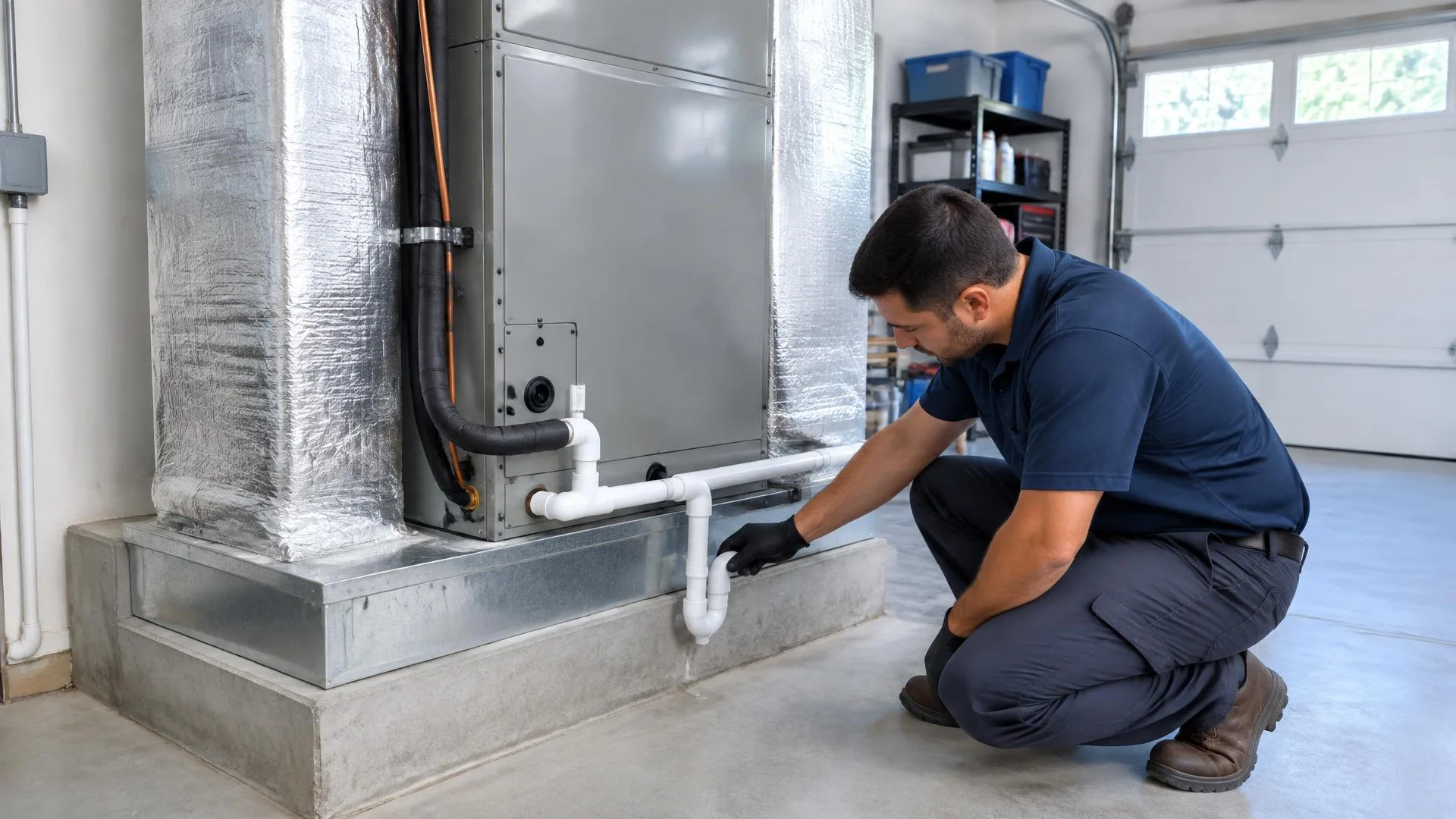
Water near an air conditioner deserves attention even when the equipment still seems to cool. All American helps Newman homeowners distinguish normal condensate production from drainage problems, thawing ice, and other sources of moisture. We look at how water is collected and routed, whether protective controls are involved, and what operating conditions may be contributing. The goal is to address the cause rather than repeatedly wiping the floor or restarting a stopped system.
- Leak tracing
- Drain inspection
- Pan assessment
- Pump diagnosis
What we handle
Trace the Water Source
A wet cabinet or ceiling stain does not identify the failed component by itself. Drain restrictions, pan problems, pump faults, and coil icing can produce overlapping symptoms. Inspection should establish where water originates and whether electrical or building-damage risks require immediate precautions.
Since 2001
Serving the Central Valley
- 01Leak tracing
- 02Drain inspection
- 03Pan assessment
- 04Pump diagnosis
- 05Safety controls
- 06Icing evaluation
Start by noting where moisture appears without opening equipment or entering a wet electrical area. Water beneath an indoor unit may be associated with the drain assembly, but nearby plumbing or another source can also be responsible. Tell the technician whether the leak occurs only during cooling, after shutdown, or continuously. That timeline helps guide inspection. If safe, protect belongings from further exposure, but do not climb into inaccessible areas or touch switches and wiring that may be wet.
A professional evaluation can review accessible drain routing, collection pans, pumps where installed, and relevant protective controls. Ice on the coil may create additional water as it melts, so drainage and cooling performance sometimes need investigation together. Switch cooling off if ice is present and seek advice; do not scrape the coil. Clearing a drain without considering why icing or overflow occurred may leave an important fault unresolved. Protective switches should not be bypassed to keep the air conditioner running.
The repair plan should explain whether the problem is a restriction, damaged component, installation limitation, or separate operating fault. Ask what can be corrected within the quoted work and whether inaccessible areas require another trade or additional access. After authorized repairs, suitable checks help confirm that water follows its intended path. Ongoing maintenance can include appropriate drain inspection, but homeowners should avoid pouring chemicals into an unfamiliar assembly. A clear drainage plan protects both cooling operation and the surrounding space without promising that future blockages are impossible.
Moisture Warnings
Take note of where and when water appears, especially if cooling stops at the same time. Keep away from wet electrical components and report spreading moisture or inaccessible leakage promptly.
- Wet cabinet
- Ceiling stain
- Full pan
- Pump noise
- Musty moisture
- Cooling shutdown
Discuss an AC Water Concern
Describe the water location, whether cooling is operating, and any visible ice. All American can discuss service availability and appropriate precautions while arranging an evaluation of the source and drainage system.
Air Conditioning questions
Frequently Asked Questions
Cooling commonly produces condensate, but that water should be collected and directed through the intended drainage system. Water escaping into occupied or building areas is not something to dismiss simply because the unit continues to cool.
Switch cooling off if leakage is continuing or the source is unclear, and ask for guidance. Stay away from wet electrical areas. If safe operation of a control is uncertain, do not approach it merely to stop the equipment.
Some installations include a protective control that stops operation when water accumulates. That shutdown may indicate the safeguard is responding to a problem. Do not bypass it; the drainage condition and control operation need professional evaluation.
Residual condensate, a drainage problem, or melting ice can cause water after shutdown. Timing provides a clue but does not establish the source. Mention any prior weak airflow or visible ice so the evaluation considers related operating faults.
Do not use household drain chemicals in an unfamiliar AC drain assembly. Materials, pumps, and routing vary, and unsuitable products can create problems. Follow specific equipment guidance or ask the service team about appropriate maintenance for that installation.
Cooling repair generally addresses the equipment-related source within its stated scope. Drying, ceiling repair, or other building restoration may require separate assessment. Clarify what is included, especially when water has entered concealed areas or affected nearby materials.