
Modesto
Control Around the Rooms You Use
The hallway temperature may not describe the room where you work, sleep, or spend the afternoon. A compatible thermostat with room-sensing options can make those differences easier to understand, but it cannot independently change airflow to every room. For Modesto households, we start with the comfort complaint, assess the HVAC controls, and discuss whether sensing features offer useful flexibility or whether the underlying issue needs a different kind of attention.
- Comfort pattern review
- Sensor compatibility checks
- Placement discussion
- Priority schedule setup
What we handle
Separate Measurement From Air Delivery
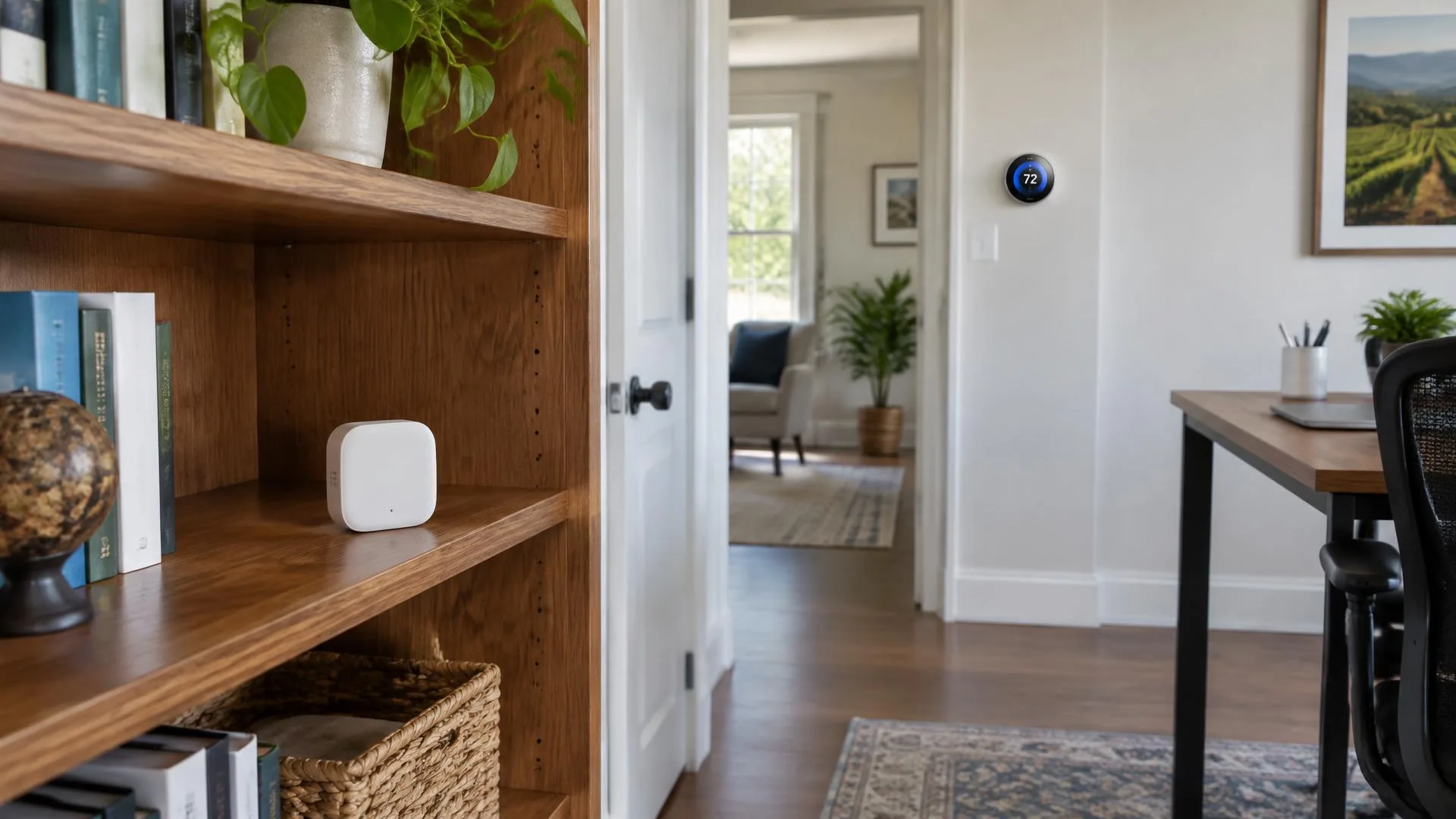
Room sensors can influence how certain thermostats evaluate comfort, depending on the product. Their usefulness depends on placement, supported settings, and the existing HVAC arrangement. They should not be confused with a professionally designed zoning system or a repair for restricted airflow.
Since 2001
Serving the Central Valley
- 01Comfort pattern review
- 02Sensor compatibility checks
- 03Placement discussion
- 04Priority schedule setup
- 05Thermostat installation
- 06App guidance
Begin with a simple description of the problem: which room feels different, when it happens, and whether doors are usually open or closed. That information is more helpful than choosing a sensor package immediately. We check whether the proposed thermostat supports room sensors and how its control logic uses them. Some products prioritize a selected sensor, while others combine readings or follow a schedule; the exact behavior matters.
Sensor placement can change the information a thermostat receives. Direct sunlight, nearby electronics, drafts, and unusual mounting locations may produce readings that do not represent normal occupied conditions. We discuss sensible placement and compatible features without suggesting that a sensor can overcome every temperature imbalance. If the system serves the entire house as one zone, a call based on one room still affects the broader served area.
The practical setup should reflect competing needs. Prioritizing a bedroom at night may make sense, while a daytime workspace could matter during working hours. We help translate those preferences into supported schedules and explain how to change them. Persistent hot or cold rooms may still need an HVAC assessment. The thermostat is one part of comfort management, not evidence that ductwork, insulation, or equipment performance is satisfactory.
When Room Information Could Help
Room sensing is worth discussing when the thermostat location does not reflect occupied spaces. Describe the timing and severity of differences so the recommendation addresses the complaint rather than simply adding devices.
- Warm home office
- Cooler sleeping area
- Hallway-only temperature reading
- Changing room occupancy
- Conflicting comfort preferences
- Interest in remote sensors
Describe Your Uneven Rooms
Tell us which Modesto rooms feel uncomfortable and when you use them. We can discuss compatible sensing features, thermostat setup, and whether the concern suggests a separate heating or cooling assessment.
Smart Thermostats questions
Frequently Asked Questions
Not in a typical single-zone system. A sensor may influence when the thermostat calls for cooling, but it does not direct air by itself. Independent room control requires an appropriate system arrangement beyond simply adding a sensor.
No. Sensor support is product-specific, and compatible accessories may have different capabilities. We confirm the thermostat, sensor, and equipment relationship before recommending a setup. A wireless accessory from another platform may not work.
It should represent the occupied area without unusual heat, sun, or draft exposure. Exact placement follows the product's instructions and room conditions. We discuss practical locations rather than treating any convenient shelf as equally useful.
Yes. In a shared zone, running equipment to satisfy one room can make another area warmer or cooler than preferred. Sensor schedules should acknowledge that tradeoff, especially where household members use different rooms at the same time.
Not necessarily. Separate locations can genuinely have different temperatures, and devices may update or display readings differently. A large or persistent discrepancy deserves review, but readings should be interpreted with placement and equipment behavior in mind.
It is usually better to confirm compatibility and the comfort objective first. That avoids purchasing accessories that do not fit the chosen thermostat or address the actual issue. We can also assess a customer-supplied compatible thermostat.