
Merced
Separate Hardness Treatment From Filtration Goals
Softening and filtration are often grouped together, yet they address different water characteristics. All American helps Merced homeowners distinguish hardness treatment from filters selected for sediment, taste, odor, or other defined targets. Some households may consider more than one treatment stage, while others need a narrower solution. The useful starting point is what testing and source information show, followed by where treated water is needed and what maintenance the household can support.
- Hardness result review
- Ion-exchange softener planning
- Sediment filtration discussion
- Taste and odor filter selection
What we handle
Give Each Treatment Stage a Specific Job
A softener is not simply another name for a whole-home filter. Understanding that distinction helps avoid choosing equipment with an unrelated purpose. If several treatment goals exist, each stage should be justified and arranged according to the water characteristics and product requirements.
Since 2001
Serving the Central Valley
- 01Hardness result review
- 02Ion-exchange softener planning
- 03Sediment filtration discussion
- 04Taste and odor filter selection
- 05Whole-home treatment layout
- 06Point-of-use RO comparison
Traditional ion-exchange softeners remove hardness minerals through a process that differs from ordinary sediment or carbon filtration. A sediment cartridge traps particles within its rated capability, while carbon media may address certain taste and odor concerns depending on the product. None of those descriptions establishes that every unwanted substance is removed. Start by identifying the target and checking the selected system's documented reduction claims rather than relying on broad treatment terminology.
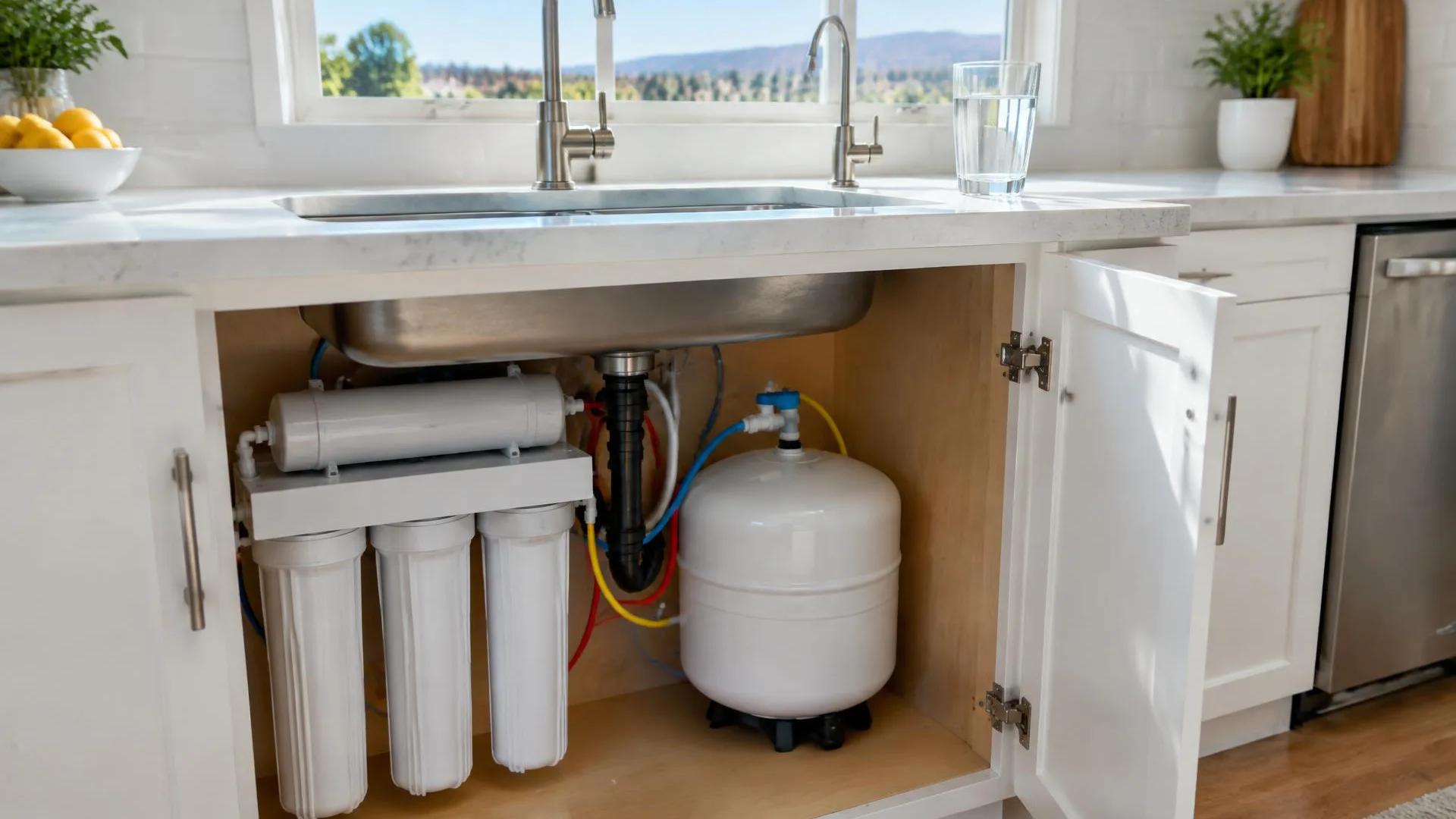
All American offers water softeners, whole-home filtration, and under-sink reverse osmosis installation and service. These systems can serve different outlets and purposes. Whole-home placement treats water along the connected distribution path, while a dedicated drinking-water system serves its designated tap. Discuss whether one concern affects bathing, appliances, drinking water, or all three. The answer informs the scope without assuming that every household requires the largest possible combination.
Gather any hardness results, provider information, and existing equipment details before comparing options. Ask how each proposed stage will be maintained and how its performance will be assessed. If several units are proposed, review their order, service access, pressure requirements, and applicable drain connections. An understandable layout should let you explain what each component does and why it is present. If that purpose remains vague, resolve it before selecting the equipment.
Different Concerns, Different Treatment Questions
Visible residue, taste, and particles should not be treated as interchangeable evidence. Describe each concern separately so testing and equipment selection can focus on the characteristic that needs to be addressed at your home.
- Deposits on fixtures
- Particles caught in aerators
- Taste concerns at drinking taps
- Unknown filter media type
- Softener expected to remove everything
- Multiple treatment goals under discussion
Compare Merced Water Treatment Options Clearly
Tell All American which water characteristics you want to address and where you need treatment. A focused comparison can separate softening, filtration, and RO without assuming every household needs the same equipment.
Water Conditioning questions
Frequently Asked Questions
A sediment filter is designed to capture particles, not remove dissolved hardness minerals in the way an ion-exchange softener does. Its usefulness depends on the particle concern and its rating. Confirm hardness separately rather than assuming filtration provides softening.
No. Softening addresses hardness through a specific process and should not be treated as comprehensive purification. Other treatment goals require their own evaluation, relevant testing, and equipment with appropriate documented claims for the identified target.
They can serve different purposes in a treatment plan, but the combination and order should be justified by the water characteristics and equipment instructions. Adding stages without a defined goal can create unnecessary maintenance and pressure considerations.
Whole-home equipment treats the connected incoming water path, while a point-of-use system serves a particular outlet. Their appropriate functions and capacities differ. Choose based on where the identified concern matters rather than assuming wider coverage always means better treatment.
Mention that limited pattern before selecting whole-home equipment. The fixture, local plumbing, or an existing point-of-use filter may be relevant. Compare other cold-water outlets and review the treatment path so the scope matches the actual observation.
Each component should have a named purpose, relevant performance information, and a maintenance requirement you can identify. The proposal should also explain layout and service access. More components are not automatically more appropriate for your household.