
Merced
Repeated Drain Stoppages in Merced Need a Different Approach
A drain that clears and then stops again is telling you something. Repeated stoppages in Merced homes can come from buildup, a low spot, a rough joint, or an obstruction that was never fully removed. Our drain and sewer service treats the second or third clog as evidence, looking at timing, fixtures, and pipe behavior so the plan goes beyond reopening the line for a short time.
- Repeat clog investigation
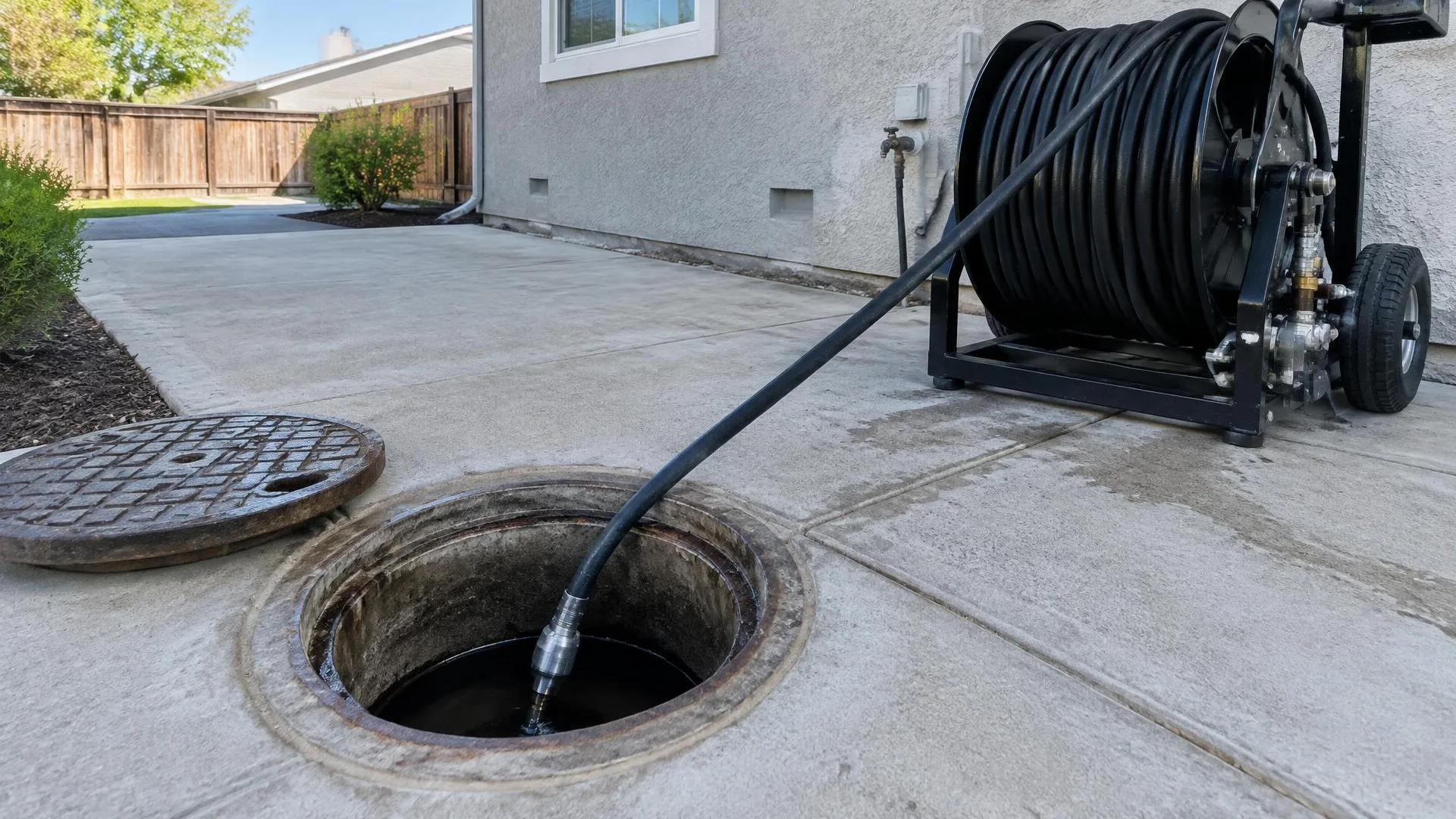
- Snaking and cable clearing
- Residue removal from pipe walls
- Review of past clearing attempts
What we handle
Why a Cleared Drain Keeps Coming Back
Recurring clogs rarely happen without a reason. We study how quickly the problem returns and which fixtures are involved, since those details guide whether cleaning, inspection, or repair makes the most sense.
Since 2001
Serving the Central Valley
- 01Repeat clog investigation
- 02Snaking and cable clearing
- 03Residue removal from pipe walls
- 04Review of past clearing attempts
- 05Fixture and line pattern analysis
- 06Next-step recommendations
How quickly a drain slows again can reveal more than the fact that it clogged. A return within days may mean the original obstruction remains partly in place or that cleaning opened only a narrow passage through accumulated material. A longer interval can reflect gradual buildup, recurring debris, or a pipe condition that repeatedly catches waste. None of those explanations should be assumed from timing alone. For a Merced service visit, useful details include the date of the last clearing, how long drainage improved, and whether normal use ever fully returned. Receipts or notes from earlier work can also help distinguish a genuinely recurring problem from several unrelated stoppages in different parts of the property.
The location of each recurrence helps determine whether attention should stay near one fixture or move farther downstream. A kitchen sink that repeatedly slows while other fixtures remain normal presents a different pattern from a bathroom group backing up together. Alternating problems in several drains may indicate that they share a restricted section, although the layout needs to support that conclusion. We ask which fixture reacts first and whether another fixture's use triggers the symptom. This is information to report, not a reason to deliberately recreate an overflow. During an active backup, limiting water use is safer than repeatedly running fixtures to see whether the drain has recovered on its own without intervention or further inspection.
A useful response to repeat clogs builds on what previous work accomplished instead of simply repeating it without explanation. We review available history, assess the current restriction, and choose cleaning equipment suited to the likely material and pipe condition. If the line reopens, the next question is whether further inspection would change the plan. A camera may reveal residue, a joint issue, or another condition that routine clearing cannot correct. It may also show that repair is not supported by the visible evidence. We explain those distinctions and discuss practical prevention where appropriate. The goal is a better-supported decision about maintenance or repair, not a promise that any drain can be made permanently clog-free.
Clues That a Clog Is More Than a One-Time Event
When symptoms return, the pattern is often more useful than the latest blockage. These signs suggest the underlying cause may still be present in the pipe.
- Drain slows again soon after clearing
- Same fixture fails repeatedly
- Water drains in short bursts
- Standing water lingers after use
- Gurgling returns after service
- Different drains take turns slowing
Stop the Repeat Clog Cycle in Merced
Share what has been tried and how often the drain stops. We will look for the pattern behind it and recommend a next step that fits what we find.
Drain & Sewer questions
Frequently Asked Questions
The blockage may not have been fully removed, residue may remain on the pipe wall, or the pipe itself may be restricting flow. The timing of the return helps us tell which is more likely.
We advise against relying on it. Chemicals can sit in a stopped pipe, irritate skin, and complicate later work. Tell the technician if you used any product so tools and handling can be chosen safely.
There is no fixed number, but a second return is a good reason to investigate. Continued reopening without learning the cause can cost time and leave a hidden problem in place.
Often, yes. A camera shows what the pipe looks like inside, such as buildup, offsets, or damage, and replaces guessing with evidence when stoppages keep coming back.
Not always. Buildup and habits can produce repeat clogs. Damage is one possibility, and we try to confirm or rule it out before suggesting anything larger than cleaning.
Keep grease, wipes, and food scraps out of drains, and note when symptoms return. If water backs up or sewage appears, avoid contact and call rather than trying to force the line open.