
Merced
Bring Uneven Rooms Into Focus
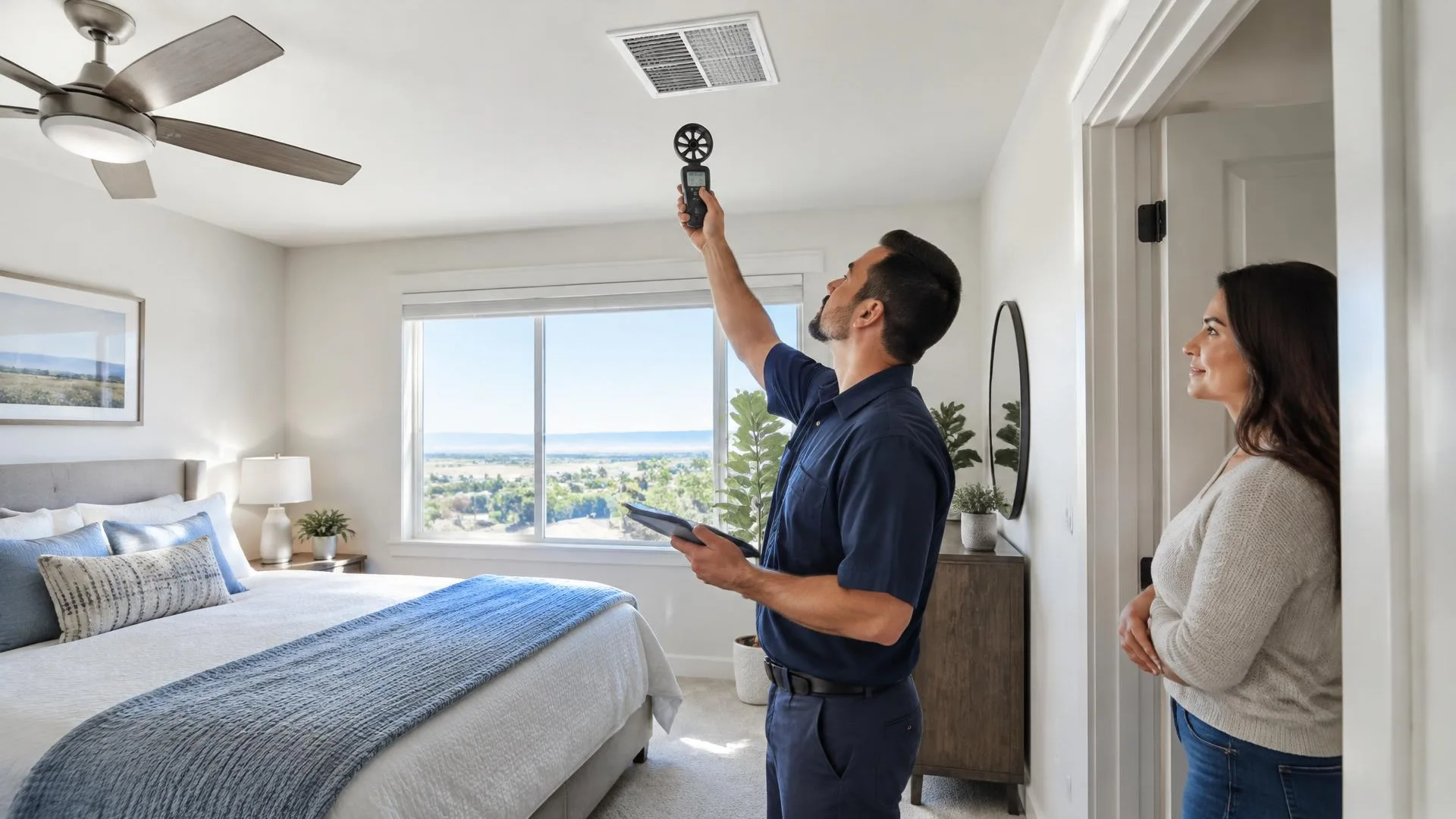
When one room feels comfortable and another remains warm, changing the thermostat can make the rest of the home uncomfortable without solving the problem. All American helps Merced homeowners investigate these differences through equipment, distribution, and control checks. We consider where cooling reaches the home, how air returns, and what each space demands. The goal is a recommendation that addresses the uneven room rather than simply lowering the temperature setting again.
- Room assessment
- Duct inspection
- Return review
- Control checks
What we handle
Compare Rooms, Not Guesses
Room imbalance can come from several interacting conditions. A blocked supply, limited return pathway, changing room use, or misplaced temperature sensor may produce similar complaints. Comparing those possibilities helps identify whether the answer belongs at the equipment, ductwork, controls, or individual room.
Since 2001
Serving the Central Valley
- 01Room assessment
- 02Duct inspection
- 03Return review
- 04Control checks
- 05Ductless options
- 06Repair planning
A useful evaluation starts with a room comparison. Note which spaces are uncomfortable, when the difference is most noticeable, and whether doors are open or closed. Furniture covering a register can matter, but persistent imbalance often deserves a closer look. We assess accessible supply and return arrangements and review how the thermostat represents the occupied areas. A comfortable hallway reading does not prove that every room receives enough conditioned air or that the control location reflects the spaces you actually use.
Distribution changes should follow an understanding of the whole system. Closing several registers to force air elsewhere can increase resistance and create new problems. Depending on the findings, recommendations may include duct repair, return improvements, blower corrections, or suitable control changes. Where a room has a substantially different cooling requirement, a ductless option may be worth comparing. The decision should account for installation access, drainage, electrical needs, and maintenance, not only the appeal of having a separate remote control.
Before authorizing work, ask how the proposed change addresses the specific room pattern. A whole-system replacement may be appropriate for failing equipment, but it should not be presented as an automatic cure for distribution defects. We explain the expected benefit and any remaining limitations. After repairs or adjustments, review comfort across several normal operating periods. That follow-through helps distinguish a real improvement from a brief temperature change caused by a different thermostat setting or a temporarily unoccupied room.
Compare These Patterns
Track the difference between comfortable and uncomfortable rooms, especially when doors close or occupancy changes. These details provide useful context without requiring you to adjust equipment or enter inaccessible spaces.
- Warm bedroom
- Cold hallway
- Door sensitivity
- Weak branch
- Sensor mismatch
- Persistent imbalance
Discuss Uneven Cooling
Tell All American which rooms differ and what you have already tried. Request an evaluation that connects the comfort complaint with distribution, controls, and equipment condition before choosing corrective work.
Air Conditioning questions
Frequently Asked Questions
Small differences can occur as room use and heat gain change. A persistent or uncomfortable difference deserves investigation. The important question is whether the system distributes cooling appropriately for the spaces and conditions it serves.
Closing multiple vents can increase system resistance rather than reliably redirect useful cooling. Avoid extensive vent adjustments without guidance. A technician can evaluate whether balancing, duct repair, or return improvements would better address the actual distribution problem.
A compatible control or remote sensor may improve how temperatures are represented, but it cannot repair damaged ducts or create missing airflow. Controls should be evaluated alongside the physical cooling system before assuming a thermostat purchase will help.
A separate system may suit a space with distinct operating needs or difficult duct access. Its value depends on the room load, installation requirements, drainage, electrical capacity, and how the rest of the home will continue to be cooled.
Only if capacity is truly part of the problem and distribution is adequate. More capacity can leave a weak branch unchanged. Room-level assessment and load calculations provide stronger evidence than choosing equipment around the most uncomfortable space alone.
Record affected rooms, approximate temperature differences, door positions, and times when discomfort occurs. Mention remodeling or changes in room use. These observations help guide testing, though the technician still needs to verify the cause through inspection and measurements.