
Madera
Keep Treatment Maintenance Specific to Your Equipment
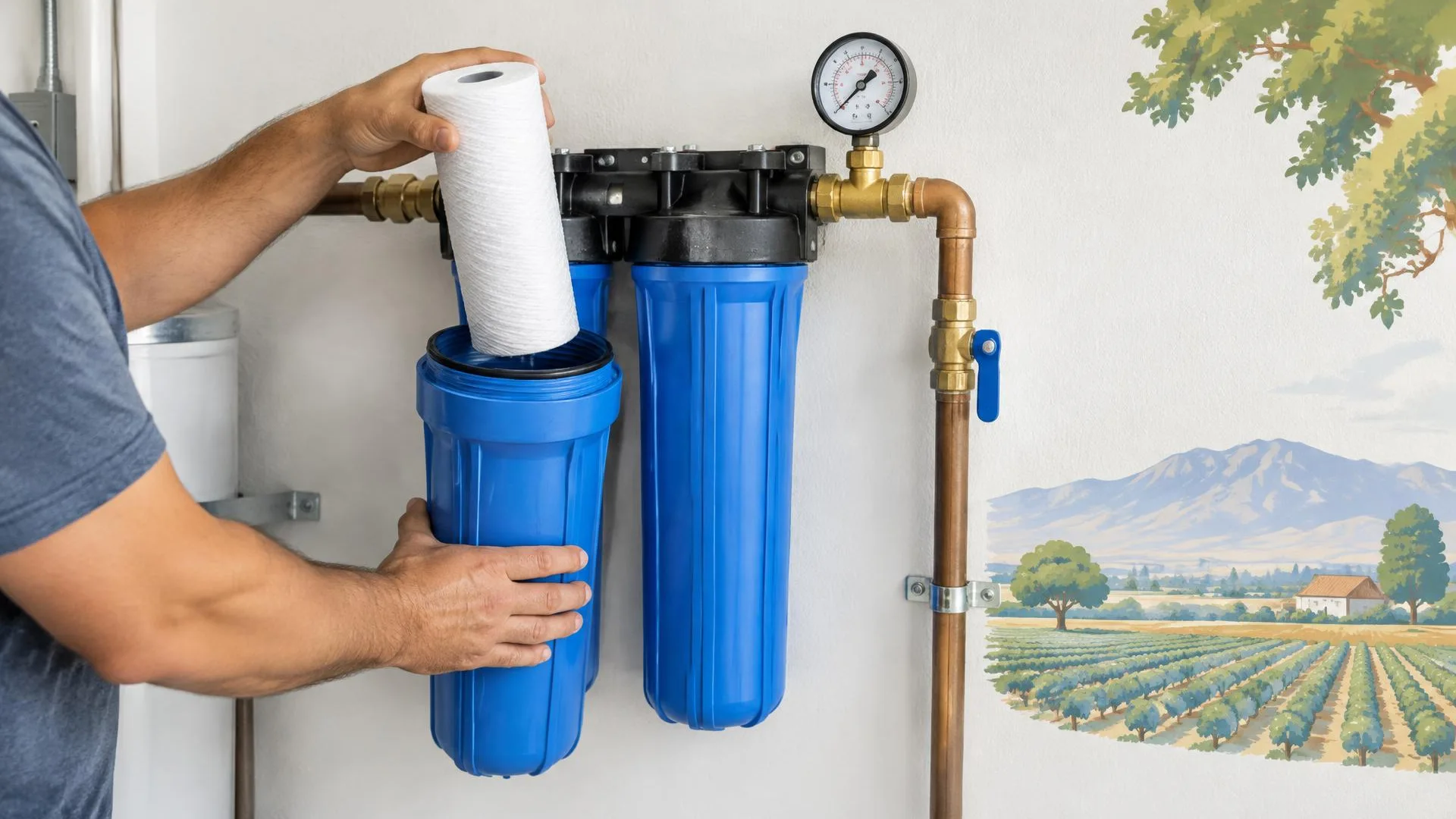
Water-conditioning equipment needs a maintenance plan that reflects what is actually installed. All American helps Madera homeowners organize service for softeners, whole-home filtration, and reverse osmosis, including systems with incomplete records. Salt checks, cartridge changes, and membrane care are different tasks rather than one universal routine. Knowing each component's purpose, model, and service requirements helps owners recognize when ordinary upkeep is due and when a change in performance deserves troubleshooting.
- Treatment equipment inventory
- Filter replacement planning
- Softener operating review
- RO maintenance coordination
What we handle
Turn Product Instructions Into a Usable Service Record
A practical maintenance plan identifies the equipment, the task, and the basis for its timing. Manufacturer guidance, water conditions, consumption, and relevant performance checks all play a role. Keeping that information together is more useful than relying on a generic annual reminder for every component.
Since 2001
Serving the Central Valley
- 01Treatment equipment inventory
- 02Filter replacement planning
- 03Softener operating review
- 04RO maintenance coordination
- 05Service history documentation
- 06Performance check discussion
Make an inventory of the treatment stages and record their model numbers, installation information, and known service history. A softener may require attention to salt and regeneration operation, while filters and RO components have their own replacement and care instructions. Do not assume that one service date covers everything. Different parts can have different requirements even when they are installed together in the same treatment plan.
All American provides ongoing filter service, softener troubleshooting, and other water-conditioning maintenance, including resin-related service where appropriate. The visit should reflect the equipment's condition and purpose rather than a fixed list of unnecessary replacements. Relevant testing or operating checks can help evaluate performance, but no single reading establishes every aspect of treatment. Ask what each check tells you and which limitations remain.
Keep the service area clear and note changes in flow, taste, control messages, or treated-water hardness before the appointment. Avoid opening pressurized housings or making internal controller changes as routine owner maintenance unless the product instructions and your competence support the task. After service, retain the parts used, dates, and any revised instructions in a simple log. That record creates continuity when equipment ages, household demand changes, or a future technician needs to understand what has already been done.
Maintenance Gaps Worth Addressing
Routine service becomes harder when information disappears over time. Review these gaps and changing symptoms so maintenance can be tied to the correct equipment, current operating conditions, and the function each treatment stage serves.
- Missing equipment manuals
- Unknown filter service dates
- No record of prior adjustments
- Salt checks handled inconsistently
- RO care requirements unclear
- Performance changes between visits
Build Your Madera Water Treatment Service Plan
Share your equipment labels, known service dates, and current concerns with All American. A system-specific maintenance discussion can organize upcoming tasks and distinguish ordinary upkeep from conditions that need a closer diagnostic review.
Water Conditioning questions
Frequently Asked Questions
A combined record is helpful, but the tasks and timing may differ. Each component has its own operating purpose and product guidance. Organize them together without assuming every cartridge, membrane, or softener check is due at the same interval.
Start with model identification and an assessment of the current arrangement and condition. Share whatever history is available without guessing dates. A documented starting point can support future maintenance even when earlier records cannot be recovered.
No. Taste does not reveal every aspect of filter capacity, softener operation, or RO performance. Follow equipment guidance and appropriate checks for the intended function. Some service needs may exist without an obvious change at the tap.
Note changes in delivery flow, control messages, visible leakage, salt use, and the water characteristics the system was installed to address. Record timing and conditions. Observations help guide service but should not be treated as a substitute for appropriate testing.
Not without considering the equipment, water conditions, and performance. Resin-related service should follow an appropriate assessment rather than an assumed universal replacement interval. Ask why the work is recommended and how it relates to the softener's condition.
Record equipment models, service dates, replacement part numbers, relevant test results, and any setting changes made during service. Add the recommended next tasks and their basis. Keep the log accessible so future work builds on reliable information.