
Madera
Choose Features Around What Comfort Means to You
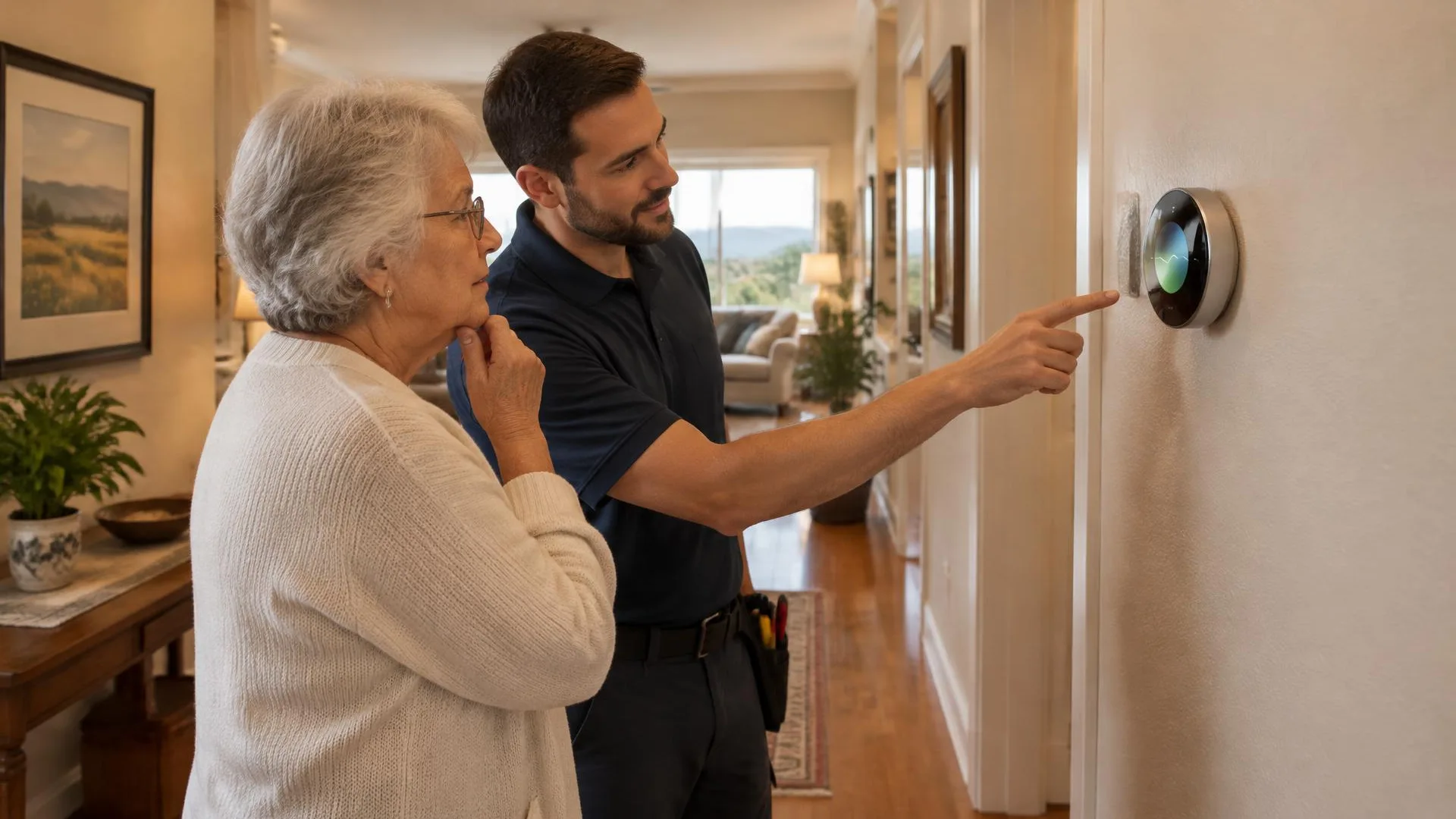
Comfort priorities differ between households. Some want steadier sleeping temperatures, others need a manageable work-from-home schedule, and some simply want fewer daily adjustments. For Madera homeowners, we begin with those priorities before discussing thermostat features. We then check the equipment, wiring, and supported controls so the upgrade fits both the HVAC system and the people using it. Technology should make your preferences easier to manage, not replace them with assumptions.
- Comfort priority discussion
- Equipment compatibility review
- Professional wiring assessment
- Suitable thermostat installation
What we handle
Define Success Before Adding Automation
A useful thermostat recommendation connects a feature to a real need. Scheduling may address changing routines, remote access may help with unexpected returns, and compatible sensing options may provide better room information. None should be presented as a universal solution to discomfort.
Since 2001
Serving the Central Valley
- 01Comfort priority discussion
- 02Equipment compatibility review
- 03Professional wiring assessment
- 04Suitable thermostat installation
- 05Practical schedule setup
- 06Selective app features
Start with the moments when comfort matters most. A household may tolerate a wider range while away but prefer a consistent sleeping environment. Another may have occupants home throughout the day. We discuss those patterns without assuming that the most aggressive setback or the most automated mode is the best choice. The selected thermostat must also support the actual heating and cooling arrangement.
Professional installation addresses the foundation beneath the preferences: compatibility, wiring, power requirements, and equipment configuration. Where suitable, our work can include C-wire upgrades, heat pump setup, and configuration for existing zoning. We explain which features the system supports and any tradeoffs associated with changing controls. A thermostat cannot add equipment capacity, repair poor airflow, or make all rooms behave identically.
After installation, a manageable schedule gives the household a baseline. App access and supported automation can then be added selectively. We explain holds and ordinary adjustments so people can respond to a different day without losing track of the overall plan. Observe how comfort changes before making repeated revisions. Energy use and bills depend on many factors, so the outcome should not be framed as a guaranteed saving.
Start With the Lived Problem
Describe the experience you want to improve rather than a feature you assume will solve it. Timing, occupancy, and room use help connect thermostat options to a realistic comfort objective for the household.
- Uncomfortable sleeping hours
- Work-from-home routine
- Too many adjustments
- Changing occupancy
- Different household preferences
- Unclear upgrade goals
Tell Us Your Comfort Priorities
Share what you want to feel different in your Madera home. We can assess suitable thermostat options and setup priorities while identifying concerns that may need attention beyond the controls themselves.
Smart Thermostats questions
Frequently Asked Questions
There is no universal choice. Equipment compatibility comes first, followed by usability and the features that address your routine. We discuss your priorities before recommending a direction rather than assuming the most feature-rich device is the most suitable.
Yes. Automation should support the household's needs. Depending on the product, a simple schedule or limited use of optional features may be appropriate. We explain available controls so preferences remain understandable and easy to adjust.
Not necessarily. Room temperature differences can involve airflow, building conditions, or equipment performance. Compatible sensing features may provide useful information, but they do not independently correct every imbalance. The underlying concern may require separate assessment.
A shared system requires practical compromise, while existing zones may allow some flexibility. We discuss occupancy and preferences within the system's capabilities. The thermostat should not be configured around an assumed routine that does not match the people at home.
Yes, ordinary schedule changes are part of everyday use on supported models. We explain how those changes interact with holds and automation. Equipment configuration is different and should not be altered casually when refining comfort preferences.
Consider whether controls are clearer, routines are easier to manage, and comfort is more predictable. Cost changes require broader context, including weather and usage. A useful thermostat upgrade should not be judged against an unsupported promise of guaranteed savings.