
Madera
Confirm Feasibility Before Selecting Equipment
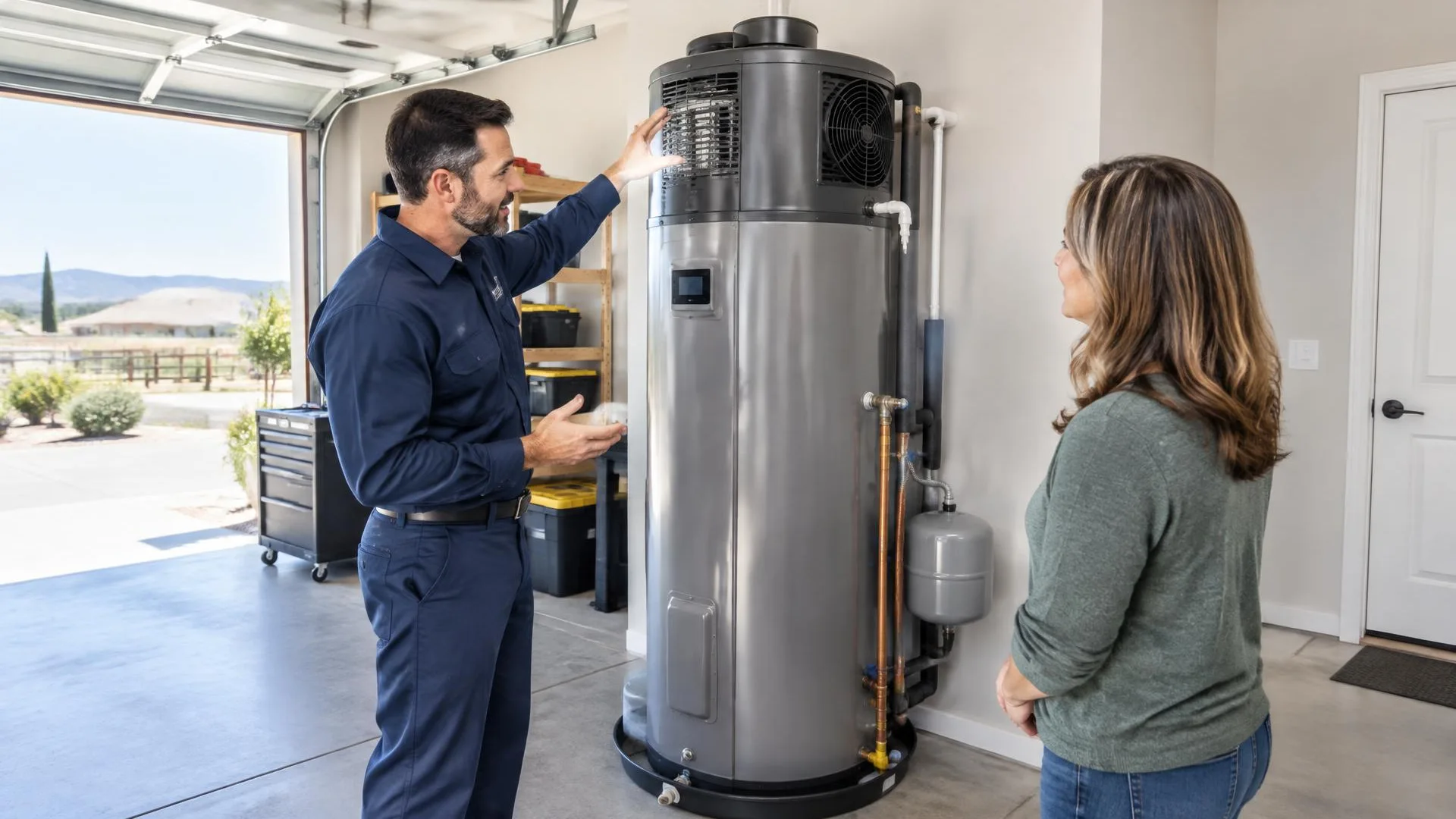
Interest in a heat pump water heater is a starting point, not confirmation that a particular model suits the home. In Madera, we bring demand, location, connections, and professional electrical assessment together before recommending an installation approach. The review identifies requirements, constraints, and questions that need resolution. This helps distinguish a practical replacement option from one needing additional work, a different location, or another equipment choice without promising that every setting can be adapted.
- Demand review
- Location assessment
- Connection evaluation
- Electrical verification
What we handle
Bring the Requirements Together
Feasibility is a combined judgment, not a single pass-or-fail measurement. An adequate circuit cannot compensate for an unsuitable enclosure, and a spacious location cannot establish electrical readiness. We evaluate the relevant requirements together so recommendations rest on the proposed equipment and actual installation setting.
Since 2001
Serving the Central Valley
- 01Demand review
- 02Location assessment
- 03Connection evaluation
- 04Electrical verification
- 05Alternative comparison
- 06Scope definition
The review begins with the hot-water service the equipment needs to provide. Demand patterns, overlapping uses, storage, and recovery expectations establish a performance brief. Existing tank capacity can inform the conversation but should not dictate the answer. If a proposed model appears attractive for one feature, that feature still needs to be weighed against the household's needs. Feasibility includes selecting equipment capable of an appropriate role, not merely finding a place to set it.
The location assessment addresses available air volume, manufacturer clearances, condensate disposal, sound considerations, and access for installation and maintenance. Plumbing arrangements and any fuel-conversion work also need review. Qualified electrical professionals evaluate supply, circuit requirements, and supporting capacity. These findings can interact: relocating the tank may improve one condition while changing several connections. Alternatives should therefore be assessed as complete installation approaches rather than isolated solutions to a single constraint.
The resulting recommendation should explain what is confirmed, what additional work is proposed, and what remains uncertain. Some questions may require further investigation before final equipment selection or scheduling. A clear scope identifies trade responsibilities, permit and inspection coordination, startup, and homeowner instruction. If the preferred option is not suitable, that should be stated plainly, with evaluated alternatives where appropriate. An informed assessment supports a decision; it does not guarantee compatibility, savings, approval, or a modification-free installation.
When Feasibility Needs Clarifying
Request a complete assessment when equipment is being recommended remotely, site requirements remain unverified, or separate discussions of capacity, space, and drainage have not been combined into one coherent installation plan.
- Remote recommendation
- Unverified space
- Supply questions
- Drain constraints
- Conversion scope
- Competing options
Establish a Practical Scope
Arrange a Madera heat pump water heater feasibility assessment before committing to equipment. We can review requirements and unresolved questions, then discuss a scope grounded in professional findings rather than general assurances.
Heat Pump Water Heaters questions
Frequently Asked Questions
No. Dimensions are only part of the assessment. Air volume, manufacturer clearances, condensate handling, electrical supply, plumbing, demand, and service access also matter. A physically fitting tank may still be unsuitable for the proposed installation setting.
It may provide useful existing infrastructure, but compatibility still requires verification. The new model's electrical needs, air requirements, condensate, clearances, and connections can differ. Existing electric service should be assessed rather than treated as approval for any replacement.
The assessment can consider other locations or equipment approaches where practical. Each alternative needs its own complete review, including demand and connection implications. A location change should not be presented as a guaranteed solution before those requirements are evaluated.
No. Electrical work may address a specific constraint, but it does not resolve air volume, condensate, clearances, plumbing, access, or performance requirements automatically. Recommendations should explain the role of each improvement within the complete installation plan.
Some conditions cannot be established from an initial discussion or visible inspection alone. The proposal should identify unresolved questions and the appropriate professional steps to clarify them. Acknowledging uncertainty is preferable to assuming hidden connections or site details are suitable.
It should connect equipment selection with demand and site findings, describe required work, assign responsibilities, and identify exclusions or contingencies. Startup, inspection coordination, and user guidance should also be addressed so the recommendation describes a complete evaluated project.