
Madera
Compare the Work, Not Just the Equipment
Electrification proposals can look similar while describing very different projects. For Madera homeowners, we help clarify the scope behind equipment names and broad upgrade recommendations. A useful comparison examines the assessment basis, electrical work, mechanical details, permitting responsibilities, and exclusions. It also separates current installation from possible future phases. The goal is an informed decision about what each proposal actually delivers, not an assumption that the shortest scope or largest project is automatically preferable.
- Design basis
- Equipment scope
- Electrical details
- Site requirements
What we handle
Make Scope Differences Visible
Before comparing totals or product labels, establish whether the proposals address the same needs. Heating and cooling design, water heater siting, circuit work, and restoration responsibilities may vary substantially. Clear documentation helps explain those differences and identifies questions that deserve answers before you commit.
Since 2001
Serving the Central Valley
- 01Design basis
- 02Equipment scope
- 03Electrical details
- 04Site requirements
- 05Exclusion review
- 06Handoff planning
Begin with the design basis. Ask what information supports equipment selection and whether the proposal reflects your actual comfort, hot-water, and replacement goals. Existing appliance sizes alone are not a complete justification for new equipment. A broad statement about electrifying the home should also identify which appliances are included and which remain outside the project. Without that boundary, two proposals may appear comparable while solving different problems or assuming different future work.
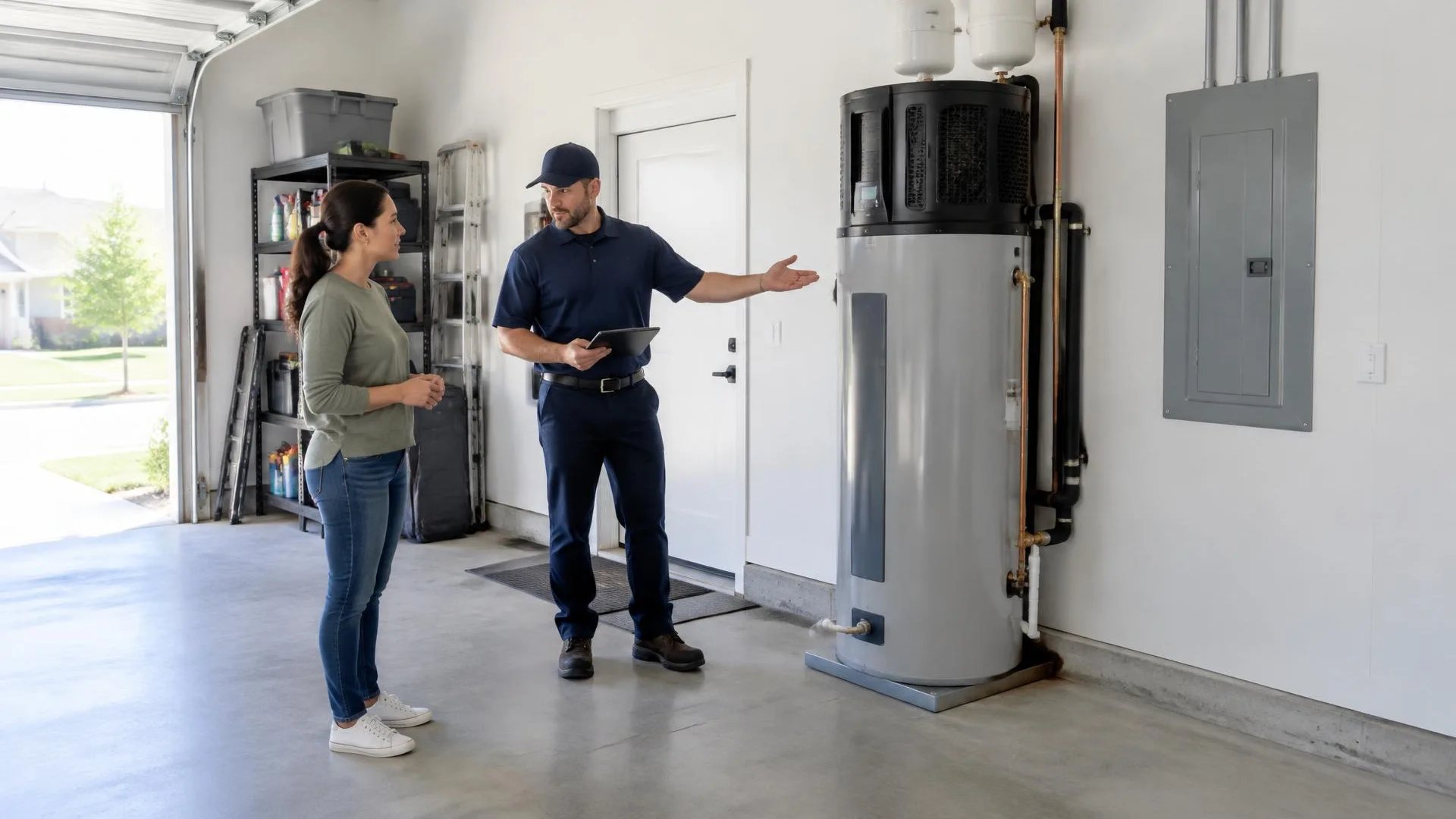
Next examine supporting installation tasks. Qualified professionals should establish electrical capacity and circuit requirements rather than assume a panel upgrade is always needed or never needed. HVAC scopes should address relevant distribution and controls questions. Heat pump water heater scopes should consider available air volume, condensate routing, manufacturer clearances, and access. Connection modifications, equipment removal, inspections, and finishing responsibilities should be identified clearly so necessary work is not hidden behind a product description.
Finally, review exclusions, contingencies, and handoff details. Find out which site findings could change the scope, who coordinates related trades, and how startup and homeowner instruction are handled. Solar and battery options should have their own stated assumptions rather than implied performance promises. A good comparison may reveal that a larger scope includes necessary work, or that some proposed additions are optional. The purpose is clarity about the evaluated project and its boundaries.
When Proposals Need Clarification
A scope review is useful when bids differ sharply, panel recommendations conflict, or equipment descriptions leave unclear who handles connections, inspections, site preparation, startup, and related work beyond supplying the appliance.
- Different scopes
- Vague allowances
- Conflicting upgrades
- Missing connections
- Unclear exclusions
- Bundled options
Ask Better Scope Questions
Discuss your Madera electrification goals and proposal questions with a clear list of included appliances. We can explain assessment needs and scope distinctions without assuming competing recommendations are equivalent or incorrect.
Home Electrification questions
Frequently Asked Questions
They may include different electrical, mechanical, access, permitting, or startup work. Equipment names alone do not describe a complete installation. Compare the assessment basis and written scope before assuming the proposals provide the same project outcome.
Ask what findings support each recommendation and whether it addresses capacity, condition, or another requirement. A professional assessment should connect the proposed electrical work to the actual appliance plan rather than use electrification as a blanket justification.
Air volume, condensate disposal, manufacturer clearances, sound, service access, and connection changes can affect feasibility. A tank model and installation address are not a complete scope. Ask how each relevant requirement has been evaluated and assigned.
They can provide context, but current work and future options should be clearly separated. Identify which preparations have a defined purpose and which later decisions require reassessment. Avoid treating a roadmap as a guarantee of future installation compatibility.
They identify work or conditions outside the quoted scope and can materially affect coordination. Ask about restoration, concealed conditions, trade responsibilities, and inspection-related changes. An exclusion is not necessarily unreasonable, but it should be understandable before agreement.
No. Claims should be supported by the proposed design and clearly stated assumptions. Avoid treating estimated savings, backup behavior, or generalized efficiency language as guaranteed outcomes. Installation quality, scope completeness, and suitability remain essential comparison points.