
Los Banos
Choose Water Treatment From Evidence, Not Assumptions
Water treatment should begin with a specific question about your household's water, not a conclusion based on the city name. All American helps Los Banos homeowners consider testing, water softeners, filtration, and reverse osmosis according to identified needs. Mineral deposits, taste concerns, and sediment are different observations that may call for different approaches. Define the problem first, then match the equipment's documented purpose to the results and the way your household uses water.
- Water concern clarification
- Hardness testing discussion
- Existing treatment review
- Softener option planning
What we handle
Build a Treatment Plan Around the Right Test
A useful test is one that answers the concern you actually have. Hardness measurement, taste and odor investigation, and testing for a specific substance are not interchangeable. Clarifying the question helps determine what information is needed before recommending equipment or interpreting a result.
Since 2001
Serving the Central Valley
- 01Water concern clarification
- 02Hardness testing discussion
- 03Existing treatment review
- 04Softener option planning
- 05Targeted filtration selection
- 06Drinking-water RO evaluation
Begin with the water source, the household's observations, and any existing treatment. Note whether the concern appears at every cold-water tap, only at one fixture, or only with hot water. These distinctions can matter. A basic field test may provide useful information about certain characteristics, but it should not be described as a comprehensive safety assessment. Specific health-related concerns may require an appropriate laboratory test or guidance from the water provider.
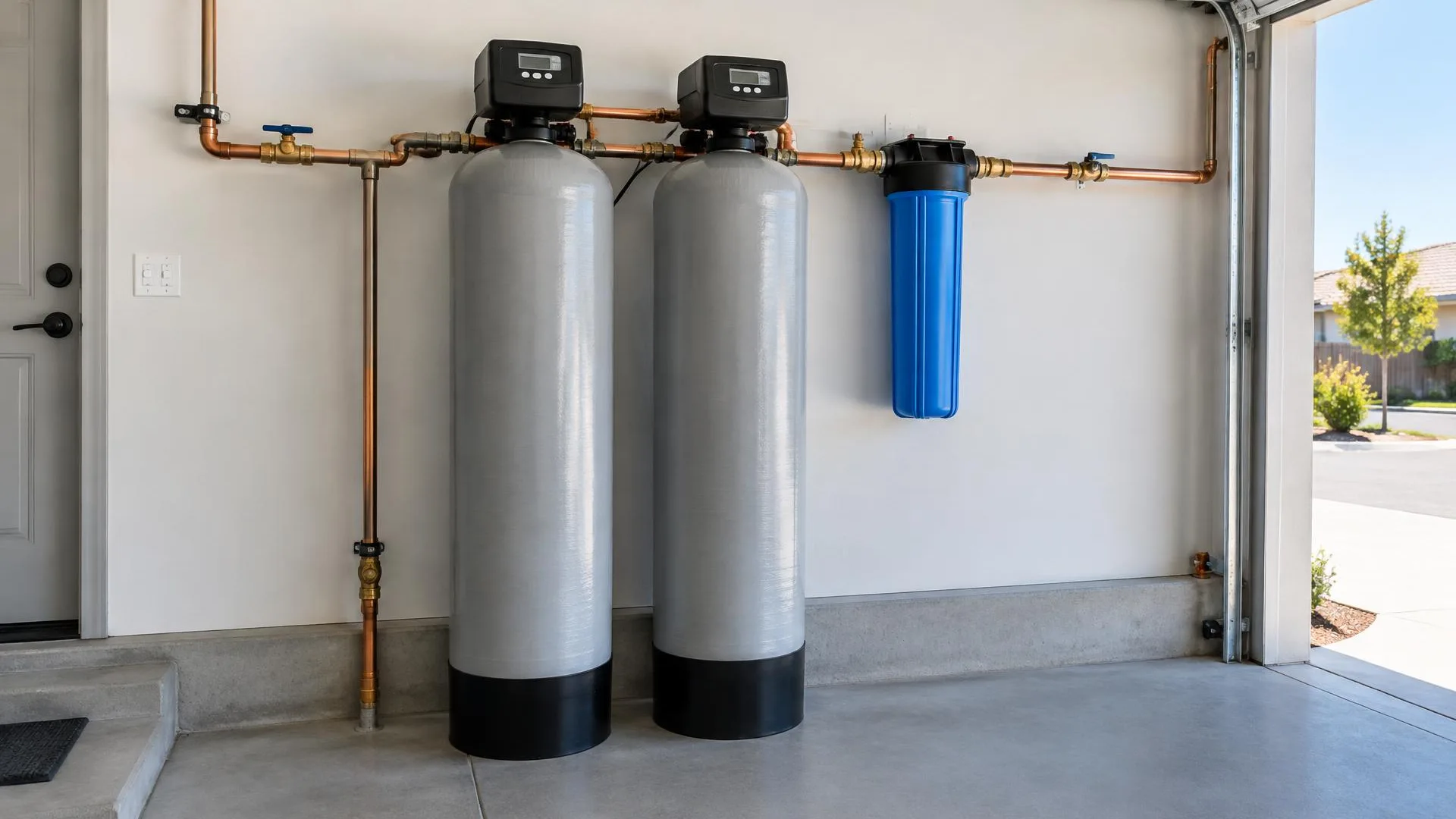
All American installs and services water softeners, whole-home filtration, and under-sink reverse osmosis systems. Each has a different role. A softener addresses hardness minerals, while a selected filter addresses the substances or characteristics its media is designed to reduce. RO is typically considered for a dedicated drinking-water outlet. Treatment selection should follow the identified target, applicable product claims, and installation requirements rather than the assumption that one system solves everything.
Prepare by collecting recent test reports, equipment model numbers, and a description of the concern. Do not sample through an unknown filter and assume the result represents untreated water. Ask how sampling should be handled for the intended test and how existing treatment affects interpretation. Once options are discussed, review installation space, maintenance access, consumables, and the method used to assess performance. A treatment plan is more useful when the owner understands both its purpose and its limits.
Observations That Can Guide Testing
Symptoms can identify questions worth investigating, but they do not establish a city's water quality or prove a particular contaminant is present. Share observations and existing reports before choosing a treatment approach.
- Recurring mineral deposits
- Noticeable taste changes
- Visible sediment at fixtures
- Unknown existing treatment purpose
- Different hot and cold symptoms
- Questions about a prior test
Start Your Los Banos Treatment Discussion With Testing
Bring your water concerns, available reports, and current equipment information to All American. A defined testing question creates a stronger basis for discussing softening, filtration, RO, and the maintenance each option requires.
Water Conditioning questions
Frequently Asked Questions
No. Equipment should be selected using the household's water source, relevant test information, intended outcome, and installation conditions. A city name alone does not establish hardness, safety, or the need for a particular filter or softener.
No. Hardness testing measures a particular characteristic, not every potential health concern. If you are concerned about a specific substance or possible contamination, use appropriate testing and relevant public-health or water-provider guidance rather than inferring safety from hardness.
That depends on the question being investigated. Untreated and treated samples answer different questions, and some evaluations benefit from comparing them. Follow the sampling instructions for the intended test rather than choosing a convenient tap without considering its treatment path.
No. Taste is a useful observation but not a reliable identification method or safety test. Describe when it occurs and whether it affects multiple fixtures. Testing or source information may be needed before selecting media to address the concern.
It should identify the target concern, why the proposed equipment fits it, and what the system does not address. Installation requirements, maintenance tasks, and a reasonable method of checking performance should also be part of the discussion.
Yes. Existing equipment may have an unclear purpose, outdated service information, or performance concerns. Gather its model and maintenance history, then compare its intended function with current goals and relevant test results before deciding whether to service or change it.