
Los Banos
Find the Leak Before Choosing the Repair
A wet cabinet or unexplained drip tells you something is wrong, but not necessarily where the problem begins. Plumbing service in Los Banos should separate the visible symptom from the actual source before repairs are discussed. All American provides leak detection and pipe repair, including slab leak location. Start with what you have noticed, which fixtures were running, and whether the moisture continues when everything is off. Those details help frame a more useful investigation.
- Isolation of suspected supply leaks
- Assessment of leaking pipe connections
- Slab leak location
- Repair options for damaged piping
What we handle
Narrow the Source Without Chasing Every Stain
Leak isolation means asking which part of the plumbing could explain the evidence. A supply connection, fixture, or concealed pipe may require a different repair approach. The goal is to establish a defensible starting point, not assume the wettest surface marks the failed component.
Since 2001
Serving the Central Valley
- 01Isolation of suspected supply leaks
- 02Assessment of leaking pipe connections
- 03Slab leak location
- 04Repair options for damaged piping
- 05Fixture-related leak evaluation
- 06Water line replacement discussions
Begin with a simple timeline. Note when the moisture appeared, whether it grows during fixture use, and whether nearby finishes have changed. Water can travel before becoming visible, so a ceiling mark or damp baseboard is a clue rather than a precise location. Photos taken from the same position can help explain changes without repeatedly disturbing the area or removing materials before the plumbing has been assessed.
The next distinction is between water escaping from a pressurized supply and water appearing only when a fixture drains. That difference affects where investigation should concentrate. All American's plumbing scope includes leak detection, pipe repair, and slab leak location, allowing the findings to guide the repair discussion. If access through a finished surface becomes necessary, ask why that location is justified and what remains uncertain before work proceeds.
A useful repair conversation identifies the suspected component, the evidence supporting that conclusion, and whether an isolated repair addresses the observed problem. Nearby piping may deserve attention, but one leak does not automatically establish a need for replacement throughout the house. Keep the immediate goal clear: stop the identified water loss, understand the condition that caused it, and know what changes should prompt another call after the repair is completed.
Clues That Deserve a Closer Look
Record what you can observe without opening walls or handling damaged piping. The pattern of moisture often provides more useful information than a single photograph taken after cleanup.
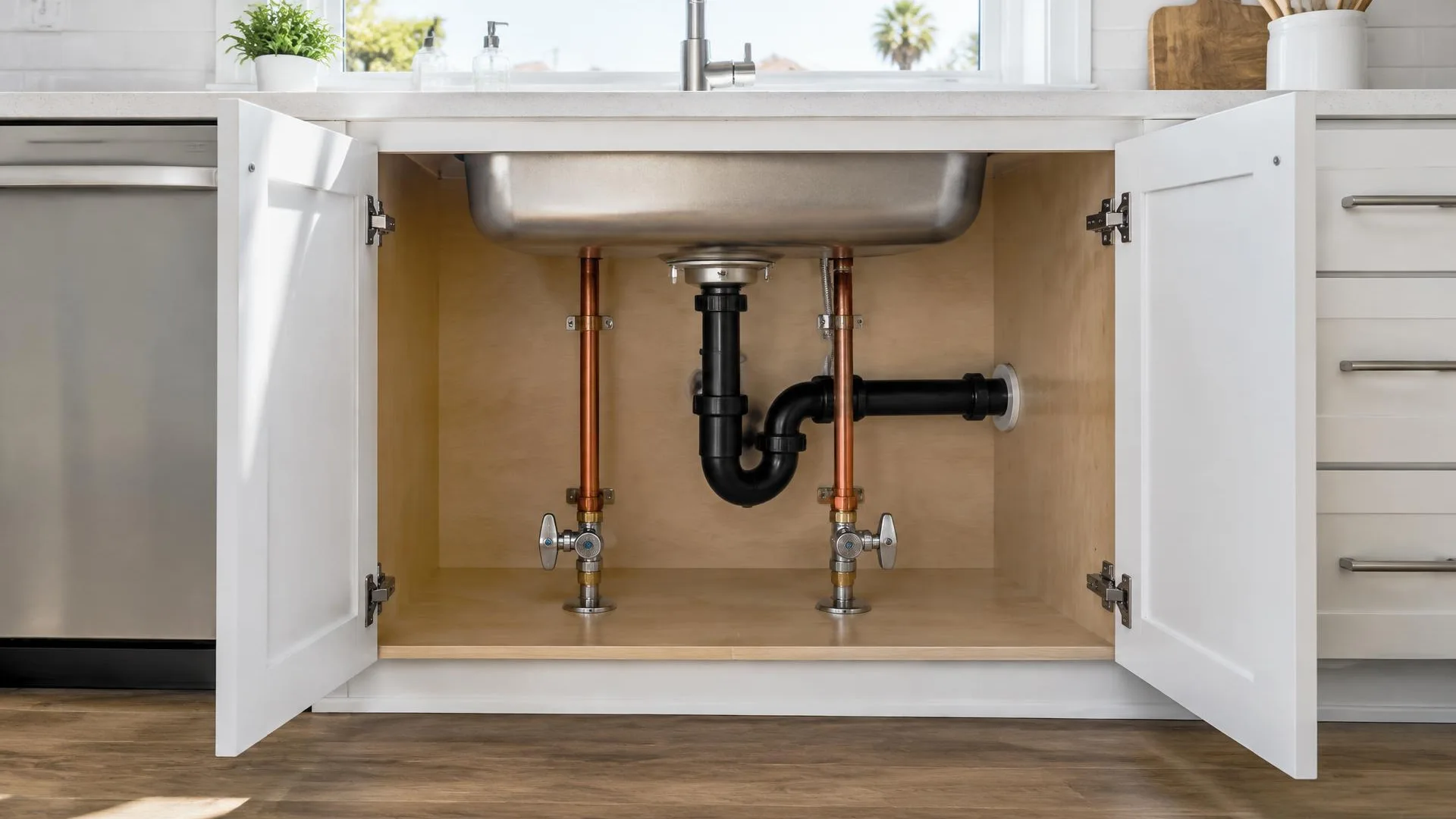
- Moisture returning beneath a sink
- A stain expanding between fixture uses
- Dripping near a supply connection
- Damp flooring without an obvious spill
- Water sounds when fixtures are idle
- Repeated repairs at the same connection
Bring the Evidence to the Repair Conversation
Contact All American about plumbing in Los Banos. Describe the wet area, its timing, and any recent changes so the discussion starts with the problem you actually observe.
Plumbing questions
Frequently Asked Questions
Not reliably. Water may follow framing, piping, or other surfaces before it becomes visible. Treat the stain as evidence to investigate rather than a reason to open that exact spot without further assessment.
Write down when moisture appears, which fixtures were used beforehand, and whether it returns after drying. Mention recent plumbing work and share photographs that show the wider area as well as the affected surface.
Yes, and All American lists slab leak location among its plumbing services. Surface moisture alone does not establish that diagnosis, so explain the symptoms and let the investigation determine whether concealed piping is involved.
Avoid repeatedly forcing a connection when its condition is unknown. Additional tightening can complicate some failures. Keep the area accessible, limit exposure to escaping water where safely possible, and request an assessment of the connection.
A single failure does not answer that question. The location, visible pipe condition, previous repairs, and findings elsewhere matter. Ask how a localized repair compares with replacement for the specific problem identified in your home.
It should connect the observed symptoms to the proposed repair, explain necessary access, and distinguish confirmed findings from possibilities. You should understand which component is being addressed and what evidence would warrant investigating beyond that repair.