
Los Banos
Heating Repair in Los Banos for Systems That Keep Cycling
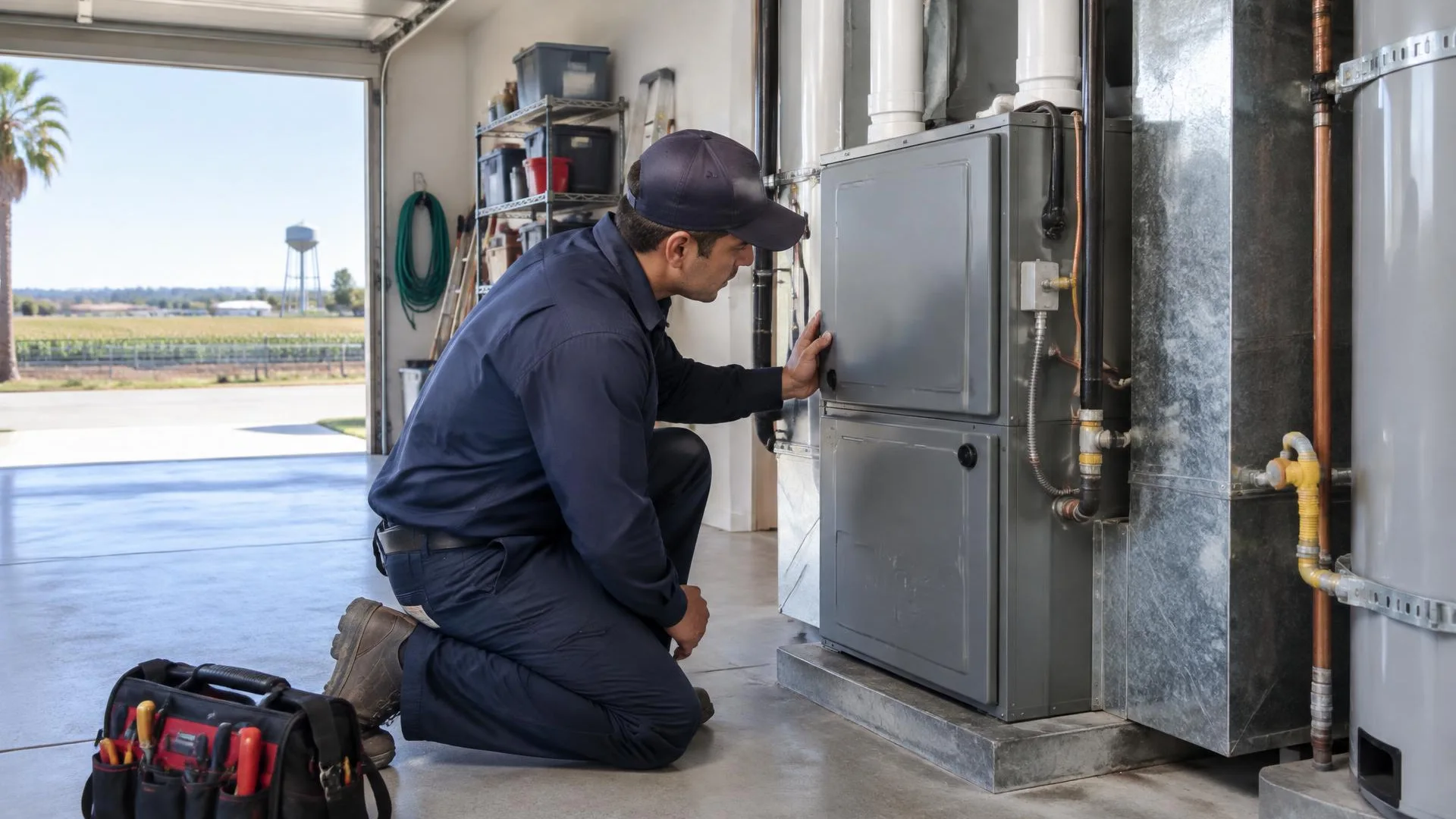
If your heat turns on, runs briefly, shuts off and repeats the pattern, the system is telling you something is out of balance. Our Los Banos heating visits start with observation, not guesswork. We watch the full sequence, compare it with the thermostat call, and look for restricted airflow, control faults or safety responses before recommending a repair.
- Observe a complete heating cycle from the thermostat call to shutdown
- Review filter condition, returns and supply registers
- Check thermostat placement, settings and wiring condition
- Evaluate limit and safety-control behavior using proper procedures
What we handle
Why cycling deserves a closer look
Cycling can be normal in small amounts, but frequent interruptions often point to a fault that wears parts faster and leaves rooms uneven.
Since 2001
Serving the Central Valley
- 01Observe a complete heating cycle from the thermostat call to shutdown
- 02Review filter condition, returns and supply registers
- 03Check thermostat placement, settings and wiring condition
- 04Evaluate limit and safety-control behavior using proper procedures
- 05Inspect blower operation and visible airflow restrictions
- 06Summarize confirmed findings and practical repair choices
Frequent cycling needs observation before parts are selected. We compare the thermostat call with the equipment sequence to determine whether the control ends the demand, internal temperature reaches a limit, or another protective device interrupts operation. Those patterns can look similar from a hallway but require different tests. Before the visit, note approximately how long each run lasts, whether the blower continues after heat stops, and whether the thermostat still requests warmth. Photograph accessible status messages without removing covers. A recorded pattern helps focus diagnosis, but it does not establish the cause by itself. Testing must confirm which event happens first and whether other conditions contribute to the interruption during operation.
Airflow checks help explain why a system might become too hot before rooms warm adequately. We review filter condition and fit, accessible returns, register positions, blower behavior and visible duct restrictions. Where appropriate, operating measurements are compared with the equipment manufacturer's requirements rather than interpreted in isolation. Prepare by moving furniture away from grilles and making the normal equipment access route available. If you know when the filter was last changed, share that information and its type. Do not remove panels or adjust internal controls. Raising the thermostat or closing additional registers is not a diagnostic solution and can make the original pattern harder to interpret during the service visit.
Recommendations should connect the confirmed cause with a proportionate correction. A blocked return, unsuitable filter or control setting may need a simple change, while a failed component requires a different repair discussion. We explain which readings support the recommendation and identify anything that remains uncertain. After correction, observing another heating cycle helps establish whether the original interruption has changed. Monitoring is appropriate only when the condition has been assessed as safe; repeated shutdowns or an unexplained unsafe fault should not be forced through additional starts. If gas odor or a carbon monoxide alarm occurs, leave the building and contact emergency services from outside rather than waiting for a heating appointment.
Signs cycling needs attention
These patterns suggest the system is stopping for a reason rather than simply finishing a normal warm-up.
- Heat shuts off before rooms feel warmer
- The same start-and-stop pattern repeats within short periods
- Warm air weakens shortly after the blower starts
- Some rooms feel noticeably cooler than the thermostat area
- Filters clog quickly or airflow feels weak at registers
- The thermostat display or system status changes during each cycle
Schedule a heating cycle evaluation in Los Banos
Share what you notice, when it happens and any thermostat messages. That detail helps us plan the right diagnostic visit.
Heating questions
Frequently Asked Questions
No. A thermostat setting, dirty filter or blocked return can also create it. Diagnosis separates control problems, airflow limits and component faults before any part is recommended.
Do not keep forcing a system that repeatedly shuts down. Stop using it if a fault is unexplained or anything seems unsafe, and arrange evaluation. If you smell gas or a carbon monoxide alarm sounds, leave and contact emergency services from outside.
Note how long each run lasts, whether the blower continues, any error codes, and which rooms stay uncomfortable. Photos of the thermostat screen are helpful.
Sometimes, particularly when the old one is heavily loaded. If cycling continues afterward, another restriction or control issue should be examined.
Yes, location, settings, power or wiring can affect the call for heat. We test it as part of the sequence instead of assuming either side is faulty.
No. Recommendations depend on findings, equipment condition and your priorities. We outline repair and replacement considerations without pressure.