
Los Banos
Los Banos Emergency Heating After Total Heat Loss
When heat stops entirely, the first priority is safety and clear information. In Los Banos, we help homeowners separate simple setting issues from equipment failures and decide what needs urgent attention. Please never ignore gas odor, smoke or alarms. If those are present, leave first and contact emergency services from a safe location.
- Confirm thermostat settings and power status
- Identify whether any part of the system responds
- Collect odors, noises, codes and timing details
- Evaluate safety conditions before restoring operation
What we handle
First steps when the home has no heat
A calm, organized response helps technicians diagnose faster and helps you stay safe while waiting.
Since 2001
Serving the Central Valley
- 01Confirm thermostat settings and power status
- 02Identify whether any part of the system responds
- 03Collect odors, noises, codes and timing details
- 04Evaluate safety conditions before restoring operation
- 05Diagnose the point where heating stops
- 06Explain repair options and interim precautions
After total heat loss, first distinguish an equipment problem from a thermostat setting or an issue limited to one area. From normal homeowner access, note the selected mode, requested temperature and whether the display has power. Look for messages without removing covers, and describe whether any blower or outdoor unit is running. A recent outage is relevant information, not a reason to keep cycling breakers or switches. Do not reset a protective shutdown or attempt electrical repairs. If you smell gas or a carbon monoxide alarm sounds, leave the building and contact emergency services from outside. Immediate danger takes priority over collecting details or requesting a heating repair appointment.
Once everyone is safe, gather the time heat stopped, the equipment type if known and any unusual sounds or odors noticed beforehand. Photographs of the thermostat and labels visible without opening equipment can help explain the situation. Mention power interruptions, prior repairs and household members who may be especially affected by losing heat. Clear an access route only if conditions are safe, and keep pets away from the work area. Do not restart the system to produce a recording or verify whether an unexplained fault returns. If indoor conditions become unsuitable, consider a safe alternative location rather than relying on an unconfirmed repair schedule to protect vulnerable occupants during the wait.
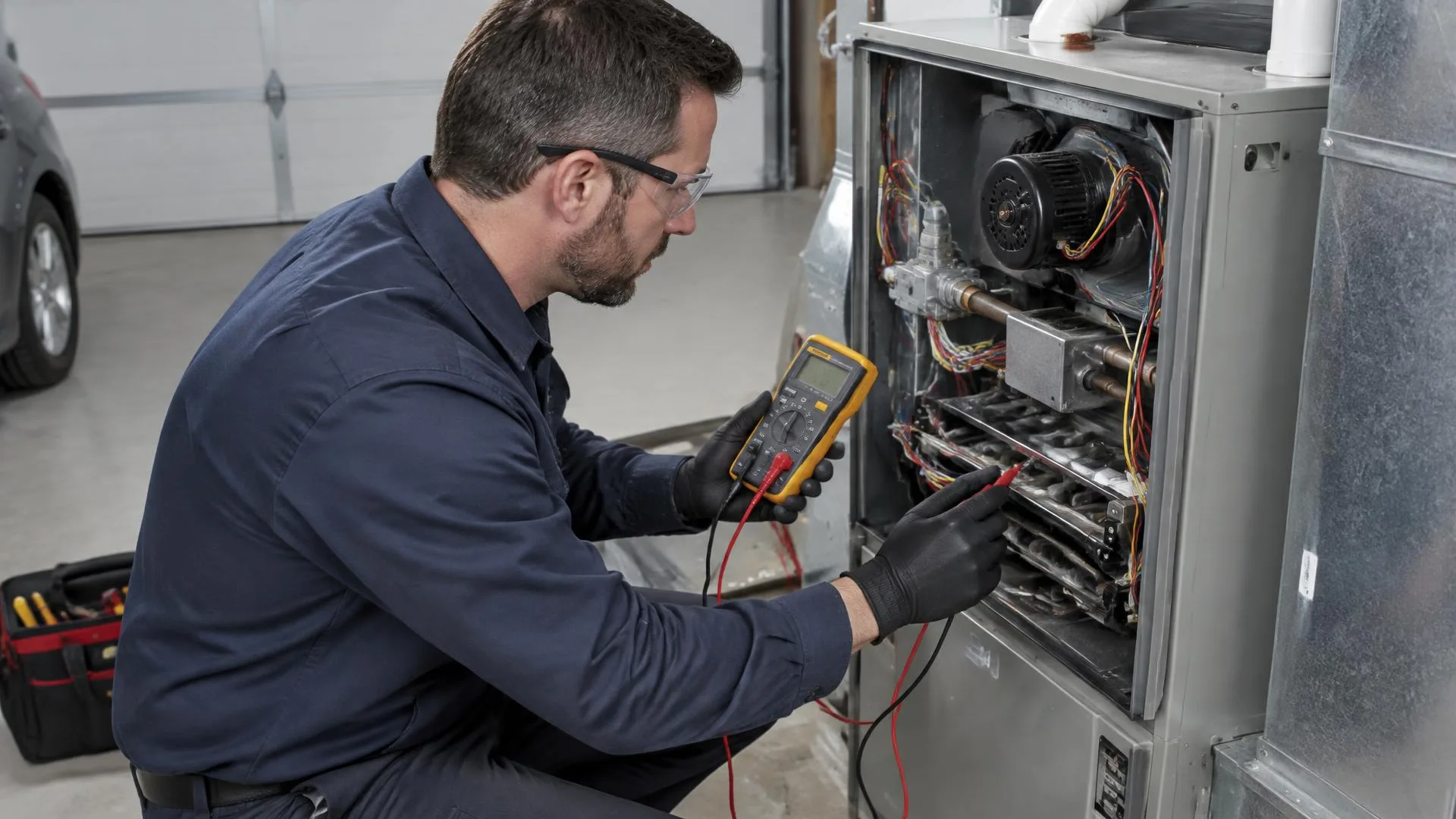
The technician evaluates where the heating sequence failed and whether the cause involves controls, power, ignition, airflow or another component. Testing should separate the primary fault from conditions that contributed to it. We explain confirmed findings, remaining uncertainty and whether the equipment must stay off until work is completed. A repair request does not guarantee a particular arrival time, available part or immediate restoration of heat. Ask about current scheduling and safe interim arrangements without treating an estimate as a commitment. Do not use ovens or outdoor combustion appliances for indoor warmth. If an unsafe fault remains unexplained, continued operation or repeated resetting is not an acceptable temporary heating plan.
When no heat is urgent
Heat loss becomes more serious when safety hazards or vulnerable occupants are involved.
- Gas smell or carbon monoxide alarm
- Burning odor, smoke or sparks
- Infants, older adults or medically vulnerable occupants at home
- Water or electrical damage near equipment
- No response after basic setting checks
- Rapidly cooling living spaces
Call about no heat in Los Banos
Tell us what you observe and whether anyone in the home is vulnerable. We will discuss next steps without making unverified promises.
Emergency Heating questions
Frequently Asked Questions
Leave immediately, bring others and pets if safe, and call emergency services or the gas utility from outside. Do not operate switches or test ignition.
No. Cooking appliances are not intended for home heating and can create fire or carbon monoxide hazards. Use safe alternatives and seek assistance.
Provide equipment type, symptoms, thermostat display, odors, noises and when heat stopped. Mention vulnerable occupants and any recent electrical issues.
No. Repeated resets may hide a fault or create risk. Note what happens and describe it to the technician.
Not always. Safety hazards and vulnerable occupants raise urgency, while stable situations may be planned. We help you evaluate the circumstances.
We cannot guarantee a specific time. We can discuss urgency, collect information and arrange service according to availability.