
Los Banos
When Cooling Stops Completely
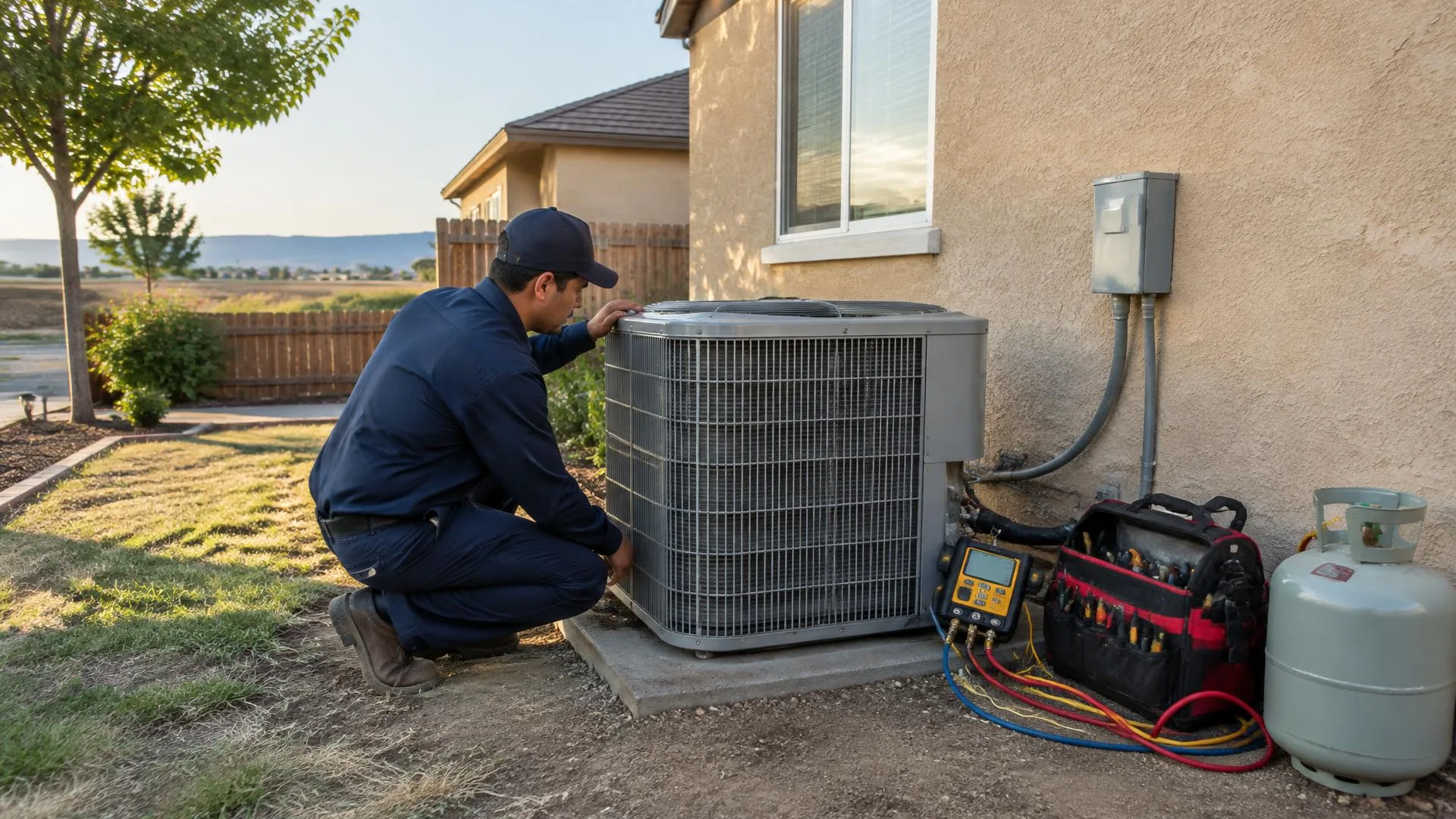
A home that has stopped cooling calls for a clear safety plan and a focused equipment evaluation. All American handles emergency AC concerns in Los Banos, including systems that no longer start or run without lowering indoor temperatures. Tell us what the thermostat shows, which components appear to operate, and whether there are sounds, odors, water, or ice. We use those details to discuss the next step without assuming a cause or promising a dispatch time.
- No-cool diagnosis
- Control checks
- Motor evaluation
- Electrical testing
What we handle
Start With People
Equipment diagnosis matters, but occupant wellbeing comes first. Move to a cooler safe location when necessary, especially for vulnerable people. If someone shows signs of heat illness, seek emergency medical help rather than waiting for an HVAC visit or attempting additional equipment checks.
Since 2001
Serving the Central Valley
- 01No-cool diagnosis
- 02Control checks
- 03Motor evaluation
- 04Electrical testing
- 05Repair options
- 06Operating verification
Complete cooling loss can involve controls, electrical components, motors, airflow, or the refrigerant circuit. A silent system and a system that runs continuously without cooling need different diagnostic paths. You can report the selected mode and temperature setting without opening equipment. If the thermostat instructions permit a simple battery check, that may be appropriate when safely accessible. Do not bypass protective switches, open electrical panels, or repeatedly restart equipment in an effort to force cooling to return.
During the service evaluation, the technician checks the operating sequence and tests relevant components rather than replacing the part most commonly associated with the symptom. Airflow, coil condition, electrical response, and equipment pressures may be considered as appropriate. Any refrigerant testing or handling belongs with qualified personnel. We explain the confirmed findings and proposed repair scope before authorized work. If additional access or investigation is required, that limitation should be clear instead of hidden behind a premature diagnosis.
While arranging service, keep communication practical. Have the equipment location, thermostat model if known, and a short history of the failure ready. Identify access restrictions and let the team know if water, ice, or an electrical hazard is present. Cooling availability depends on diagnosis, parts, and scheduling, so maintain an alternative comfort plan rather than relying on an unverified restoration estimate. After repair, ask what operating checks were completed and what symptoms should prompt another call if cooling does not recover as expected.
Describe the Failure
A short description of what stopped and what still runs helps frame the call. Report safety concerns first, then share the thermostat reading and any changes that preceded the failure.
- Silent system
- Warm rooms
- Running fan
- Blank control
- New odor
- Visible ice
Request No-Cooling Help
Call All American to discuss your cooling loss and current availability. Explain occupant concerns and equipment symptoms, while arranging a cooler safe place if indoor conditions are becoming uncomfortable or unsafe.
Emergency AC Repair questions
Frequently Asked Questions
Review the thermostat mode and setting, and follow its owner instructions for accessible batteries if applicable. Observe which components run from a safe location. Stop checking if you encounter water near electricity, burning odors, smoke, or other hazards.
Restoration depends on scheduling, access, diagnosis, repair scope, and parts availability. Ask about current appointment options and the next update. Keep a separate comfort plan rather than assuming a specific arrival or completion time before evaluation.
Repeatedly lowering the setpoint does not repair a failed system and may not change its output. Record the current setting and symptoms instead. If the unit is struggling or behaving abnormally, request guidance about whether it should remain off.
Move the person to a cooler safe location if possible and seek emergency medical help for signs of heat illness. Do not wait for an AC appointment to address a health emergency or assume equipment repair is the only necessary response.
No. Air circulation can continue even when the outdoor equipment or another cooling function has failed. Tell the technician which components appear active, but avoid reaching into the unit or using that observation to identify a specific failed part.
Ask for the confirmed findings, the proposed work, relevant pricing, and known limitations. Clarify whether additional testing or parts may be needed. An emergency call still benefits from a clear explanation of what you are authorizing.