
Los Banos
Start With What Your Home Uses
A useful electrification plan begins with an accurate appliance inventory, not a shopping list. For your Los Banos home, we identify which equipment uses gas, what still works well, and which replacements deserve early attention. Heating, cooling, cooking, and water heating can follow different timelines. Bringing those decisions together helps you understand shared electrical needs before choosing equipment or committing to construction that may affect several rooms.
- Appliance inventory
- Condition review
- Load assessment
- Replacement priorities
What we handle
Inventory Before Installation
Existing equipment tells only part of the story. Its condition, location, fuel connection, and daily workload matter too. Our assessment connects those details with your goals so recommendations reflect what you actually want to change, rather than assuming every appliance should be replaced immediately.
Since 2001
Serving the Central Valley
- 01Appliance inventory
- 02Condition review
- 03Load assessment
- 04Replacement priorities
- 05Location planning
- 06Phased scope
We begin by documenting major appliances and the services supporting them. A furnace may share planning considerations with an air conditioner, while a water heater introduces different space and plumbing requirements. Cooking equipment can involve its own circuit and ventilation questions. Recording these relationships creates a clearer starting point than treating each purchase as an isolated project. You can also identify appliances you intend to retain, avoiding unnecessary assumptions about the scope.
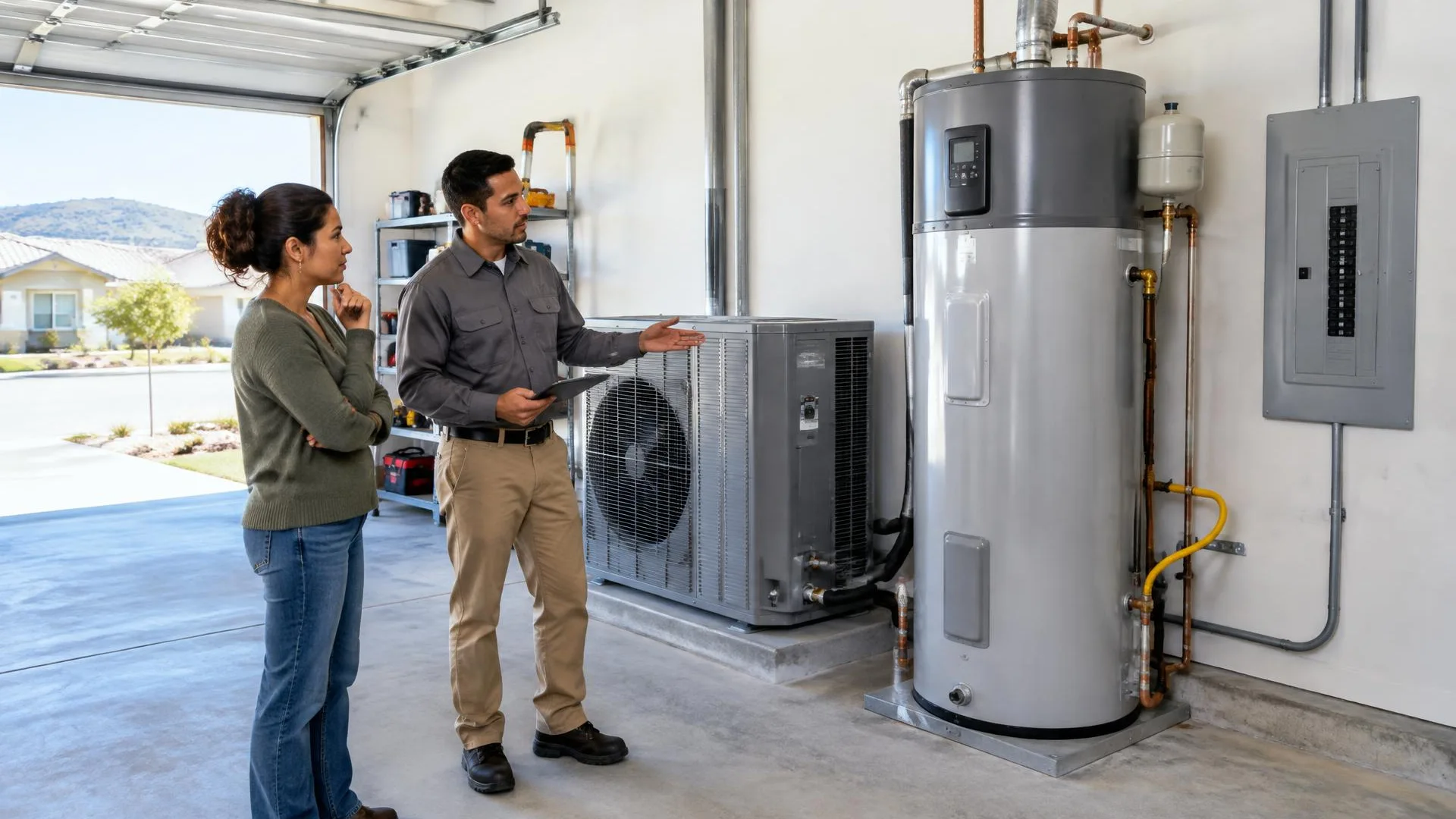
Qualified professionals evaluate electrical capacity and circuit requirements before recommending additions. An available breaker position alone does not establish capacity, and an older appliance label does not establish the correct replacement size. For a potential heat pump water heater, planning also includes condensate disposal, available air volume, and manufacturer clearances. These checks help distinguish straightforward replacements from work requiring additional design, coordination, or changes to the proposed equipment location.
The finished plan should explain priorities, dependencies, and decisions that can wait. An appliance approaching replacement may become the first phase, while functioning equipment remains in service. Solar and battery options can be considered alongside anticipated electrical demand without assuming either is necessary. Ask for clearly separated work scopes so you can compare the immediate project with future phases and understand which enabling improvements serve more than one planned upgrade.
Reasons to Begin
Consider an inventory when appliance decisions overlap, equipment histories are unclear, or you want a coordinated direction before replacing something simply because another contractor suggested starting there without broader context.
- Mixed fuels
- Aging equipment
- Unclear priorities
- Upcoming replacement
- Multiple proposals
- Longer planning
Map Your Appliances
Schedule a Los Banos electrification assessment to discuss existing equipment, replacement goals, and professional capacity checks. Bring appliance details you already have; opening electrical equipment yourself is unnecessary and unsafe.
Home Electrification questions
Frequently Asked Questions
No. An inventory can support selective replacements over time. The important step is identifying shared dependencies early, so an urgent water heater decision does not overlook electrical work or space needed for another planned appliance.
Existing model numbers, approximate installation dates, service records, and your replacement priorities are useful when readily accessible. Photographs can help explain locations, but leave panel covers, wiring, and electrical testing to qualified professionals during the assessment.
It establishes a starting point rather than a complete design. Heating and cooling require appropriate sizing analysis, while water heating depends on demand and recovery expectations. Existing appliance dimensions or ratings should not automatically dictate replacements.
Yes, where their condition and your plans support that choice. Keeping functioning equipment may be part of a phased approach. The proposal should distinguish necessary enabling work from optional replacements and explain any scheduling consequences.
That requires a professional assessment of existing demand, proposed equipment, and applicable requirements. Some projects may need changes; others may have different options. Neither appliance count nor visible spare breaker spaces can settle the question alone.
They can be evaluated after anticipated electrical uses become clearer. Solar production, battery backup priorities, and appliance demand are related but separate design questions. An inventory informs those discussions without guaranteeing compatibility, savings, or outage coverage.