
Los Banos
Drain & Sewer Service in Los Banos: Branch Line or Main Line?
When a drain stops working in Los Banos, the first question is how far the problem reaches. One slow sink points toward a branch line, while several affected fixtures suggest a shared pipe farther downstream. Our drain and sewer service starts by mapping which fixtures are affected, then clears the blockage and recommends a repair only when the evidence supports it, so you avoid work that does not match the problem.
- Single-fixture drain clearing
- Shared branch line cleaning
- Main sewer line clearing
- Fixture-by-fixture symptom mapping
What we handle
Locating the Blockage Before Choosing a Fix
A useful drain visit begins with observation. We compare what each fixture is doing, note when symptoms began, and use that pattern to decide where cleaning should start and how deep it needs to go.
Since 2001
Serving the Central Valley
- 01Single-fixture drain clearing
- 02Shared branch line cleaning
- 03Main sewer line clearing
- 04Fixture-by-fixture symptom mapping
- 05Cleanout location and use
- 06Repair recommendations after findings
A branch line problem often announces itself through one fixture rather than the whole home. A bathroom sink may hold water while the nearby shower and toilet continue draining normally. That pattern helps narrow the search, but it does not identify the exact obstruction by itself. Hair, soap residue, an object, or buildup farther along the branch can produce similar symptoms. We compare the affected fixture with nearby connections and ask whether the slowdown developed gradually or appeared suddenly. The purpose is to choose an appropriate entry point and cleaning method, not automatically treat the entire sewer. Tell us about previous attempts, including any drain chemicals, before work begins so we can account for them safely.
A shared sewer restriction can create reactions in places that were not being used. Water from a shower might make a toilet bubble, or a draining sink might cause water to rise in a lower fixture. Those relationships matter more than the loudest sound or the first drain you noticed. We consider which connections share a downstream route and whether the symptoms occur together. Venting issues can sometimes resemble a blockage, so gurgling alone is not enough to settle the diagnosis. If wastewater is rising, stop adding water where practical and keep people away from the affected area. Repeated flushing or running fixtures to investigate can increase the amount of water that escapes indoors.
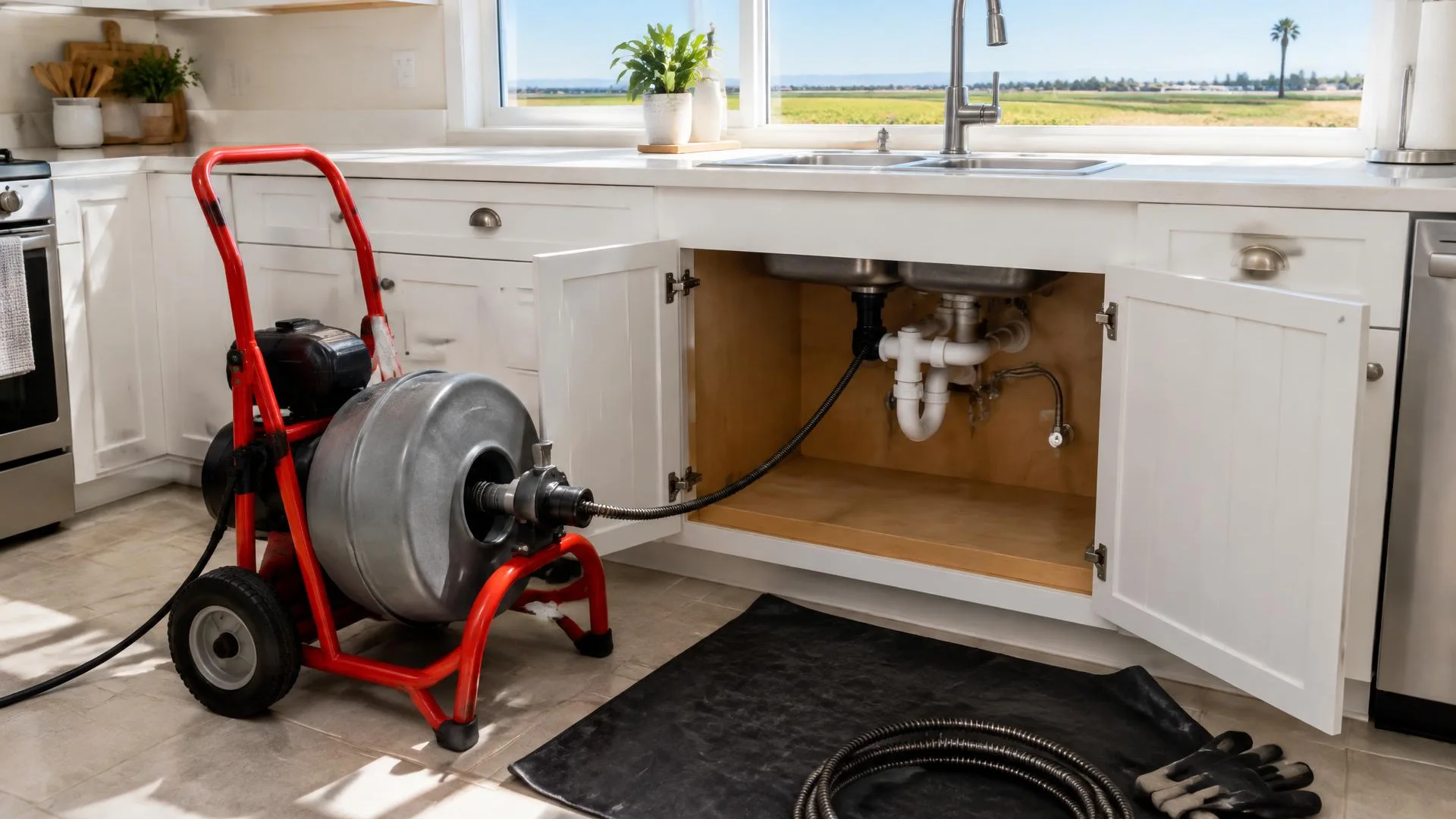
Once the likely scope is understood, the next step is selecting access and equipment that fit the affected pipe. A usable cleanout may allow direct work on the shared line, while a localized problem may be approached closer to the fixture. We explain what the initial clearing is intended to accomplish and check drainage afterward when conditions permit. Restored flow is useful evidence, but it does not prove that every underlying defect has disappeared. If resistance, recurring symptoms, or retrieved material suggests a deeper issue, a camera inspection may help clarify the cause. Recommendations can then distinguish routine cleaning from a repair that addresses an observed pipe condition, rather than treating every blockage as the same problem.
Signs the Problem May Reach the Main Line
A single slow fixture and a house-wide drainage problem call for different responses. These signs help show which one you may be facing before service begins.
- Several fixtures slow at once
- Toilet gurgles when sinks drain
- Lowest drain backs up first
- One sink slow, others normal
- Water rises in a tub or shower
- Symptoms follow a repeated pattern
Find Out How Far Your Los Banos Clog Reaches
Tell us which fixtures are slow or backing up and when it started. We will use that pattern to decide whether the work belongs on a branch line or the main sewer.
Drain & Sewer questions
Frequently Asked Questions
Count the affected fixtures. One slow drain suggests a local branch, while multiple fixtures slowing together point toward a shared line. Note which drain reacts when another is used, because that clue helps narrow the location.
Limit use. Extra water can push a partial blockage tighter or overflow the lowest fixture. If sewage is present, avoid contact, keep children and pets away, and wait for professional help instead of attempting a repair yourself.
Debris from a poorly draining branch can travel into a larger pipe, though many branch clogs stay put. We look at the fixture history and flow pattern to decide whether the larger line needs attention.
Bubbling can mean air and water are being pushed through a restricted shared pipe. It is a reason to describe the pattern accurately, since it suggests the blockage may be beyond a single fixture.
Clearing restores flow, but it does not always explain why the blockage formed. If symptoms suggest damage or buildup, we will explain what else could be checked rather than assuming one pass is enough.
Tell us which fixtures are affected, whether odors are present, and whether the problem is constant or comes and goes. Photos of any cleanout covers can also help us plan access.