
Los Banos
Find Where Cooling Gets Lost
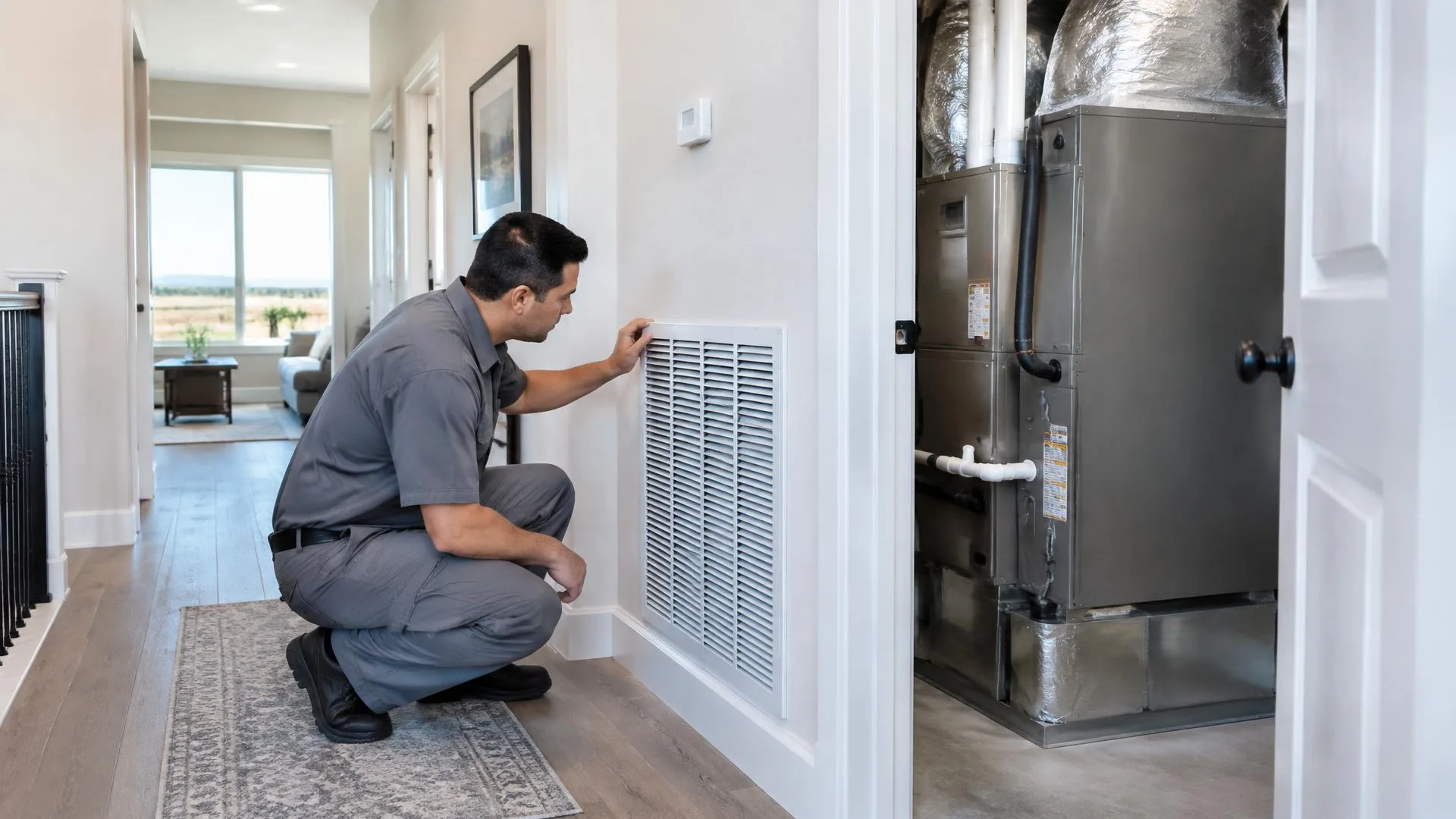
An air conditioner can produce cold air without delivering enough of it to the rooms that need cooling. In Los Banos, All American evaluates airflow problems by looking beyond the thermostat reading. Restricted filters, return pathways, blower performance, and duct resistance can each affect comfort. Our approach connects what you notice indoors with measurements at the equipment, helping you choose between a targeted repair, a distribution improvement, and a broader system upgrade.
- Airflow testing
- Blower diagnosis
- Return assessment
- Duct repair
What we handle
Follow the Air
Weak delivery does not automatically mean the equipment is too small. Before recommending more capacity, we examine how air enters, moves through, and leaves the system. That distinction helps prevent an expensive replacement from inheriting the same unresolved distribution problem.
Since 2001
Serving the Central Valley
- 01Airflow testing
- 02Blower diagnosis
- 03Return assessment
- 04Duct repair
- 05AC replacement
- 06Maintenance
Start with the pattern rather than a suspected part. Tell us whether every supply feels weak, only distant rooms struggle, or airflow changes when bedroom doors close. Those observations help separate a central restriction from a localized duct problem. A technician can inspect accessible return paths, evaluate filter suitability, and measure static pressure. Blower settings and equipment condition also matter because a functioning fan may still deliver less air than the system requires under actual operating conditions.
The next step is to connect airflow with cooling performance. A temperature reading alone cannot establish whether the system is operating correctly. Restricted movement across the indoor coil may reduce useful capacity and contribute to icing. Accessible ducts may have leakage, compression, or disconnected sections that deserve attention before equipment replacement. We explain what was inspected, what could not be accessed, and which findings support the recommendation, so a repair proposal reflects evidence rather than a guess about tonnage.
An appropriate solution might involve correcting a filter mismatch, repairing a duct section, addressing a blower fault, or planning a properly sized replacement. Each option should include its limitations. Replacing equipment does not automatically correct an undersized return, and duct work does not resolve every mechanical failure. After authorized work, operating checks help establish whether airflow and cooling have improved together. Future maintenance can then focus on preserving that improvement rather than repeatedly responding to the same comfort complaint.
Airflow Clues
Notice where airflow changes and whether the pattern follows doors, equipment cycles, or filter replacement. Share observations without removing panels or reaching into operating equipment during your own visual checks.
- Weak registers
- Whistling return
- Uneven delivery
- Long operation
- Filter distortion
- Coil ice
Request an Airflow Evaluation
Describe the rooms affected and any recent filter or equipment changes. Ask All American about appointment availability, diagnostic scope, and the steps involved in evaluating your cooling concerns before repairs.
Air Conditioning questions
Frequently Asked Questions
Not necessarily. Restrictions, blower problems, and duct losses can limit delivery even when equipment capacity is appropriate. Increasing size without evaluating those conditions may leave the original problem unresolved and introduce additional operating issues.
Sometimes, but the correct choice depends on the system and filter cabinet. An overly restrictive or incorrectly fitted filter can affect airflow. Use the equipment guidance and ask for help choosing a compatible replacement rather than operating without filtration.
Some rooms depend on a shared return pathway. Closing the door can change pressure and reduce circulation when no adequate return route exists. An assessment can determine whether that pattern contributes to the room's cooling complaint.
No. Sealing addresses leakage, not every restriction or sizing issue. Crushed sections, inadequate returns, blower faults, and coil contamination may require different work. Recommendations should distinguish confirmed leakage from other causes of poor delivery.
Switch cooling off and contact the service team for advice. Do not scrape the coil or chip away ice. Describe any water and avoid electrical areas; the underlying restriction or equipment fault still needs diagnosis.
The technician can compare relevant airflow, pressure, and operating measurements with earlier findings. Room conditions may take time to stabilize, so ask what immediate results to expect and what ongoing symptoms would justify another evaluation.