
Gustine
Ask About Outages Before Assuming Backup
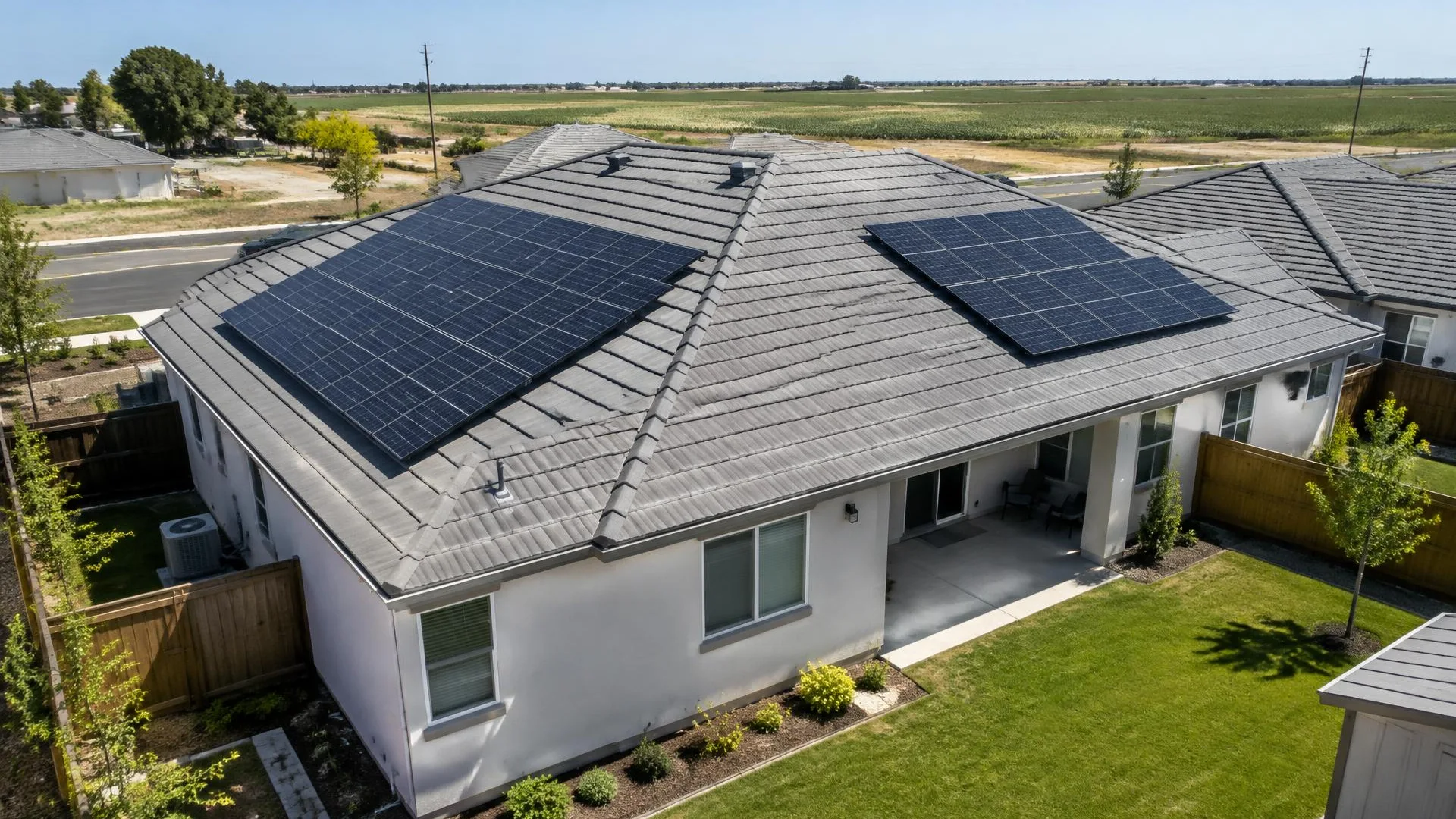
Solar panels on the roof do not automatically keep a home powered when the grid goes down. Gustine homeowners considering solar for resilience need that distinction explained at the start. We review household usage, roof suitability, and the electrical panel while discussing whether battery storage and a specifically designed backup arrangement fit the project. The conversation should identify essential loads and operating limits instead of relying on an undefined promise that solar means energy independence.
- Outage goal discussion
- Essential-load priorities
- Battery option review
- Electrical readiness assessment
What we handle
Make Outage Capability a Separate Design Question
Ordinary grid-tied solar generally shuts down during a grid outage. Providing power safely during that interruption requires suitable equipment and controls. The design must explain supported loads, available power, stored energy, and relevant operating conditions rather than treating backup as a standard panel feature.
Since 2001
Serving the Central Valley
- 01Outage goal discussion
- 02Essential-load priorities
- 03Battery option review
- 04Electrical readiness assessment
- 05Roof and usage review
- 06Backup scope explanation
Begin with a short list of what you actually want to support. Lighting, refrigeration, communications, and selected other needs may lead to a different conversation from maintaining every appliance. Starting and running demands both matter, as does how long equipment is used. We discuss those priorities within the proposed system's limits without promising a fixed duration before the loads and equipment are understood.
Battery storage may be part of a backup design, but the battery label does not describe the complete arrangement. Compatible controls, electrical connections, and the division between supported and unsupported loads need explanation. Solar recharging during an outage also depends on the designed system and conditions. Do not assume that daylight guarantees continuous operation or that an ordinary solar installation can be manually improvised into an emergency power source.
The project still needs the fundamentals of a sound solar proposal: usage-based sizing, roof assessment, electrical readiness, clear installation scope, and transparent financial assumptions. Backup goals may change equipment choices and costs, so they belong in the design rather than as a late expectation. Financing and incentive guidance should reflect the actual proposed work. Neither resilience planning nor storage establishes guaranteed savings or unlimited household operation.
When Backup Needs Explicit Discussion
Ask direct questions if resilience is a major reason for considering solar. A proposal focused on annual energy production may not address outage operation, essential loads, or the equipment needed to deliver the function you expect.
- Outage resilience priority
- Essential refrigeration needs
- Home communications reliance
- Large appliance expectations
- Unclear battery function
- Whole-home backup claims
Define Your Backup Priorities
Tell us what your Gustine household hopes to keep operating during an outage. We can discuss solar and battery options while making the difference between generation, storage, and designed backup explicit.
Solar Installation questions
Frequently Asked Questions
Ordinary grid-tied systems are designed to stop supplying power during a grid outage. Continuing operation requires a suitable backup arrangement with appropriate controls. Panels alone do not establish that capability, even when sunlight is available.
No. The complete system must be designed for backup, including compatible equipment, controls, and supported loads. A battery can serve other purposes. Ask for an explicit description of outage operation rather than infer it from the equipment list.
Duration depends on available stored energy, the loads operating, usage patterns, and relevant system conditions. Solar replenishment may also vary. A fixed runtime should not be promised without clearly stated assumptions about the designed system and household demand.
Selected-load planning can be considered as part of an appropriate design. The final arrangement depends on electrical conditions and equipment choices. Identifying priorities early helps frame that discussion without assuming that every existing circuit will be supported.
That depends on the specifically designed arrangement, compatible equipment, and available conditions. It should not be assumed for every solar-and-storage installation. The proposal should explain the intended operation and limitations for the actual system being offered.
Do not improvise electrical connections or attempt to bypass shutdown functions. Safe outage operation requires a properly designed system. Discuss backup needs before installation and follow the operating guidance for the equipment rather than attempting emergency wiring changes.