
Gustine
Treat a Sudden Sound Seriously
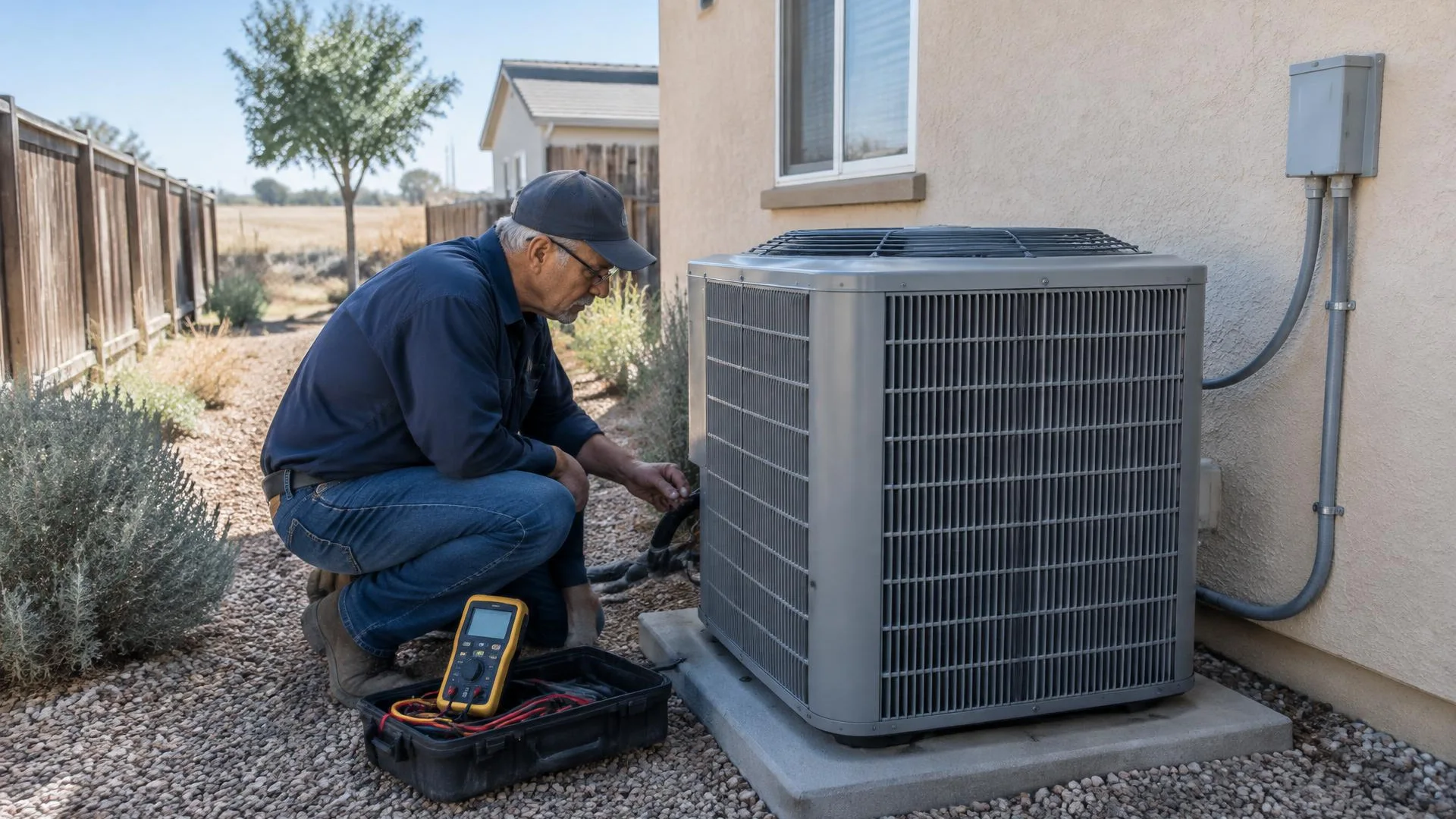
A sudden harsh sound from cooling equipment can be a reason to stop operation before a fault becomes more damaging. All American helps Gustine homeowners arrange emergency evaluation of unusual AC noise. Describe whether the sound is grinding, banging, humming, or clicking and whether cooling changed at the same time. Do not remove covers or reach through a grille. If there is smoke, sparking, or an immediate fire hazard, leave the area and contact emergency services.
- Noise diagnosis
- Fan assessment
- Motor testing
- Vibration review
What we handle
Observe From a Distance
Sound provides a clue, not a parts list. Different faults can create similar noises, and vibration can travel away from its source. A careful diagnosis connects the reported sound with component condition, electrical behavior, airflow, and the point in the operating sequence when it occurs.
Since 2001
Serving the Central Valley
- 01Noise diagnosis
- 02Fan assessment
- 03Motor testing
- 04Vibration review
- 05Electrical checks
- 06Repair verification
If the sound is severe or newly associated with obvious distress, switch cooling off when that can be done safely. Avoid approaching damaged equipment or wet electrical areas to reach a control. A recording from a safe position may help explain an intermittent concern, but no recording is worth exposure to moving parts. Note whether the sound began at startup, developed during operation, or happened as the unit stopped. Report any burning odor or visible movement of the cabinet before ordinary comfort details.
The technician may inspect fans, motors, mounting conditions, accessible panels, and relevant electrical components. Airflow and duct conditions can also create or transmit noise, so the loudest location is not always the origin. A humming outdoor unit with a stationary fan needs testing, not a hand-assisted start. We explain the evidence behind the finding and whether the proposed work addresses a failed component, an installation issue, or both. Additional investigation may be needed when the symptom cannot be reproduced safely.
After authorized repairs, appropriate operation should be observed and any remaining sound explained. Equipment may have normal clicks and airflow noise, but a new baseline should not include an unexplained severe symptom. Ask what to monitor and whether further work is recommended. While the system is off, maintain a safe plan for indoor comfort rather than repeatedly restarting to see if the noise disappeared. If vulnerable occupants develop signs of heat illness, seek emergency medical help and move to a cooler safe place instead of waiting for the equipment evaluation.
Urgent Sound Clues
Describe timing and accompanying symptoms rather than trying to identify the part yourself. Keep your distance, and report smoke, electrical odors, visible damage, or severe vibration before requesting routine sound assessment.
- Sudden grinding
- Loud banging
- Electrical buzz
- Fan scraping
- Severe vibration
- Burning smell
Report an Abnormal AC Sound
Contact All American with the sound pattern and any safety concerns. Ask about current service availability, leaving abnormal equipment off when advised and avoiding panel removal, fan contact, or repeated trial starts.
Emergency AC Repair questions
Frequently Asked Questions
Stop cooling if safe and seek guidance rather than continuing abnormal operation. Grinding can indicate a condition that deserves prompt inspection, but the sound alone does not identify the fault. Do not restart repeatedly to test whether it has improved.
No. Humming can arise from several electrical or mechanical conditions. Testing is needed before a capacitor, motor, or another component is condemned. Avoid touching equipment or trying to assist a stationary fan while it remains energized.
A recording made from a safe distance can help communicate an intermittent sound. Do not open cabinets, enter hazardous areas, or deliberately trigger more noisy starts. The recording supplements inspection; it does not replace component and operating checks.
A disappearing sound does not necessarily mean the cause is gone. Report what occurred and any changes in cooling or vibration. Intermittent faults may require a detailed history or further observation, particularly when the original sound was severe.
Smoke, visible fire, sparking, or an immediate electrical hazard calls for appropriate emergency help and moving away from the area. Do not remain near the unit to troubleshoot. An HVAC appointment is not a substitute for responding to an immediate hazard.
No. Sound depends on equipment, installation, airflow, and surroundings. If replacement is considered, ask how the proposed design addresses the identified source and what normal operating sound to expect rather than accepting a general promise of silence.