
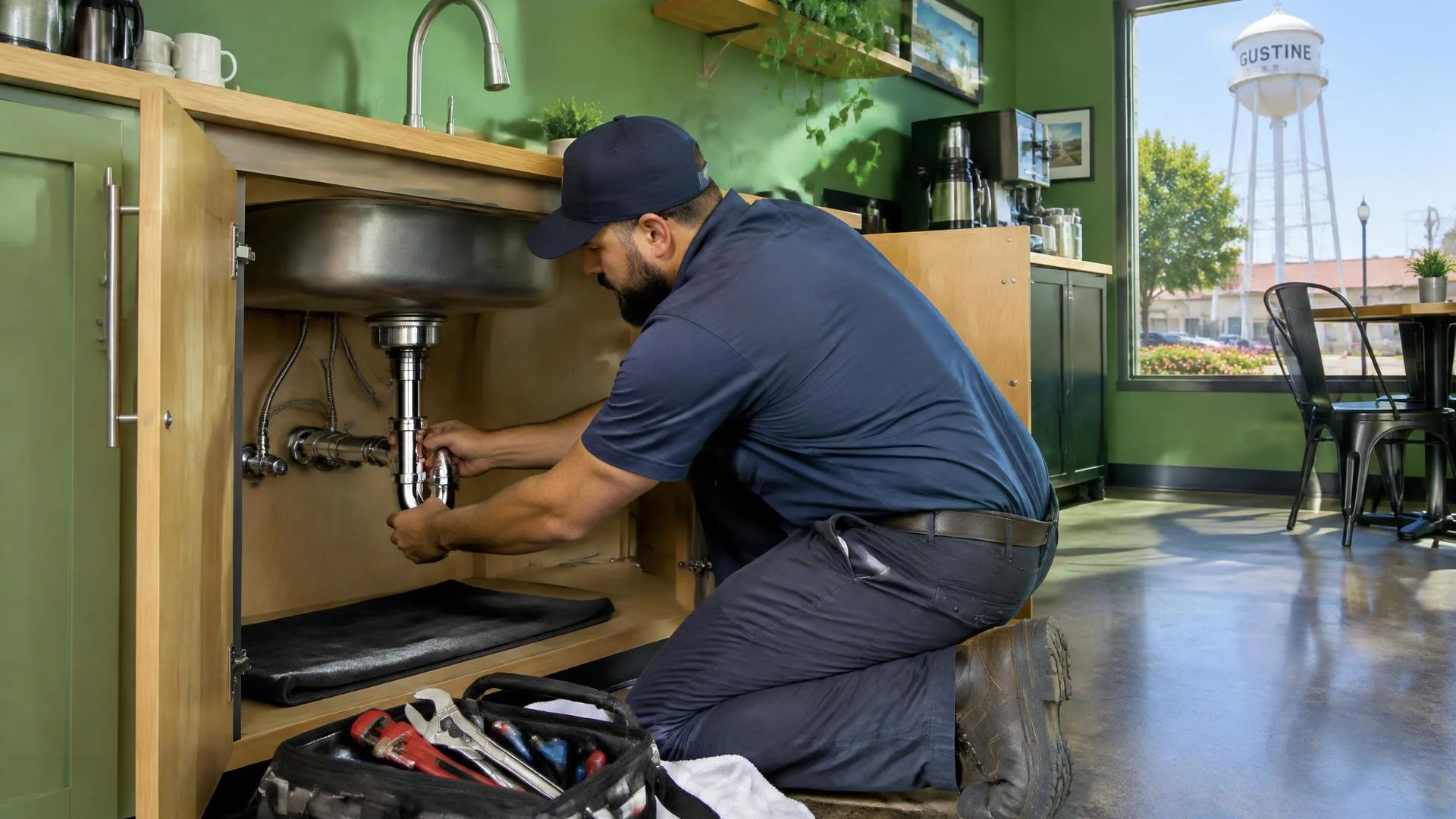
Gustine
Scheduling Commercial Plumbing Maintenance in Gustine
Maintenance is easier to fit into a business when it is planned instead of forced by a failure. In Gustine, our commercial plumbing service helps you decide what to check, how often, and when visits fit your operation. A thoughtful schedule can catch worn parts, slow drains, and small leaks while they are manageable, rather than waiting until they disrupt customers or staff.
- Maintenance planning
- Restroom and fixture checks
- Drain and floor drain review
- Water heater plumbing inspection
What we handle
Planning Plumbing Checks Around Your Business
Good scheduling balances what the plumbing needs with what the business can accommodate. We help build a plan that is realistic for both.
Since 2001
Serving the Central Valley
- 01Maintenance planning
- 02Restroom and fixture checks
- 03Drain and floor drain review
- 04Water heater plumbing inspection
- 05Visit grouping to limit interruptions
- 06Maintenance notes and follow-ups
A commercial maintenance plan is most useful when it begins with the building's actual systems and operating needs. Restrooms, break-area sinks, water heaters, floor drains, and equipment connections do not all face the same demands or produce the same consequences when they fail. For a Gustine business, an inventory can identify which areas have frequent use, a history of leaks, or limited alternatives during repairs. Existing service records help distinguish recurring concerns from components that have been operating normally. The purpose is to prioritize attention, not to assign identical work to every fixture. A practical plan should explain what deserves review and why, while leaving room to respond when conditions change or new symptoms appear between visits.
Scheduling matters because some plumbing tasks can be performed with little interruption while others require restricted access or a water shutdown. Grouping compatible work may reduce repeated interruptions, but only when the same access and isolation arrangements genuinely serve those tasks. We discuss the business's quieter periods, approval process, and any areas that cannot be taken out of use together. That conversation helps identify a workable sequence rather than promising that maintenance will never affect operations. Tasks involving different systems may still need separate planning. If a review uncovers a more significant repair, it should be discussed as a distinct scope rather than assumed to be included merely because the visit was described as routine preventive maintenance.
The record from each visit should make the next one more informed. Notes about observed conditions, completed work, and items to watch provide a basis for adjusting the plan. An isolated drip that was corrected may not need the same follow-up as a component with repeated deterioration. Frequency should reflect use, condition, and service history rather than a single interval applied to every business. Maintenance can help identify developing issues, but it cannot guarantee that no unexpected failure will occur. Staff should still report unusual sounds, changing fixture performance, leaks, or drainage symptoms between visits. A responsive plan combines those observations with service findings so attention follows the building's needs instead of becoming a checklist with no practical priorities.
Reasons to Set Up a Maintenance Plan
Some buildings benefit more than others from regular plumbing attention. These conditions suggest a planned schedule may be worthwhile.
- Frequent minor repairs
- Older plumbing or fixtures
- Heavy daily restroom use
- Recurring slow drains
- Multiple tenants sharing systems
- Previous leak or backup history
Build a Plumbing Maintenance Plan in Gustine
Tell us how your building is used and what has gone wrong before. We will help plan checks that fit your schedule and your plumbing.
Commercial Plumbing questions
Frequently Asked Questions
It depends on building age, use, and history. Heavily used or older systems may benefit from more frequent attention than lightly used ones.
Scope varies, but it may include fixtures, drains, supply connections, and equipment plumbing. We tailor the visit to your building's needs.
We discuss scheduling options based on the work. Some tasks suit quiet periods, while others need specific conditions.
No. It can help catch wear early, but it cannot eliminate all risk. It improves your chance of addressing problems on your terms.
It reduces repeated interruptions and lets us look at related systems together, which can reveal patterns.
Keep notes on findings, repairs, and recommendations. They help future technicians and help you plan budgets and upgrades.