
Fresno
Consider the Rooms Around the Water Heater
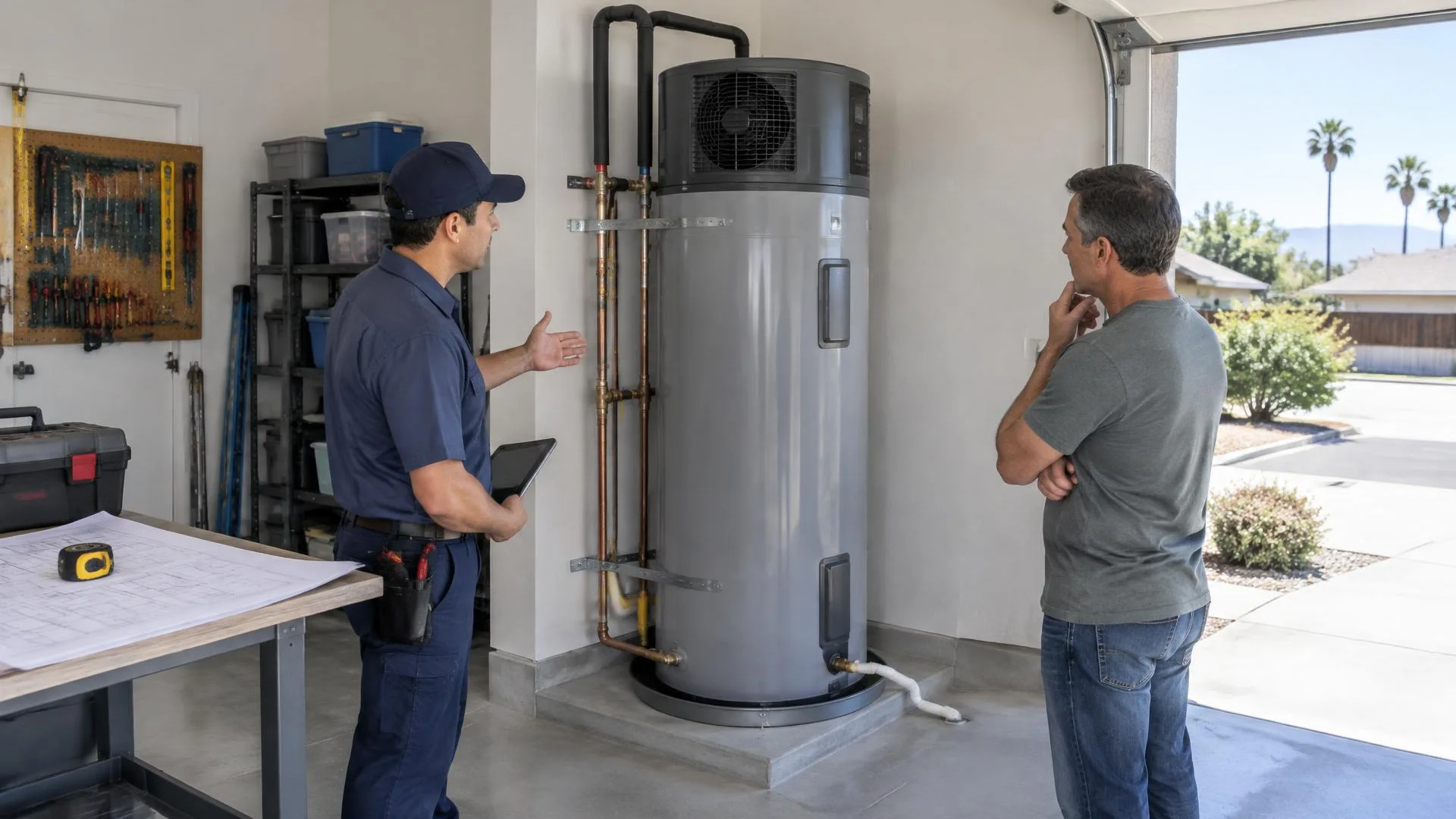
Operating sound is worth discussing before a heat pump water heater is installed, especially when the proposed location adjoins spaces where quiet matters. For Fresno homeowners, we review nearby rooms and household routines alongside equipment characteristics and installation requirements. The aim is an informed siting decision, not a promise of silence. Air availability, condensate disposal, manufacturer clearances, connections, and maintenance access still need evaluation even when sound is the main reason you are comparing locations.
- Adjacent-room review
- Sound discussion
- Location comparison
- Enclosure assessment
What we handle
Put Sound in Context
How noticeable equipment feels depends on more than a product description. Location, adjacent activities, and the installation setting influence the experience. We discuss those factors without assuming every household has the same tolerance or that a particular room will always provide the quietest result.
Since 2001
Serving the Central Valley
- 01Adjacent-room review
- 02Sound discussion
- 03Location comparison
- 04Enclosure assessment
- 05Connection planning
- 06Operating orientation
Start by identifying where people sleep, work, relax, or spend time near the proposed equipment. Explain whether those uses overlap with periods when hot water is commonly replenished. This does not establish an exact operating schedule or sound outcome, but it gives the assessment practical context. Model documentation can inform the discussion, while a general comparison with another appliance should not be treated as a guarantee of how the installation will sound.
A location chosen for separation must still support proper operation. Available air volume, manufacturer clearances, condensate routing, plumbing, and professional electrical evaluation remain essential. Enclosing equipment to reduce perceived sound can interfere with operating or service requirements if not designed appropriately. Any proposed enclosure or related treatment needs equipment-specific review. Moving the tank also affects connections and access, so alternatives should be compared as complete installation arrangements rather than acoustic ideas alone.
At handoff, ask which sounds are expected for the installed model and which changes should prompt a service call. New or unusual noise should not automatically be dismissed as ordinary heat pump operation. Homeowners should not remove covers, alter mounts, or modify electrical components while investigating. A thoughtful plan explains the limits of sound predictions, preserves required airflow and service space, and connects your preferences with a feasible installation instead of promising an inaudible appliance.
Sound Questions to Raise
Discuss sound early when a proposed location borders sleeping or working areas, an enclosure is being considered, or equipment comparisons promise quiet operation without addressing the actual installation setting and routines.
- Nearby bedroom
- Home workspace
- Shared wall
- Enclosure plans
- Sound sensitivity
- Relocation options
Discuss Location and Sound
Arrange a Fresno heat pump water heater assessment and identify nearby spaces where sound matters. We can review location tradeoffs while keeping air requirements, condensate, clearances, and professional electrical checks central.
Heat Pump Water Heaters questions
Frequently Asked Questions
No. Operating sound should be expected and discussed using the selected model's information. How noticeable it is depends on the installation and surrounding activities. Avoid relying on a universal claim that the equipment will be inaudible.
Not automatically, but it deserves careful discussion. Equipment characteristics, the actual setting, and your preferences matter. A site assessment can compare options without assuming either that the location will be acceptable or that relocation is always required.
Only after equipment-specific evaluation of air volume, manufacturer clearances, service access, and other requirements. An enclosure intended to reduce sound can create operational problems if it restricts the setting. Cabinet dimensions alone do not establish suitability.
Relocation may be worth evaluating, but its outcome is not guaranteed and it changes other installation requirements. Plumbing, electrical routing, condensate disposal, access, and air availability must be reviewed alongside the desired separation from nearby activities.
Seek professional assessment rather than assume every noise is normal. Follow the user guidance for the installed equipment and avoid dismantling covers or modifying components. A changed sound can have several causes that require appropriate investigation.
They offer useful comparison information, but they do not fully describe every installation experience. Room relationships, surroundings, and personal sensitivity also matter. Treat specifications as one part of siting discussions rather than a guarantee of perceived quiet.