
Fresno
When Cooling Feels Like Heat
Air coming from the vents is not useful cooling if it stays warm or becomes noticeably hot. All American helps Fresno homeowners investigate this urgent comfort problem by reviewing the operating mode, equipment response, and cooling performance. Tell us whether the change followed thermostat work, a power interruption, or unusual sounds. Avoid opening cabinets or altering wiring to test a theory. A clear symptom history is more helpful than repeatedly lowering the thermostat.
- Warm-air diagnosis
- Mode checks
- Outdoor evaluation
- Control testing
What we handle
Verify the Mode and Response
Warm airflow can result from several conditions, including absent cooling, control errors, or equipment faults. Heat-pump systems add mode-specific considerations. Diagnosis should establish what the system is actually doing rather than assuming that warm air always means it needs refrigerant.
Since 2001
Serving the Central Valley
- 01Warm-air diagnosis
- 02Mode checks
- 03Outdoor evaluation
- 04Control testing
- 05Heat-pump assessment
- 06Cooling verification
You can safely review the thermostat's selected mode and temperature setting using its normal controls. Mention whether the indoor fan runs continuously and whether the outdoor equipment appears active from a safe distance. If a thermostat was recently replaced or reset, that timing may matter. Do not change installer settings or internal wiring to experiment with cooling operation. If there is a burning odor, smoke, or severe mechanical sound, stop operation if safe and seek appropriate help rather than continuing a comfort check.
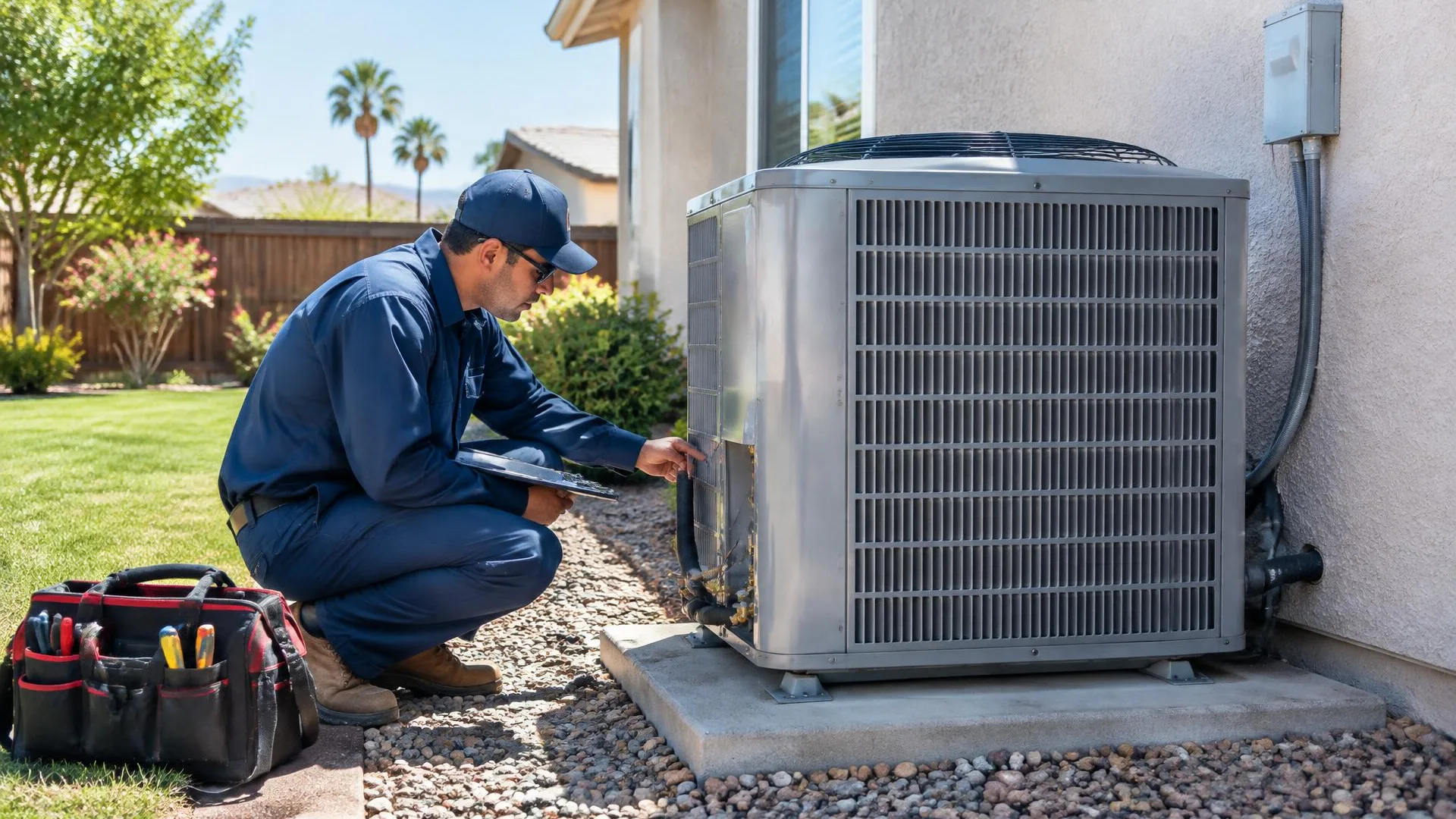
The technician may evaluate control commands, airflow, outdoor operation, and refrigerant performance as appropriate. For a heat pump, correct mode response is part of the investigation. Similar indoor symptoms can arise from different faults, so testing should determine the repair path. Refrigerant handling is professional work, and adding charge without understanding the condition is not a substitute for diagnosis. We explain the confirmed findings and whether the proposed work addresses the entire concern or only one identified problem.
While service is being arranged, assess how the indoor conditions affect occupants. Move to a cooler safe location when needed, especially for infants, older adults, and people with health vulnerabilities. Seek emergency medical help if signs of heat illness develop. Do not rely on the circulation of warm air as evidence that the home is becoming safer. After authorized repair, appropriate operating checks help establish that the system is delivering cooling again, and the technician can explain realistic recovery expectations without promising an exact room-temperature timetable.
Report the Change
Describe whether air is merely not cool or actively feels heated, and when that began. Include recent thermostat changes while leaving internal settings, wiring, and refrigerant components untouched for professional evaluation.
- Warm vents
- Hot delivery
- Mode mismatch
- Continuous fan
- Idle condenser
- Recent reset
Request Warm-Air Diagnosis
Contact All American with the selected mode, equipment type, and symptom timeline. Ask about service availability while making a separate plan for a cooler safe place if indoor discomfort is increasing.
Emergency AC Repair questions
Frequently Asked Questions
No. Controls, outdoor operation, airflow, and other faults can produce warm delivery. Refrigerant concerns require qualified testing under appropriate conditions. A diagnosis should identify the reason for poor cooling rather than beginning with an assumed recharge.
A lower target does not repair a system that is failing to cool. It may simply prolong the request. Record the current setting and symptoms, then ask for guidance instead of repeatedly changing the thermostat in search of a response.
Incorrect compatibility or configuration can affect operation, particularly with heat pumps and staged equipment. The timing is worth reporting, but it does not prove the thermostat is responsible. A technician should verify both the control request and equipment response.
Ask the service team based on the equipment and symptoms. Air circulation does not repair missing cooling and may not improve safety as indoor temperatures rise. Stop operation if there are electrical odors, smoke, ice, or other concerning conditions.
Move to a cooler safe location if possible and seek emergency medical help for suspected heat illness. Do not wait for the AC appointment or continue equipment checks while a person may be experiencing a heat-related medical emergency.
The technician can review appropriate equipment operation and relevant measurements after authorized work. A brief sensation of cooler air is not the only check. Ask about remaining limitations and what to report if the system still cannot maintain comfort.