
Dos Palos
Find Where Treatment-Related Flow Changes Begin
Reduced flow after treatment installation or between filter changes deserves a structured review. All American helps Dos Palos homeowners consider cartridges, valve positions, equipment requirements, and the difference between an isolated outlet issue and a whole-home symptom. A filter should not be blamed automatically, but its condition and selection are relevant. Describe when performance changed, which fixtures are affected, and whether the pattern varies with simultaneous water use.
- Treatment flow symptom review
- Cartridge condition assessment
- Valve position clarification
- Equipment flow rating discussion
What we handle
Compare Conditions Before Replacing Equipment
A pressure complaint can involve incoming supply, treatment restrictions, piping, or a fixture itself. Observations and appropriate measurements help separate those possibilities. The goal is to understand the water path and operating conditions before choosing a new cartridge, larger unit, or unrelated repair.
Since 2001
Serving the Central Valley
- 01Treatment flow symptom review
- 02Cartridge condition assessment
- 03Valve position clarification
- 04Equipment flow rating discussion
- 05Whole-home versus outlet comparison
- 06Maintenance-based troubleshooting
Start by distinguishing a problem at one faucet from a change affecting several fixtures. Note whether both hot and cold water are involved and whether performance is different during busy periods. A gradual decline after a filter change can suggest a different investigation from a sudden drop following valve operation. These details provide direction, but they do not establish the failed component without evaluation.
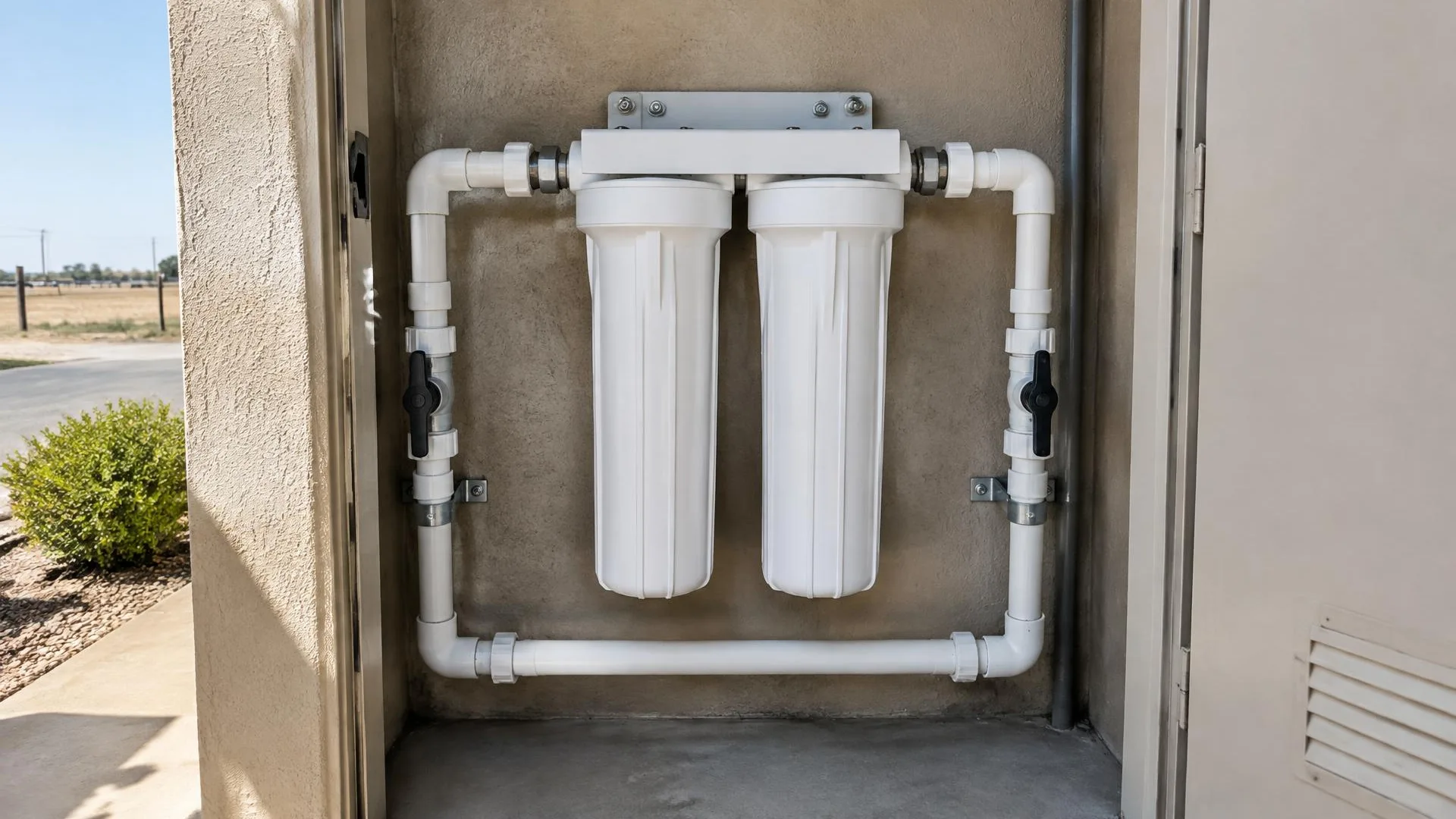
Filters have operating flow requirements and can become restrictive as they collect material. Incorrect cartridge selection, an unsuitable rating, or a valve left partly positioned may also matter. All American services filtration and conditioning equipment and can review the relationship between the treatment stage and household demand. A lower-restriction cartridge should not be substituted casually if doing so changes the intended treatment function.
Collect model numbers, cartridge specifications, and the date of the last service. Do not open a pressurized housing or experiment with unfamiliar bypass valves to compare flow. Explain any recent changes so an appropriate assessment can be planned. If pressure loss is confirmed across a treatment stage, the next step should address the cause while preserving the treatment goal. Replacing an entire system is a separate decision that should follow the findings rather than a reaction to one weak fixture.
Flow Patterns That Help Narrow the Problem
Useful comparisons do not require dismantling equipment. Record where reduced flow occurs and what changed beforehand so supply conditions, fixture restrictions, and treatment maintenance can be considered in a sensible order during assessment.
- Flow declining between filter changes
- Several fixtures weakening together
- Problems during simultaneous use
- Change after treatment servicing
- Hot and cold behaving differently
- Only one outlet affected
Discuss Reduced Flow in Dos Palos
Contact All American with the equipment model, service history, and fixtures affected. Those details help organize a review of treatment restrictions, operating demand, and other possible causes before replacement options are considered.
Water Conditioning questions
Frequently Asked Questions
No. A loaded cartridge is one possibility, but supply conditions, valve positions, piping, and fixture restrictions can also matter. The pattern across outlets and any changes since service help determine where the assessment should begin.
It can, depending on the product, media, housing, and operating conditions. Cartridge selection should balance the intended treatment function with appropriate flow requirements. A finer rating should not be assumed automatically better for every installation.
It helps relate the symptom to maintenance and recent changes. A decline developing over time differs from a problem that starts immediately after service. The cartridge type and any valve adjustments made during that work are also relevant.
Only operate equipment according to the instructions for your installation and your level of familiarity. Do not experiment with unknown valve combinations. Describe the arrangement and request guidance rather than assuming a generic bypass procedure applies.
No. The cause must first be established. A larger housing cannot correct an unrelated fixture restriction or supply issue, and equipment changes still need to preserve the treatment purpose and suit the plumbing arrangement.
Review the cartridge condition, correct parts, valve arrangement, and equipment operating requirements. The appropriate response may involve maintenance or a design change, but it should be tied to the findings rather than an assumption that all equipment needs replacement.