
Dos Palos
Plan Storage as Part of the System
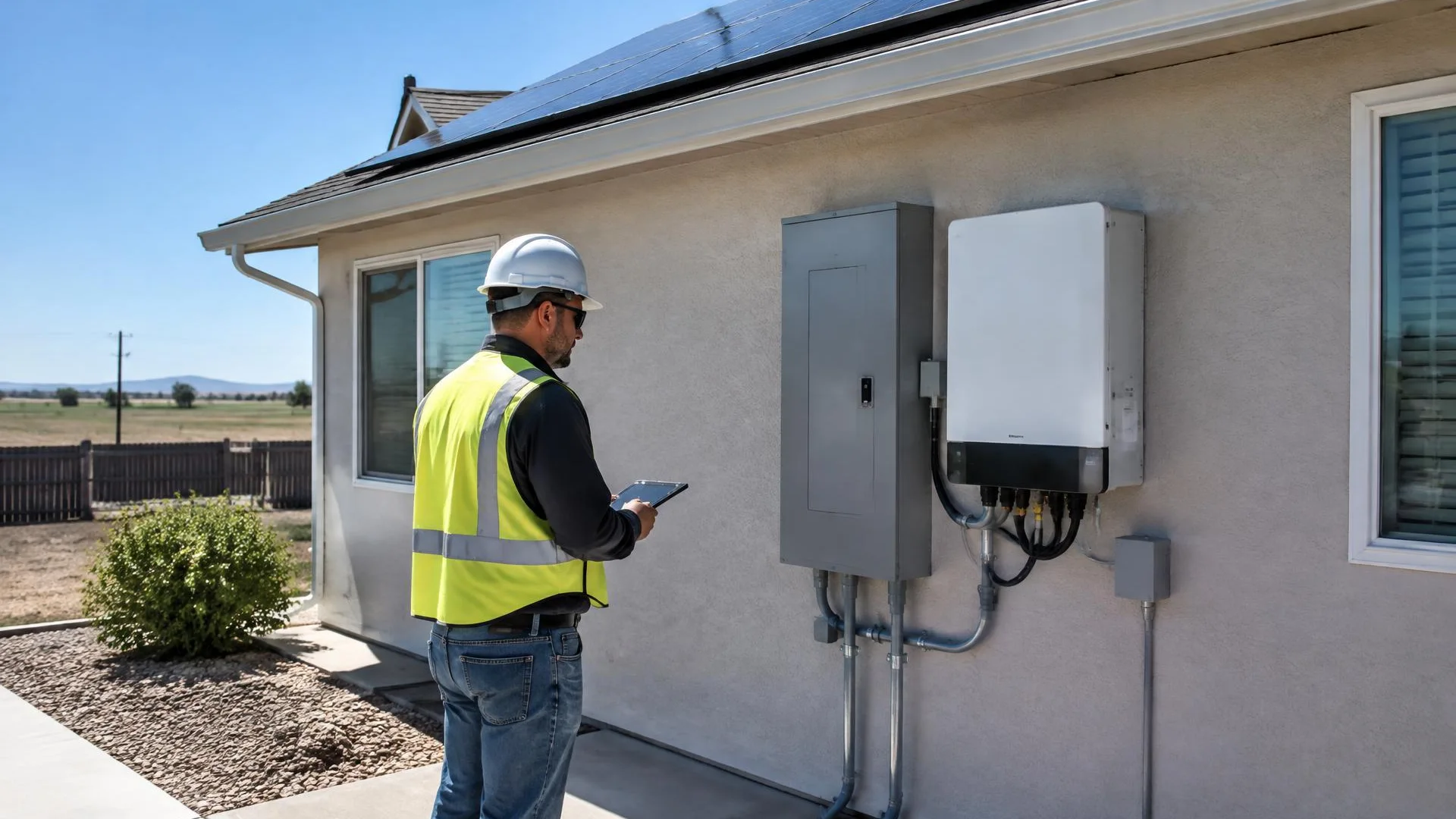
A battery changes the solar planning conversation, but its purpose needs to be clear. Dos Palos homeowners may be interested in storing energy for later use, preparing for selected outage needs, or considering storage after the initial solar installation. We review those goals alongside usage, roof conditions, and electrical readiness. The proposal should distinguish what the battery is intended to do from what requires additional equipment, design decisions, or future work.
- Storage goal discussion
- Solar system design
- Usage timing review
- Electrical readiness checks
What we handle
Define the Storage Goal Before the Equipment
Energy management and backup are related but different functions. A battery can be part of either discussion, yet its presence alone does not establish outage operation. Compatibility, connection arrangements, equipment locations, and household priorities all influence the proposed integration and its practical limits.
Since 2001
Serving the Central Valley
- 01Storage goal discussion
- 02Solar system design
- 03Usage timing review
- 04Electrical readiness checks
- 05Battery compatibility planning
- 06Backup limitation explanation
Start with the reason storage interests you. If the priority is using stored energy later, the design discussion should connect that goal to usage timing and the applicable financial assumptions. If outage support is the priority, identify the essential loads rather than request an undefined whole-home promise. Battery capacity, power capability, and the supporting controls all affect what an appropriately designed system can provide.
Integration also depends on the selected solar and electrical equipment. Planning storage now may involve different decisions from adding it to an existing system later. We discuss battery options without assuming every product can be combined or that a future addition will be a simple attachment. Where later storage is a possibility, the proposal should explain current provisions, remaining uncertainties, and work that is not included.
The battery discussion should remain connected to the rest of the project. Roof suitability, household usage, electrical panel needs, and equipment siting still matter. Financing and incentive guidance should distinguish the solar and storage scope and rely on current verified terms. Neither batteries nor panels justify a guaranteed savings claim. Ordinary grid-tied solar generally shuts off during outages unless the system includes a specifically designed backup arrangement.
When Integration Deserves Early Attention
Bring battery goals into the first design discussion. Whether storage is immediate or only a future possibility, early clarity helps avoid assumptions about compatibility, included equipment, backup operation, and the scope of later installation work.
- Storage planned now
- Future battery interest
- Evening energy use
- Selected backup priorities
- Existing solar equipment
- Unclear storage purpose
Describe What Storage Should Do
Tell us why a battery interests your Dos Palos household. We can discuss solar integration, electrical requirements, and realistic limitations before treating storage as a generic add-on or an unlimited backup solution.
Solar Installation questions
Frequently Asked Questions
Yes, battery options are part of the service discussion. The proposed arrangement depends on goals, compatibility, electrical conditions, and siting. The scope should explain the intended functions instead of assuming every solar-and-battery package behaves the same way.
That can be considered, but future compatibility and installation requirements need review. Do not assume today's solar equipment makes every later battery a straightforward addition. A proposal should identify any present provisions and avoid guaranteeing unknown future conditions.
No. Backup requires a suitable system arrangement, controls, and load planning. A battery used for energy management may not provide the outage operation you expect. The proposal must explain whether backup is included and what it can support.
That depends on the designed power capability, available energy, connected loads, and operating conditions. Large or simultaneous loads can change feasibility. We discuss priorities rather than assume every appliance can run normally for an unspecified period.
No financial result should be guaranteed. Costs, usage timing, rates, system operation, and financing all influence the outcome. Storage should be evaluated against its intended purpose and transparent assumptions, not an unsupported universal payback claim.
Bring electricity records, the loads you consider essential, and any existing solar equipment details. Explain whether your interest is everyday energy use, outage support, or both. Leave electrical connection and capacity checks to the professional assessment.