
Dos Palos
Connect Appliances to a Clear Circuit Plan
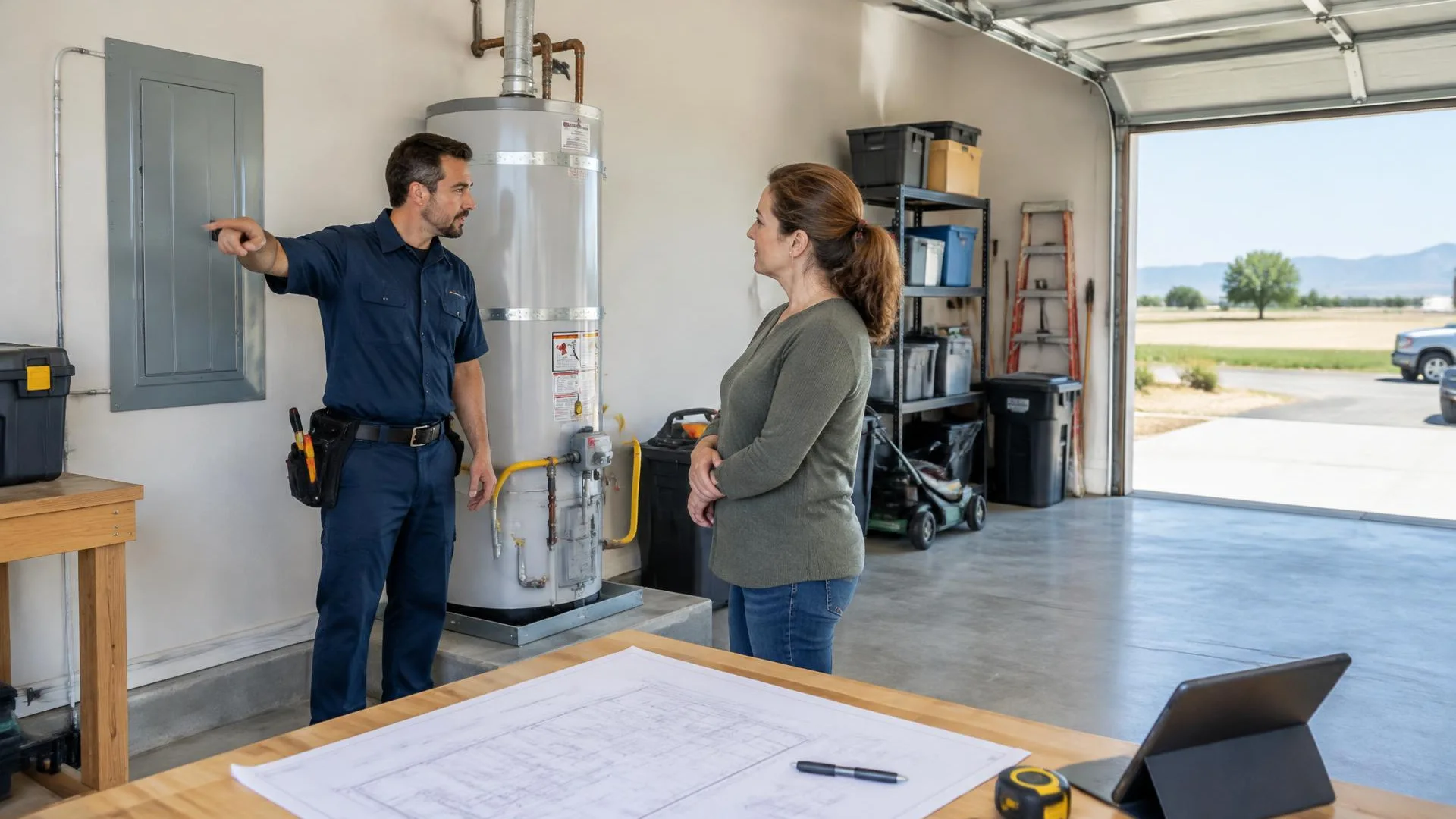
Electric appliance planning becomes more useful when each proposed installation has a defined connection strategy. In Dos Palos, we help connect heating, water heating, and cooking goals with professional circuit assessment. The discussion includes where equipment will sit, how wiring may reach it, and which requirements depend on the selected model. A nearby outlet or unused breaker position is not enough information to confirm that a new appliance can be installed.
- Appliance requirements
- Circuit assessment
- Route planning
- Location coordination
What we handle
Design Connections Deliberately
Circuits are part of an overall electrical system, not isolated accessories added after an appliance arrives. Qualified professionals evaluate the intended load and installation requirements together. Early coordination helps the proposal explain necessary wiring work, location constraints, and assumptions that must be resolved before installation.
Since 2001
Serving the Central Valley
- 01Appliance requirements
- 02Circuit assessment
- 03Route planning
- 04Location coordination
- 05Protection review
- 06Scope documentation
The starting point is a reasonably defined appliance scope. A cooking conversion, heat pump, and water heater may have different connection requirements, so a general request for more electrical capacity is not a complete design brief. We review proposed locations and likely equipment choices before identifying questions for electrical evaluation. Existing connections provide context, but their presence does not establish suitability for replacement equipment or a different use.
Circuit planning also involves the route between electrical equipment and the appliance. Access, finished surfaces, distance, and other building systems can influence how work is performed. Professionals determine appropriate wiring, protection, disconnecting arrangements, and related requirements; homeowners should not inspect concealed wiring or make their own compatibility tests. If a location changes, the proposal should explain the effect on electrical work rather than assuming the original connection plan still applies unchanged.
Connections must be coordinated with the appliance's other installation needs. A heat pump water heater requires suitable air volume, condensate drainage, manufacturer clearances, and plumbing access in addition to electricity. HVAC equipment needs its own mechanical design and controls coordination. A useful electrification proposal identifies which circuits serve current installations, which preparations relate to future phases, and when another assessment is needed if the equipment specification or overall project scope changes.
Connection Questions to Resolve
Circuit planning deserves attention when an appliance will move, a conversion changes electrical demand, or a proposal assumes existing wiring can be reused without explaining a professional evaluation of suitability.
- Relocated appliances
- New circuits
- Unverified outlets
- Hidden routes
- Changing models
- Future preparation
Define the Connection Work
Arrange a Dos Palos electrification assessment to review proposed appliances and professional circuit planning. Share intended locations and accessible records, but leave wiring inspection and electrical testing to qualified professionals.
Home Electrification questions
Frequently Asked Questions
Only a professional evaluation can establish that. The selected equipment's requirements, circuit characteristics, capacity, and applicable installation rules all matter. An outlet being nearby or unused does not demonstrate that it is an appropriate connection.
A sufficiently defined equipment specification is important because requirements vary. Planning can begin earlier, but final electrical work should reflect the actual installation needs. If the model changes, the electrical design may need to be reviewed again.
Not by itself. A circuit serves a particular load, while the broader electrical system must also be evaluated. Professionals assess both the branch connection and the supporting equipment rather than treating a new circuit as proof of adequate capacity.
They can. Access and the proposed appliance location may influence labor, coordination, and restoration responsibilities. Ask the proposal to identify routing assumptions and exclusions so concealed conditions or location changes are not mistaken for included work.
That possibility needs equipment-specific evaluation. A circuit intended for one appliance should not be assumed suitable for another future load. Clearly identify any preparation's purpose and revisit its adequacy when the later project is actually designed.
You can provide accessible appliance labels and prior installation documents without opening electrical equipment. Internal inspections, wiring verification, and testing belong to qualified professionals. Avoid removing covers or attempting to determine circuit suitability from appearance alone.