
Chowchilla
Understand What Salt-Free Conditioning Does Differently
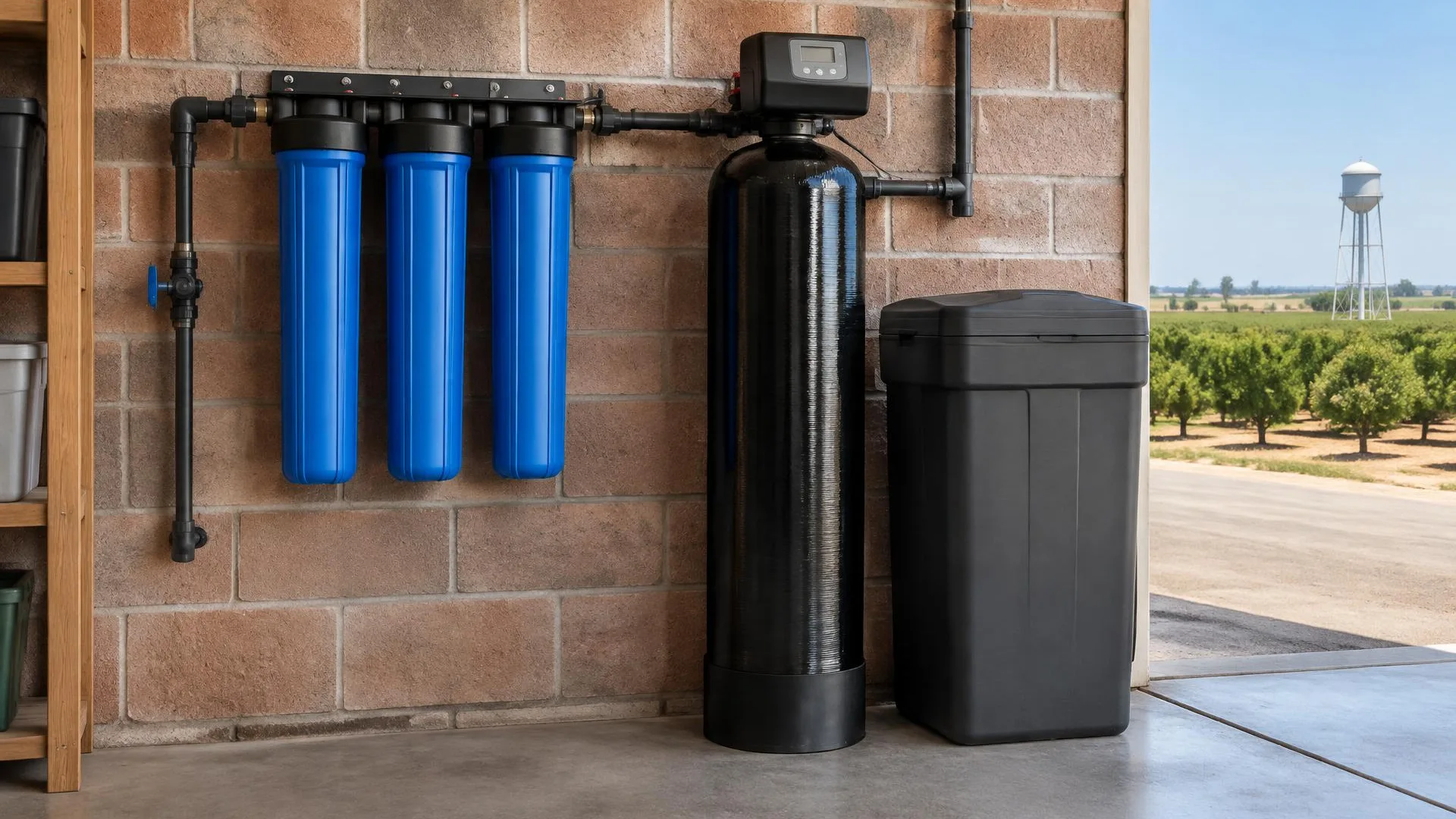
Salt-free conditioning and conventional softening should not be described as identical processes. All American helps Chowchilla homeowners compare their intended functions, maintenance requirements, and fit with relevant water information. An ion-exchange softener removes hardness minerals, while a salt-free conditioner generally addresses how scale-forming minerals behave rather than removing them. The right discussion begins with the outcome you want, followed by product-specific claims and the conditions required for the selected equipment.
- Hardness testing review
- Ion-exchange softener comparison
- Salt-free function explanation
- Product limitation discussion
What we handle
Compare Outcomes, Not Just the Absence of Salt
A product can avoid salt refills without producing conventionally softened water. That distinction affects expectations for hardness testing and household use. Comparing systems fairly means identifying what each is designed to change, what remains in the water, and what ongoing service the equipment requires.
Since 2001
Serving the Central Valley
- 01Hardness testing review
- 02Ion-exchange softener comparison
- 03Salt-free function explanation
- 04Product limitation discussion
- 05Maintenance requirement review
- 06Treatment goal clarification
Traditional ion-exchange softening removes hardness minerals through a defined treatment process and uses regeneration according to the equipment design. Salt-free conditioning technologies are not all identical, and their stated purposes and operating limits need product-specific review. They should not be assumed to remove hardness simply because they are marketed alongside softeners. Relevant testing helps establish the water characteristics before either approach is considered.
All American discusses conventional softeners and salt-free conditioning tradeoffs within its water-conditioning service. The choice should connect to the desired result, whether that is measured hardness reduction or another defined treatment objective. Neither approach should be presented as universal filtration or a complete drinking-water safety solution. Other concerns, including sediment or a specific tested substance, may require a different treatment stage selected for that target.
Ask how the proposed system's performance is evaluated and what changes you should reasonably expect. A hardness test after a salt-free conditioner may still show hardness because mineral removal is not its function. Review maintenance, media replacement where applicable, installation requirements, and any upstream treatment needs. Avoid reducing the decision to salt versus no salt. An informed comparison explains the process and limitations clearly enough that the homeowner can recognize whether the product's purpose matches the original goal.
Expectations to Clarify Before Selecting Equipment
Confusing terminology can lead to a mismatch between the product and the desired result. Raise these questions so hardness removal, scale-related claims, filtration goals, and maintenance expectations remain distinct throughout the equipment discussion.
- Desire to avoid salt refills
- Expectation of measured hardness removal
- Unclear salt-free product claims
- Several water concerns grouped together
- Questions about ongoing media service
- Comparisons based only on marketing labels
Compare Conditioning Approaches in Chowchilla
Tell All American what outcome matters most and share any hardness results. A clear comparison can explain conventional softening, salt-free conditioning, and other treatment needs without treating their functions as interchangeable.
Water Conditioning questions
Frequently Asked Questions
Generally, salt-free conditioning is intended to influence scale-related behavior rather than remove the hardness minerals as an ion-exchange softener does. Specific technologies vary, so review the selected product's documented function and avoid assuming it produces conventionally softened water.
If the process does not remove hardness minerals, a hardness test may continue to measure them. That result must be interpreted against the system's intended function. It should not be compared to a softener using an expectation the conditioner does not claim.
No. Maintenance requirements depend on the product and may include media service, associated filter changes, or operating checks. The absence of a brine tank does not establish that no ongoing attention is required.
Not simply by being a conditioner or softener. Drinking-water treatment should address a defined target using appropriate documented performance. Softening and salt-free conditioning are not general assurances that all unwanted substances have been removed.
Ask about the actual treatment process, supported claims, operating conditions, and service requirements. A shared salt-free label does not establish identical technology or performance. Relevant water information should be considered before deciding either product is suitable.
State the outcome in concrete terms, such as measured hardness reduction or a specific scale-related objective. Ask how the proposed system addresses it and how results are assessed. Separate that goal from unrelated taste, sediment, or health concerns.