
Chowchilla
Plan for Changes Without Guessing at Demand
A household considering solar may also be considering a heat pump or heat pump water heater. Those plans matter, but they should not become an excuse for an unexplained oversized system. For Chowchilla homeowners, we separate documented electricity use from estimated future demand, then review roof suitability and the electrical panel. This creates a more useful discussion about what the solar design addresses today and which assumptions depend on equipment or lifestyle changes that have not happened yet.
- Current usage review
- Future equipment discussion
- Explicit demand assumptions
- Electrical panel assessment
What we handle
Distinguish Current Loads From Future Possibilities
Specific equipment plans provide better information than a general intention to electrify someday. The proposed design should identify what is known, what is estimated, and what remains uncertain. Solar generation planning also needs to remain separate from assessing electrical capacity for additional household loads.
Since 2001
Serving the Central Valley
- 01Current usage review
- 02Future equipment discussion
- 03Explicit demand assumptions
- 04Electrical panel assessment
- 05Roof constraint review
- 06Design option comparison
Begin with available electricity records and a list of planned changes. A confirmed heat pump replacement can be discussed differently from a distant possibility, especially if equipment choices and operating patterns remain unknown. We ask about timing and existing arrangements so the proposal does not silently combine historical use with speculative demand. Any estimate for future equipment should be visible enough to question and revise.
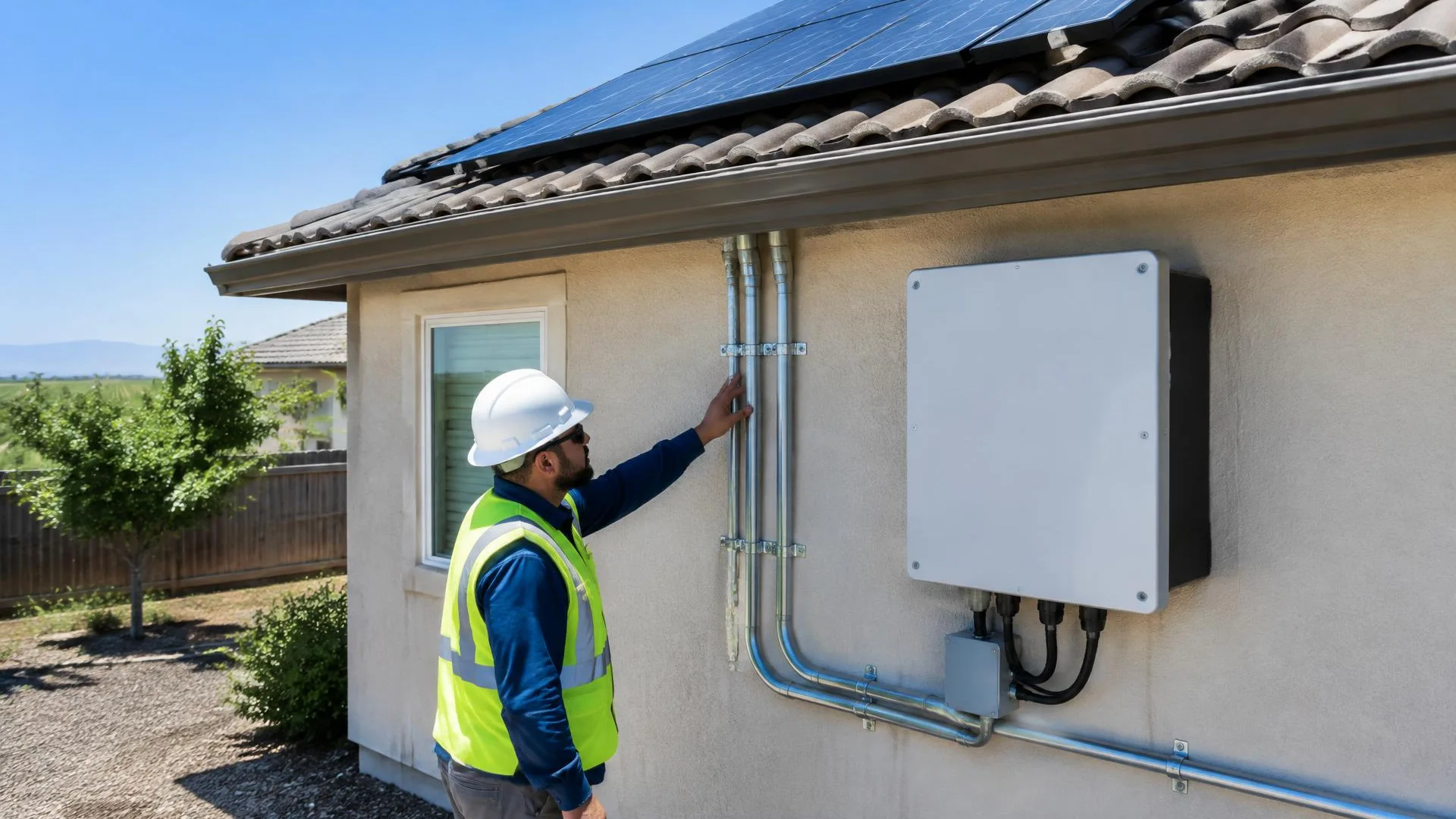
Electrical readiness is an equally important part of the conversation. Solar panels do not automatically expand the home's ability to support new appliances, and an electrical panel review may identify upgrade considerations. Our solar scope includes panel upgrade options, custom design, and rooftop installation. The project should explain how these elements relate without suggesting that generation alone resolves every capacity or connection issue.
Roof area, shading, and project budget still place practical limits on the design. A clear proposal can discuss alternatives and their assumptions rather than imply that every future load must be covered immediately. Battery options may be relevant to usage timing or designed backup, but they need separate evaluation. Neither future-proofing language nor a larger system establishes guaranteed savings, a zero bill, or uninterrupted operation during outages.
When Load Planning Matters
Bring specific future changes into the early assessment. Equipment timing, household changes, and limited usage records can materially influence the assumptions behind a solar design and should not be hidden inside a single recommended system size.
- Heat pump planned
- Water heater electrification
- Changing household occupancy
- Recent appliance additions
- Uncertain future demand
- Panel upgrade interest
Bring Today’s Usage and Tomorrow’s Plans
Share your Chowchilla electricity records and concrete equipment plans. We can discuss practical solar options, electrical readiness, and visible assumptions without treating every possible future change as a confirmed load today.
Solar Installation questions
Frequently Asked Questions
Specific plans should be considered, but their estimated demand needs to be distinguished from historical usage. The design should explain the assumptions and uncertainty. A vague future possibility should not automatically justify adding more equipment now.
That cannot be answered universally. Electricity demand and overall energy costs depend on the existing system, replacement equipment, operation, and applicable rates. Solar planning should use clearly stated assumptions rather than a blanket claim about future bills.
No. Generation and electrical load capacity are separate considerations. The existing panel and proposed additions require professional review. Solar should not be treated as a substitute for appropriate infrastructure or a reason to skip an electrical readiness assessment.
We can discuss the intention, but the resulting demand estimate will have limits. The proposal should make those limits clear. More specific equipment and usage information can improve later decisions rather than pretending uncertainty has already been resolved.
Not automatically. The reason for additional capacity should be connected to usage, future assumptions, design constraints, and financial conditions. Covering more roof is not a goal by itself and should not replace a reasoned sizing discussion.
Storage may change when available energy is used, but it does not create additional solar generation or automatically expand household electrical capacity. Its usefulness depends on the intended function and complete design, including any separately planned backup arrangement.