
Chowchilla
Choose Storage With Recovery in Mind
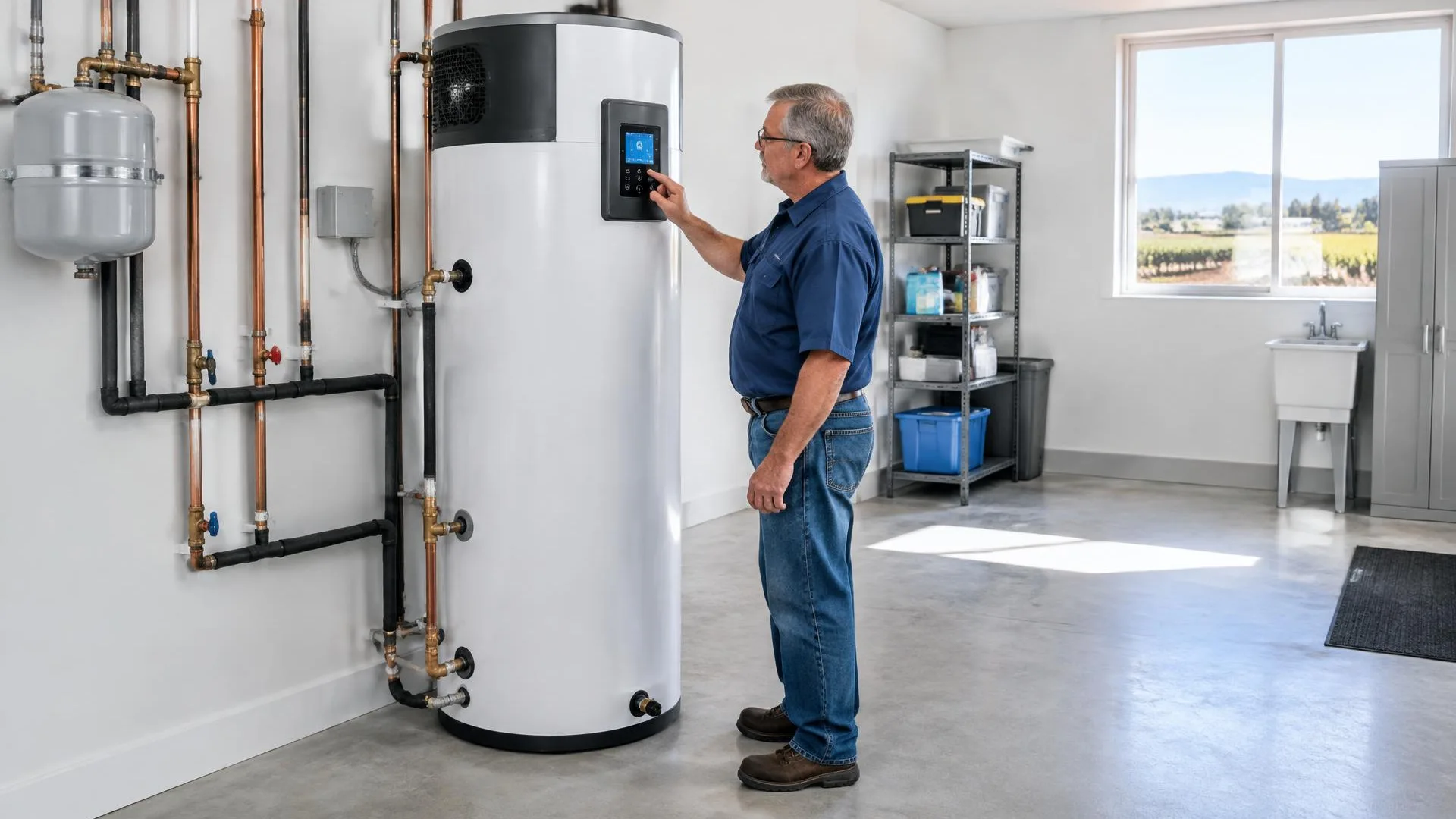
Tank capacity is important, but it does not describe the entire hot-water experience. In Chowchilla, we evaluate storage alongside peak demand, recovery behavior, and the space available for installation. The right discussion considers how your household uses hot water and how the proposed model replenishes it. A larger tank is not automatically better, and matching the old capacity is not automatically correct. Selection should follow an informed assessment of both performance expectations and site requirements.
- Peak-demand review
- Storage comparison
- Recovery assessment
- Fit evaluation
What we handle
Size the Complete System
Storage decisions need a clear demand picture and an understanding of model-specific operation. We compare those needs with location constraints before recommending equipment. This keeps sizing connected to air volume, manufacturer clearances, condensate disposal, access, and professional electrical findings rather than treating capacity as an isolated specification.
Since 2001
Serving the Central Valley
- 01Peak-demand review
- 02Storage comparison
- 03Recovery assessment
- 04Fit evaluation
- 05Supply coordination
- 06Tradeoff explanation
The assessment begins with your busiest hot-water period. Consecutive showers, bathing fixtures, and overlapping appliance use can create different demands from activities spread throughout the day. Existing shortages are worth discussing, but they do not establish a sizing diagnosis by themselves. We review your expectations and relevant equipment operation so the proposal can explain why a particular storage approach is being considered instead of simply increasing capacity whenever performance is questioned.
Recovery characteristics provide the second part of the comparison. Available modes and heating behavior differ between models, and storage alone cannot predict every demand outcome. The selected equipment should be discussed in relation to your routines without promising unlimited hot water. If future household changes are reasonably defined, they can inform the assessment, but uncertain possibilities should not automatically lead to the largest tank or obscure the requirements of the present installation.
Physical and electrical feasibility complete the sizing decision. A different tank may change delivery access, connection locations, manufacturer clearances, and available service space. Heat pump operation also requires suitable air volume and condensate handling, while qualified professionals assess the supply and circuit needs. If the preferred capacity does not suit the proposed setting, alternatives should be explained as tradeoffs. The objective is a coherent installation that addresses evaluated demand, not a selection based on one impressive number.
Sizing Assumptions to Revisit
Review storage sizing when recommendations simply copy the old tank, suggest the largest model without explanation, or overlook recovery behavior, concentrated demand, and the practical constraints of the proposed installation setting.
- Copied capacity
- Larger recommendation
- Peak shortages
- Changing occupancy
- Tight location
- Recovery uncertainty
Discuss Capacity in Context
Schedule a Chowchilla heat pump water heater assessment to connect storage choices with actual demand and site feasibility. We can explain relevant tradeoffs without assuming one capacity suits every household or location.
Heat Pump Water Heaters questions
Frequently Asked Questions
No. Storage should be evaluated alongside recovery, demand, installation fit, and equipment requirements. A larger model may be worth considering, but size alone does not establish suitability or guarantee better results for the household's particular use pattern.
Not automatically. The old tank provides context, including your experience with its performance, but the proposed technology and routines deserve review. Selection should explain why the capacity is appropriate rather than copy a label without assessment.
Recovery influences how the equipment replenishes hot water after use. Different models and modes can behave differently, so storage should not be considered alone. Discuss the busiest periods and time between activities when evaluating the proposed equipment.
Reasonably defined changes can be included as planning assumptions. Separate likely needs from uncertain possibilities and ask about tradeoffs. Future planning does not justify ignoring site constraints or automatically choosing the largest available equipment for every household.
Not by itself. Physical dimensions, available air volume, manufacturer clearances, and service access are separate considerations. The selected model and actual setting must be evaluated together, along with condensate, plumbing, and professionally assessed electrical supply.
The assessment can compare other equipment or location approaches, each with its own requirements and performance considerations. Avoid forcing a selection into an unsuitable setting. The proposal should explain alternatives and unresolved questions before equipment is ordered.