
Atwater
Verify the Supply Before Conversion
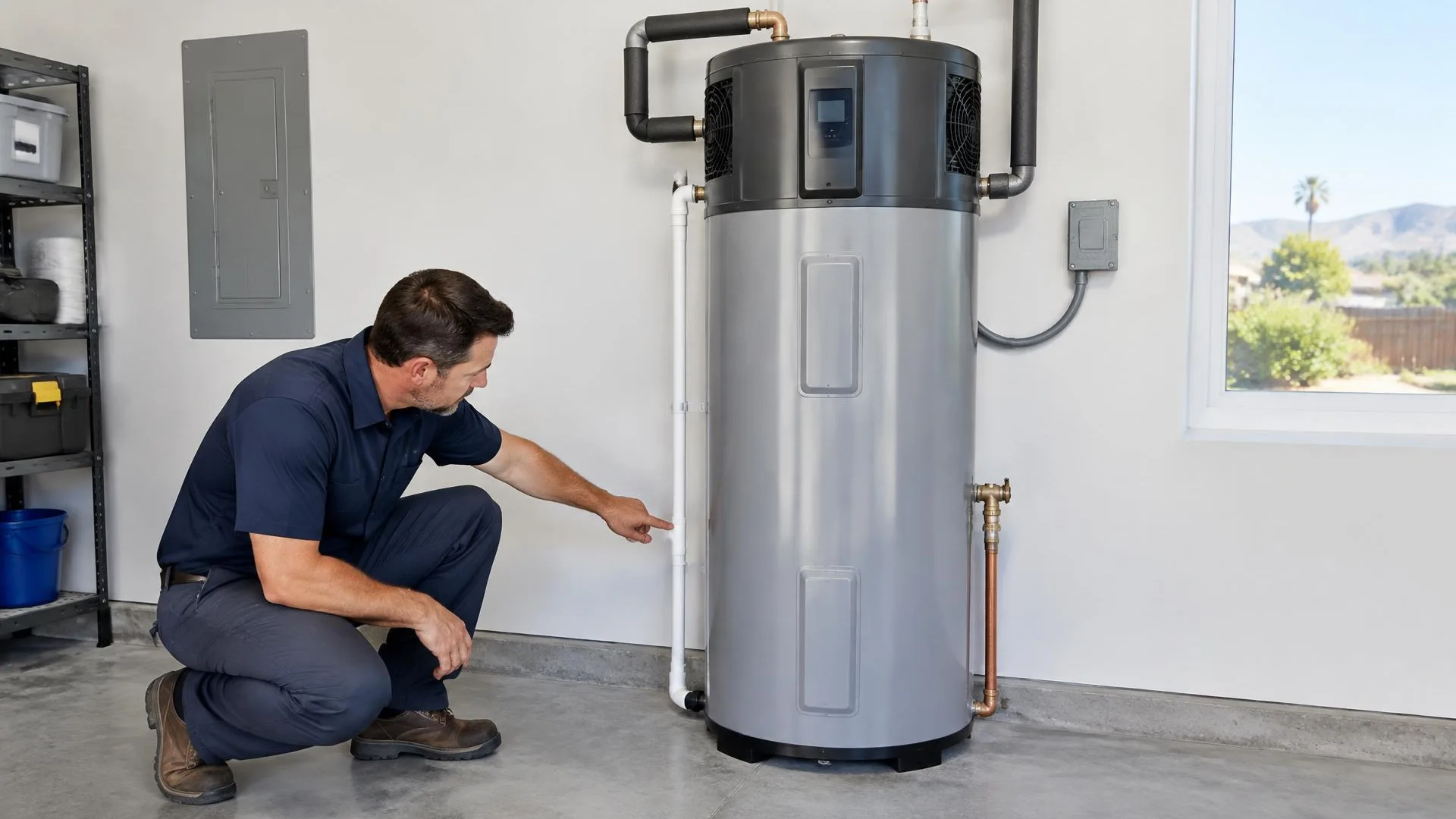
An existing electric connection does not automatically suit a new heat pump water heater, and a gas conversion needs more than replacing the tank. In Atwater, we coordinate equipment selection with professional evaluation of the available electrical supply. The assessment connects model requirements, circuit arrangements, and broader capacity questions with the actual installation site. This creates a clearer basis for recommendations than assuming either that a panel upgrade is unavoidable or that the existing connection can simply be reused.
- Supply assessment
- Circuit verification
- Capacity review
- Model coordination
What we handle
Match Equipment and Electrical Requirements
Different equipment can have different connection requirements, so electrical planning should follow a defined installation scope. Qualified professionals evaluate the supply and explain necessary work. We also keep non-electrical requirements visible, because a compatible circuit alone does not establish that the proposed location is suitable.
Since 2001
Serving the Central Valley
- 01Supply assessment
- 02Circuit verification
- 03Capacity review
- 04Model coordination
- 05Conversion planning
- 06Site evaluation
The first step is documenting the current water heater and the model or equipment approach under consideration. Existing labels and prior installation records can be useful when accessible, but they do not replace professional verification. A previous electric tank may have different requirements from its replacement, and a former gas location may need a new electrical route. Those distinctions should be addressed before the proposal describes the connection as straightforward.
Qualified electrical professionals assess circuit suitability, supporting equipment, and relevant capacity questions. They determine the installation requirements for the selected model rather than relying on outlet appearance or spare breaker positions. If changes are recommended, ask whether they address demand, condition, routing, or another requirement. Homeowners should not remove panel covers, test wiring, or alter receptacles to investigate compatibility. The purpose of assessment is to replace assumptions with an informed electrical scope.
Electrical readiness must then be considered alongside hot-water demand and siting. A heat pump water heater needs suitable air volume, manufacturer clearances, condensate disposal, plumbing connections, and access for maintenance. Equipment with a different electrical profile still needs to meet household expectations and all other installation requirements. A useful proposal explains these tradeoffs, identifies unresolved conditions, and avoids promising that one product choice will eliminate every modification or make any existing location suitable.
Supply Assumptions to Question
Seek professional review when a conversion relies on an unverified outlet, an existing electric tank is being replaced, or panel recommendations appear before the proposed model and supporting system are evaluated.
- Gas replacement
- Existing wiring
- Unknown circuit
- Model changes
- Panel questions
- Assumed compatibility
Verify the Electrical Scope
Schedule an Atwater heat pump water heater assessment with professional supply evaluation. Share accessible equipment information and intended goals; leave electrical inspections, testing, and any connection modifications to qualified professionals only.
Heat Pump Water Heaters questions
Frequently Asked Questions
Possibly, after professional verification against the selected model and installation requirements. Existing service does not guarantee suitability. Circuit characteristics, condition, protection, and supporting capacity all need appropriate evaluation before reuse is included in the scope.
No universal rule applies. The actual electrical system and proposed equipment must be assessed. A new circuit or other work may be needed, but panel replacement should follow documented findings rather than be assumed solely because the old heater burned gas.
No. Requirements can differ by model and approved configuration. Equipment selection should account for supply compatibility, hot-water performance, and site feasibility together. Do not assume a familiar product category establishes the correct wiring or installation details.
Leave wiring verification and electrical testing to qualified professionals. You can share accessible labels and previous project documents without opening equipment. Removing covers or interpreting conductor appearance is not an appropriate homeowner step for determining compatibility.
Not necessarily. A different electrical profile may be useful to evaluate, but performance, plumbing, air volume, condensate disposal, clearances, and access still matter. The complete installation should be assessed rather than judged by one equipment rating.
It should identify the selected equipment, required connection work, relevant assessment findings, and assumptions awaiting confirmation. Clear boundaries help distinguish appliance installation from electrical modifications and explain why each proposed task is part of the project.