
Atwater
Atwater Emergency Heating for Electrical or Burning Odors
A hot, acrid or electrical smell from heating equipment should be treated seriously. In Atwater, our guidance begins with protecting people. If you see smoke, sparks, flames or feel immediate danger, leave and call emergency services. Heating service comes after the immediate hazard is controlled and the equipment has been safely stopped.
- Stop heating from the thermostat when safe
- Prioritize emergency contact for smoke, sparks or alarms
- Inspect accessible electrical and mechanical conditions
- Evaluate motors, wiring, controls and heat sources
What we handle
Safety comes before diagnosis
Odors can come from dust, motors, wiring, insulation or components under stress, so the source should not be guessed.
Since 2001
Serving the Central Valley
- 01Stop heating from the thermostat when safe
- 02Prioritize emergency contact for smoke, sparks or alarms
- 03Inspect accessible electrical and mechanical conditions
- 04Evaluate motors, wiring, controls and heat sources
- 05Identify scorching, melting or contamination evidence
- 06Advise whether operation may resume
An odor complaint needs a safety decision before an equipment diagnosis. A brief dusty smell after inactivity can differ from a persistent, sharp or electrical odor, but that distinction should not be used to dismiss an unexplained concern. If a mild odor occurs without smoke, sparks or other immediate danger, switch heating off at the thermostat if safe and avoid restarting it until evaluated. Note when the smell began and whether it coincided with startup or blower operation. Do not stand near the equipment trying to identify it more precisely. Strong, worsening or uncertain symptoms deserve caution rather than another heating cycle intended to prove whether the odor will clear.
If you smell gas, hear a carbon monoxide alarm or suspect fire, leave the building and contact emergency services from outside. Sparking or smoke also requires immediate attention rather than an HVAC appointment as the first response. Do not open panels, touch wiring, spray cleaners into the equipment or attempt to trace the smell. Avoid operating switches while leaving a suspected gas incident, and follow responders' directions before returning. Once the location is safe, describe what happened and any prior repair work. Household members should not reenter to collect a model number or perform one more check; equipment information can wait until emergency personnel have addressed the immediate safety concern.
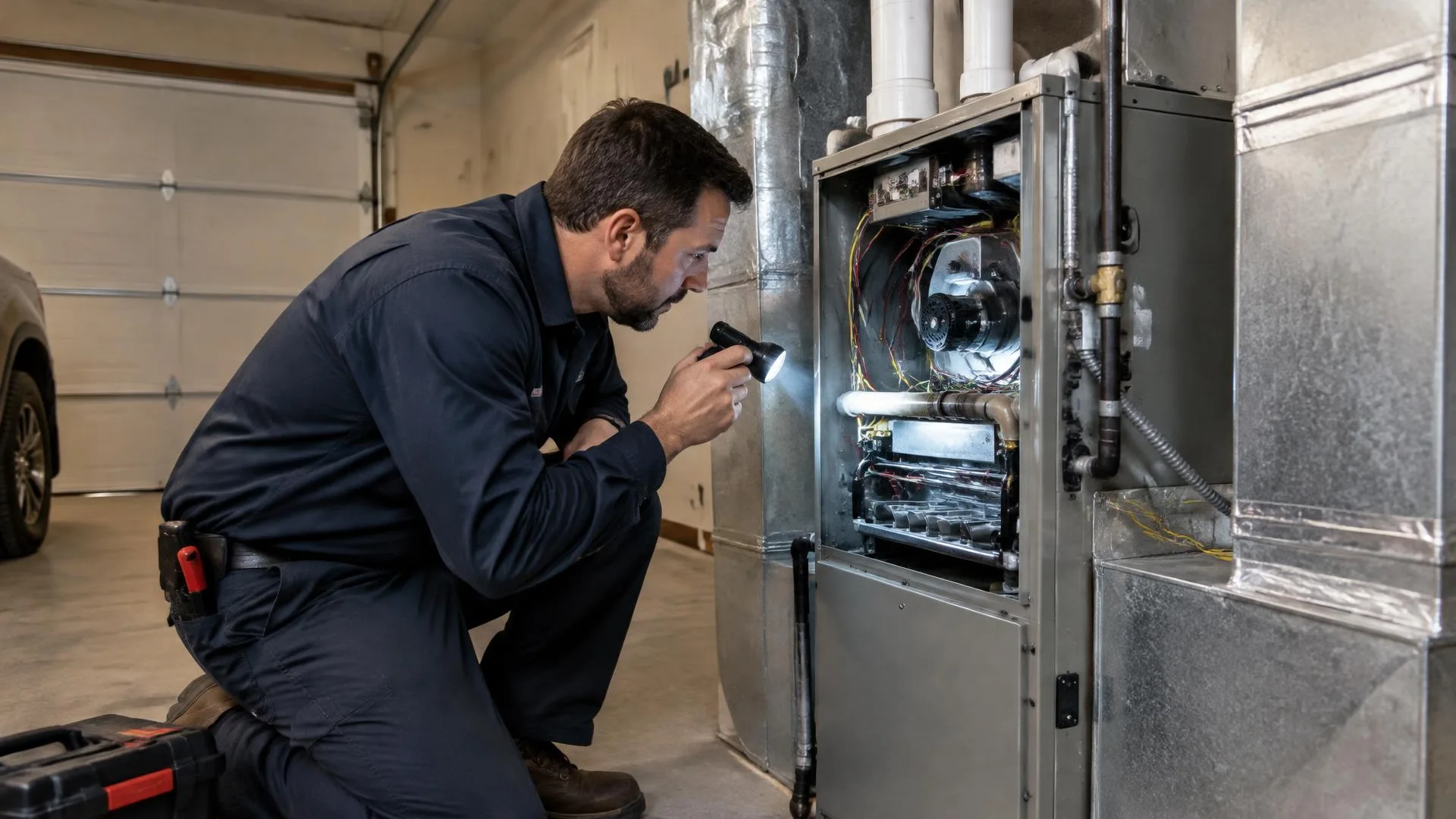
The technician investigates accessible equipment condition and tests relevant controls, motors and electrical components using appropriate procedures. Dust, a failing component and a wiring problem require different evidence and different corrections, so the odor description alone is not a diagnosis. We explain what was found, whether more investigation is necessary and what must happen before the system returns to use. Do not accept continued operation as a temporary solution when an unsafe fault remains unexplained. Service urgency and repair possibilities depend on findings and availability, with no guaranteed arrival or restoration time. If the home cannot remain safely occupied without heat, arrange an alternative location rather than relying on a presumed schedule.
Odor-related danger signs
Leave first and call emergency services if these occur. Do not wait for a repair visit.
- Visible smoke or flames
- Sparks, popping or sizzling sounds
- A strong electrical or melting-plastic smell
- Heat or discoloration around equipment
- Tripping breakers connected to the system
- Gas odor or carbon monoxide alarm
Call about an Atwater odor problem
If there is no immediate danger and the system is off, contact us with a description of the smell and symptoms.
Emergency Heating questions
Frequently Asked Questions
Turn the system off at the thermostat if safe. If smoke, sparks, flames or alarms are present, leave and contact emergency services.
No. Panels may expose electrical and combustion parts. Inspecting or touching them can be dangerous.
It can be brief after a long idle period, but strong or persistent odors are not normal. Stop use and request evaluation.
Do not repeatedly reset a breaker connected to heating equipment. Repeated tripping is a warning sign requiring professional assessment.
A fading odor does not prove the cause is resolved. Keep the system off until a technician evaluates it.
Describe the smell, timing, sounds, thermostat settings and whether breakers tripped. Do not disturb evidence by opening equipment.