
Atwater
Let Water Heating Inform the Plan
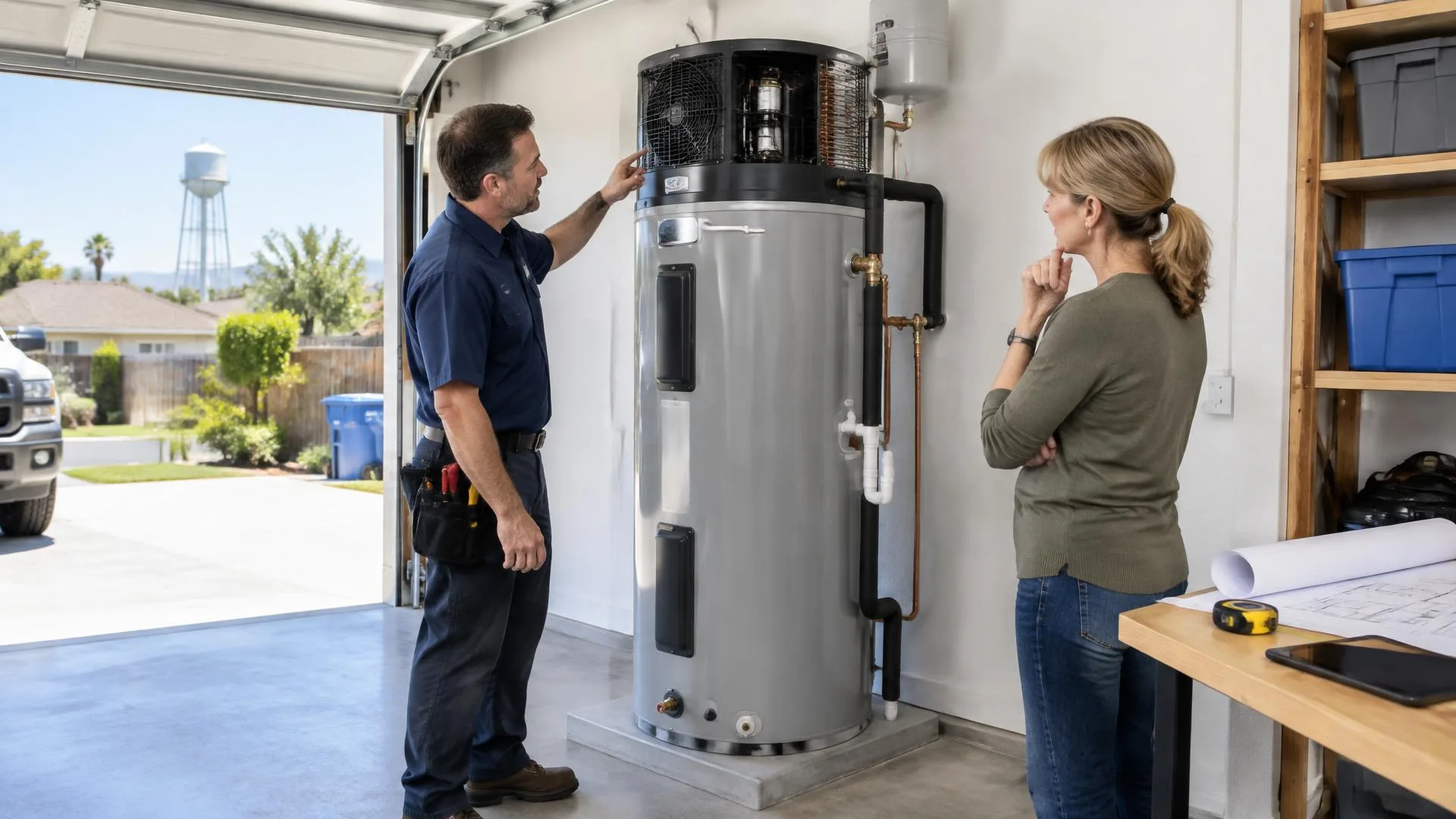
Water heating can be a focused starting point for a broader electrification conversation. For an Atwater home, we examine hot-water demand, existing connections, installation space, and professional electrical findings before recommending a conversion approach. The discussion can stay centered on one appliance while still considering future heating, cooking, solar, or storage plans. That balance helps avoid turning a specific replacement need into an unnecessarily broad project or an isolated decision.
- Demand discussion
- Siting review
- Supply assessment
- Condensate planning
What we handle
Begin With Daily Demand
A water heater must serve the household's routines and fit its installation setting. Those requirements deserve attention before a model is chosen. We connect water heating options with broader electrification goals while keeping sizing, recovery behavior, and site feasibility distinct from whole-home aspirations.
Since 2001
Serving the Central Valley
- 01Demand discussion
- 02Siting review
- 03Supply assessment
- 04Condensate planning
- 05Conversion scope
- 06Future coordination
We first discuss when hot water is used, which activities overlap, and whether current performance matches your expectations. Household size alone does not capture concentrated morning demand, large bathing fixtures, or changing schedules. Those details help inform storage and recovery discussions. They also establish a useful comparison point: replacing equipment should respond to an understood need rather than assuming the existing tank represents either the correct size or the preferred technology.
For a heat pump water heater, the installation review includes available air volume, manufacturer clearances, condensate disposal, sound considerations, and service access. Existing plumbing and electrical supply need professional evaluation, and a gas conversion introduces additional coordination. A tank fitting through the door does not establish that the room supports its operation. Location and connection findings may affect equipment choice or reveal work that should be separated clearly in the proposal.
The broader plan considers how this project fits later appliance changes. Qualified electrical professionals assess the proposed demand alongside existing loads and any reasonably defined future additions. Solar and battery goals can be discussed without implying they are prerequisites for electric water heating. The recommended scope should identify what is needed for this installation, what preparation may serve a later phase, and what should wait until future equipment decisions are concrete.
A Useful Starting Point
Water heating may deserve early attention when replacement is approaching, hot-water routines have changed, or you want one manageable project evaluated within a broader, professionally assessed home electrification strategy first.
- Replacement planning
- Changing routines
- Space questions
- Gas conversion
- Recovery concerns
- Future appliances
Discuss Water Heating First
Arrange an Atwater assessment that starts with hot water and keeps future upgrades in view. We can evaluate practical requirements before you select equipment or assume the existing location will work.
Home Electrification questions
Frequently Asked Questions
Yes. A focused project can be assessed on its own while documenting future goals. The important distinction is between work required now and optional preparation, so a single appliance replacement does not become an undefined whole-home commitment.
Not automatically. Demand patterns, recovery characteristics, and the proposed equipment differ between households and technologies. Discuss actual use and any service shortfalls so sizing reflects expectations rather than simply copying the number on the existing unit.
Possibly, after evaluating available air volume, manufacturer clearances, condensate routing, access, and connections. The old location may need modifications or may not suit the proposed model. Physical tank dimensions are only one part of that decision.
No, solar is a separate planning consideration rather than an automatic requirement. If solar is also being explored, anticipated electrical use can inform the discussion. Neither project should rely on unverified assumptions about the other's final design.
Qualified electrical professionals assess the existing supply, circuit requirements, and relevant capacity questions. Homeowners should not open panels or test wiring. The installation proposal should explain any required electrical work and its relationship to the selected heater.
The immediate water heating scope can still be evaluated. Record possible future changes as assumptions rather than confirmed loads, and revisit them when equipment choices become clearer. That keeps present recommendations grounded without ignoring the broader direction.